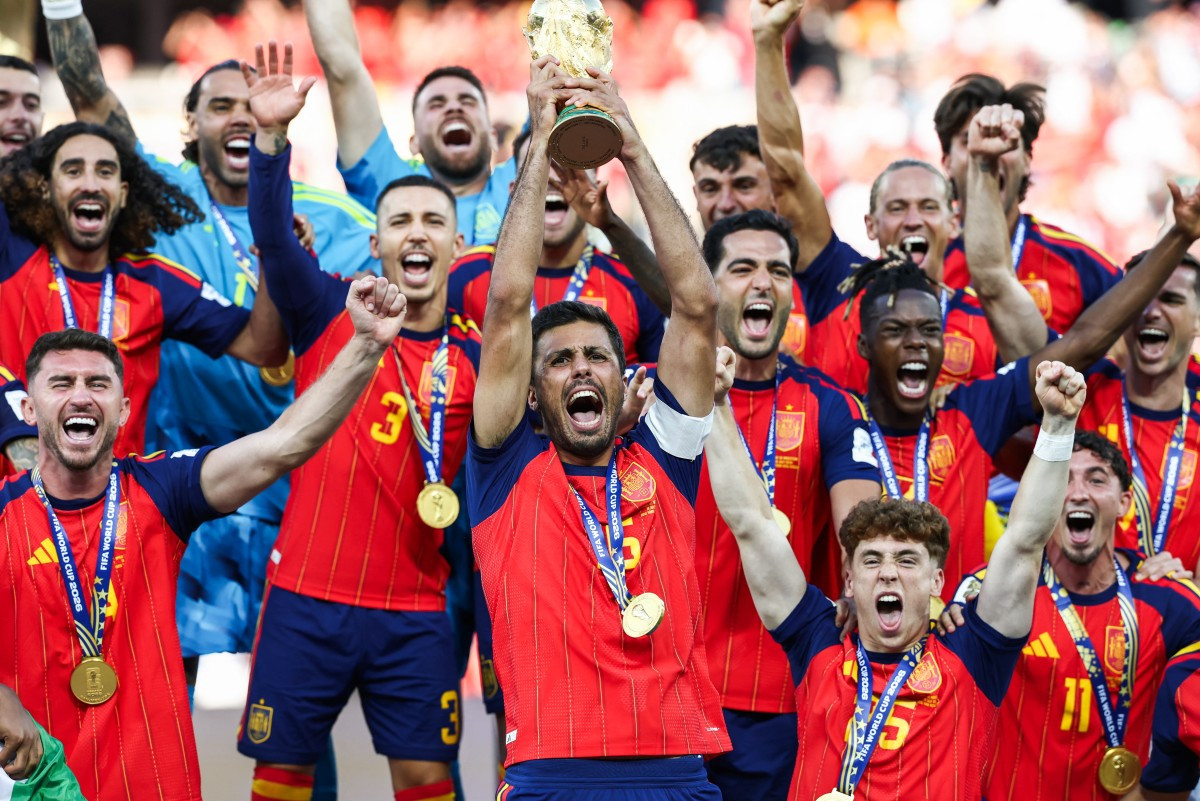
The Predestined Clash: Argentina vs. Spain in the World Cup Final
The recent World Cup final between Argentina and Spain was steeped in a series of striking coincidences that many fans interpreted as a sign of destiny. This matchup, featuring two of soccer’s most storied nations, was not just a battle for the title but also a narrative woven with threads of history, emotion, and controversy. Despite Argentina’s status as the defending champion, their path to the final was not without its skeptics, particularly following a contentious 1-0 defeat against Spain earlier in the tournament.
A Nostalgic Snapshot
Days before the final, social media erupted with a nostalgic photograph from 19 years ago, showcasing a young Lionel Messi bathing an infant Lamine Yamal in a plastic tub. This image, capturing a tender moment between two of FC Barcelona’s La Masia academy stars, resonated deeply with fans. Both players, who began their professional journeys at the Spanish club, wore the number 19 jersey, adding another layer of intrigue to the narrative surrounding the final.
Allegations of Favoritism
However, not everyone viewed Argentina’s journey to the final through rose-tinted glasses. Critics voiced concerns over FIFA’s potential favoritism, pointing to Argentina’s relatively straightforward draw compared to that of other contenders. The skepticism intensified following a controversial VAR decision during the round of 16, where a second goal for Egypt was annulled, allowing Argentina to stage a dramatic comeback and win 3-2. This incident sparked a viral sensation on social media, particularly through a parody video featuring Indonesian children reenacting the moment, which garnered over 81 million views. The humor in the video, including a child discovering an Argentine jersey hidden beneath the referee’s uniform, highlighted the ongoing struggle for fair play in sports.
Geopolitical Tensions Off the Pitch
The World Cup was not only marked by on-field drama but also by off-pitch geopolitical tensions. The host nation, the United States, faced scrutiny for its discriminatory policies that impacted the Iranian team. In the wake of strained relations between the two countries, the Iranian squad was prohibited from training on American soil. This forced them to establish their base in Tijuana, Mexico, leading to exhausting commutes for their group-stage matches in Los Angeles and Seattle. Additionally, US authorities denied entry visas to several Iranian team officials, further complicating their preparations and support.
Iran’s Unbeaten Journey
Despite these challenges, Iran managed to maintain an unbeaten run in the group stage, securing three points from three consecutive draws. However, this was not enough to advance to the knockout stage, contrasting sharply with the host nation, the US, which progressed to the round of 16. The American campaign, however, ended in a 4-1 defeat to Belgium, a match overshadowed by controversy after FIFA rescinded a two-match ban on American striker Folarin Balogun at the last minute, allowing him to play.
The Legacy of the Tournament
As the dust settles on this World Cup, it is clear that the tournament will be remembered not only for its thrilling matches but also for the complex narratives that unfolded off the pitch. From the nostalgic connections between players to the geopolitical ramifications affecting teams, the 2023 World Cup final was a microcosm of the broader issues facing the world today. The interplay of fate, controversy, and the human spirit made this tournament a memorable chapter in the annals of soccer history.