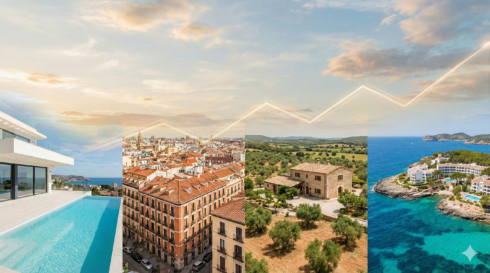
Spain’s Property Market Hits New Heights: A Closer Look at the Surge in Sales
The Spanish property market is experiencing a remarkable resurgence, with the number of property sales reaching its highest level in nearly two decades. According to recent data from Spain’s Ministry of Housing, home seekers in various cities are purchasing properties at rates that surpass even the peak of the 2006 real estate bubble. This trend raises questions about the sustainability of the market and the implications for potential buyers.
In 2025, cities such as Sevilla, Cordoba, and Granada in Andalucia reported significant increases in property transactions. Notably, these areas have outperformed the record-breaking sales figures from the 2006 market frenzy. Other cities, including Badajoz, Bilbao, Caceres, San Sebastian, Ourense, Pamplona, Segovia, Teruel, and Vitoria, also saw similar trends, indicating a widespread resurgence across the country.
Overall, the Ministry reported a staggering 752,098 property transactions across Spain last year, marking a 5% increase from 2024 and the highest total in 18 years. This figure is only surpassed by the sales recorded in the lead-up to the infamous 2006 bubble, which ultimately led to a devastating economic crisis when it burst in 2007.
While the current surge in sales may not necessarily indicate the formation of another bubble, experts caution that it highlights a deepening housing crisis. As property prices soar and buildable land becomes increasingly scarce, many would-be buyers find themselves locked out of the market. Investors are flocking to real estate as a safe investment, further driving up prices and creating a challenging environment for first-time buyers.
Real estate expert Raul Garcia Molina from Ysabika Inmobiliaria shared insights on the current market dynamics. “Homes are selling like hot cakes simply because they are seen as a safe investment,” he explained. “Buyers can easily purchase property and rent it out at a profit. This pushes prices higher – and the more they rise, the more attractive the business becomes for potential investors.” Garcia emphasized the urgent need for more housing to alleviate the pressure on the market.
Interestingly, the Ministry’s figures reveal that the most significant surges in property sales were recorded in Granada and Bilbao. Granada, for instance, saw 4,005 property sales in 2025, which is 1,406 more than in 2006. Similarly, Bilbao recorded 4,684 sales, with a gap of 1,215 compared to the peak year. These figures illustrate a robust demand for housing in these regions, contrasting sharply with the situation in Spain’s largest cities.
In contrast, major urban centers like Madrid, Malaga, Palma de Mallorca, and Barcelona are lagging behind. Madrid sold approximately 9,000 fewer homes in 2025 than in 2006, while Malaga, Palma, and Barcelona trailed by around 3,500 sales each. Valencia also reported nearly 2,500 fewer transactions. This discrepancy highlights the different demographic and economic factors at play in larger cities, where property prices have surged at a much faster rate than in smaller towns.
Experts suggest that the current market dynamics may lead to a slowdown in the near future. Garcia warned that Spain’s largest cities could serve as a “canary in the mine,” indicating potential challenges ahead for the property market. As prices continue to rise, the sustainability of this growth remains in question, particularly for those seeking affordable housing options.
As the property market evolves, it’s essential for potential buyers and investors to stay informed about trends and shifts in the landscape. The ongoing surge in sales may present opportunities, but it also underscores the complexities of navigating a market characterized by rising prices and limited availability.
Click here to read more Property News from The Olive Press.