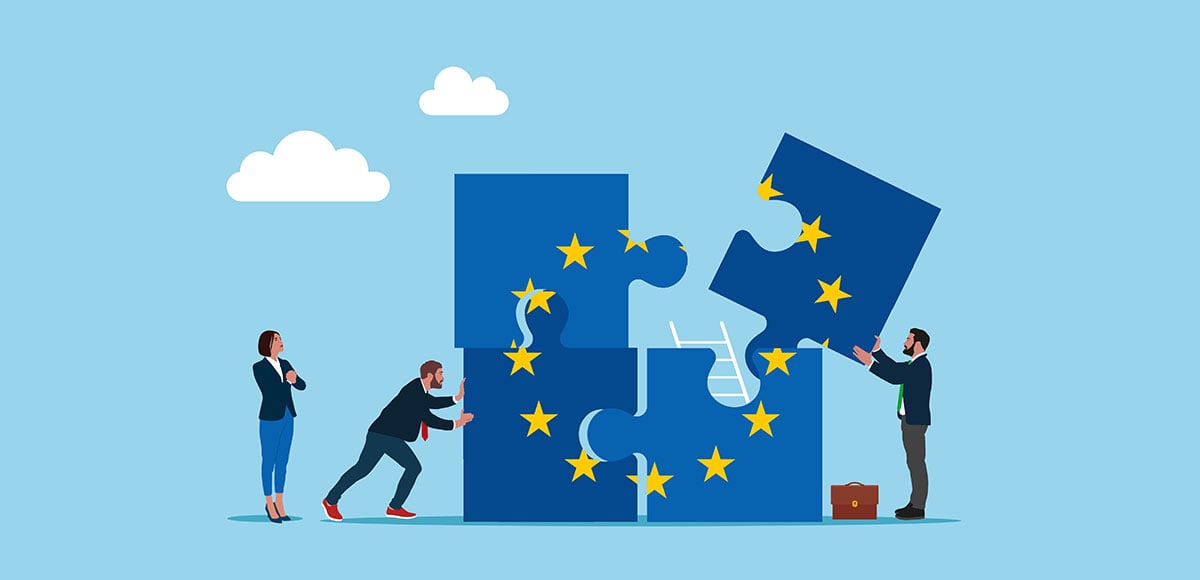
The Reality of Expanding Startups in Europe
A founder can set up a company in Europe in under 24 hours, hire seamlessly across France, Spain, and Germany, and continue to grow with limited costs—these are the oft-touted ambitions of the European Union’s single market. However, the reality for many founders is starkly different.
The Administrative Burden
In practice, establishing a business across Europe can take months of administrative work. Founders often find themselves navigating a labyrinth of legal requirements, necessitating multiple legal entities, separate payroll systems, and dedicated employment and tax lawyers in every jurisdiction. This complexity creates a significant gap between the ideal of a single market and the operational reality that many entrepreneurs face.
The Cost of Fragmentation
One of the most significant barriers for European startups is the requirement to manage separate legal entities in each member state. This fragmentation adds time, cost, and operational complexity at every stage of growth. For instance, consider Value Added Tax (VAT): each of the 27 member states sets its own rates and exemptions, which can vary drastically—from 17% in Luxembourg to 27% in Hungary. Such variations can delay market entry and complicate financial planning.
Hiring Challenges
When it comes to hiring, the differences in employment regulations across countries can be daunting. From notice periods and probation rules to contractor classifications, these discrepancies make it challenging to scale teams consistently. For a business aiming for rapid growth, these are not trivial matters. Probation rules dictate how quickly a new hire can be onboarded, while notice periods influence how swiftly a company can adapt to changing circumstances.
Moreover, the classification of contractors varies by country, affecting hiring flexibility. When you add employee equity structures into the mix, which differ from one nation to another, every new market becomes a mountain to climb.
The Impact on Growth
These challenges not only create administrative headaches but also directly hinder a startup’s ability to grow competitively. The result? A less attractive operating environment. Between 2008 and 2021, nearly 30% of European unicorns relocated outside the EU, and only 8% of global scaleups are based in Europe. This trend underscores the urgent need for reform.
The Promise of EU INC
The European Commission’s proposal for a pan-European solution, dubbed ‘EU INC,’ aims to address these issues. Designed to offer founders a single legal entity across all 27 member states, it promises to simplify the process of growing and investing in EU businesses. While it won’t resolve all challenges overnight, it acknowledges the fragmentation that has long plagued founders.
Reducing Administrative Burdens
One of the most encouraging aspects of the EU INC proposal is its focus on reducing the administrative burden for investors. Founders need capital to scale, and investors require straightforward processes to deploy that capital. Currently, the complexity of operating across multiple jurisdictions adds unnecessary steps for both parties. By streamlining share transfers and digitizing funding processes, EU INC aims to facilitate capital flow into high-growth EU companies.
Aligning with Global Trends
This initiative also positions Europe to compete more effectively on the global stage. As digitization continues to drive efficiency and competitiveness in markets worldwide, EU INC reflects a necessary evolution in the European business landscape.
The Future of Scaling in Europe
Europe’s startups are ambitious, yet they often lack the time and resources needed for cross-border expansion. The moment a founder attempts to grow beyond their home market, they encounter a system that wasn’t designed for such endeavors. While the EU INC proposal is a step in the right direction, its success will ultimately depend on whether it reduces friction for founders and investors in practice.
Measuring Success
Effective implementation must be measurable. For instance, company setup should take days rather than months, and cross-border hiring should not necessitate a separate legal team in every market. Reporting requirements should be consistent across member states, eliminating unnecessary duplication.
The potential of EU INC to make Europe a more attractive place for building and investing in startups is significant. However, this potential will only be realized if the implementation moves at the pace the market demands.