Unearthing the Past: European Footprints on Fuerteventura
The history of Fuerteventura, particularly its post-conquest period, remains shrouded in mystery, with many remnants of the first Europeans who arrived on the island lying buried beneath layers of earth. Although archaeological study has historically overlooked this era, newly risen research endeavors promise to illuminate the moments when indigenous cultures and European newcomers first intersected.
The Importance of Post-Conquest Archaeology
The intersection of indigenous and European cultures in Fuerteventura is a crucial and transformative moment in the island’s history. Rosa López, a leading archaeologist and director of Arenisca archaeological excavations, highlights this post-conquest phase as “fundamental.” She emphasizes the collaboration between fieldwork conducted by archaeologists and the supporting documentation from the time. This combination allows researchers to corroborate written accounts from the conquest with tangible material remains, giving insights into societal changes among the indigenous populations and the initial settlement dynamics.
The Search for First Settlements
In a recent presentation at the Jornadas de Estudios sobre Lanzarote y Fuerteventura in Arrecife, Rosa López detailed the ongoing research regarding potential early European settlements. One significant site discussed was Rosita del Vicario, located at the Barranco de La Torre. Discovered in 1945 by provincial commissioner Sebastián Jiménez Sánchez and local resident Juan Medina Berriel, the site unveiled a mix of indigenous and European materials—ceramics, metal plates, and even a coin. Some of these artifacts are currently housed in the Fuerteventura Museum.
Unraveling Historical Uncertainties
Jiménez Sánchez hypothesized that Rosita del Vicario could represent the Norman tower cited in several conquest chronicles, a proposition supported by maps from the period. However, the interpretation remains controversial. In the 1950s, historian Elías Serra Rafols suggested that the structures might be of indigenous origin. More recent excavations led by archaeologist Carmen del Arco have dated materials to the 13th and 14th centuries, challenging Jiménez Sánchez’s initial conclusions. López reaffirms the need for further exploration, noting that Rosita del Vicario is likely an indigenous site repurposed after the conquest.
The Quest in Pozo Negro
Moving to Pozo Negro, the pursuit of the elusive castles built by early settlers Jean de Bethencourt and Gadifer de la Salle becomes apparent. Historical documents from the 1500s reference active trade in the region, particularly around a water source that locals still recognize. López describes this area as vibrant for archaeological investigation, hinting at the significance of the Norman presence.
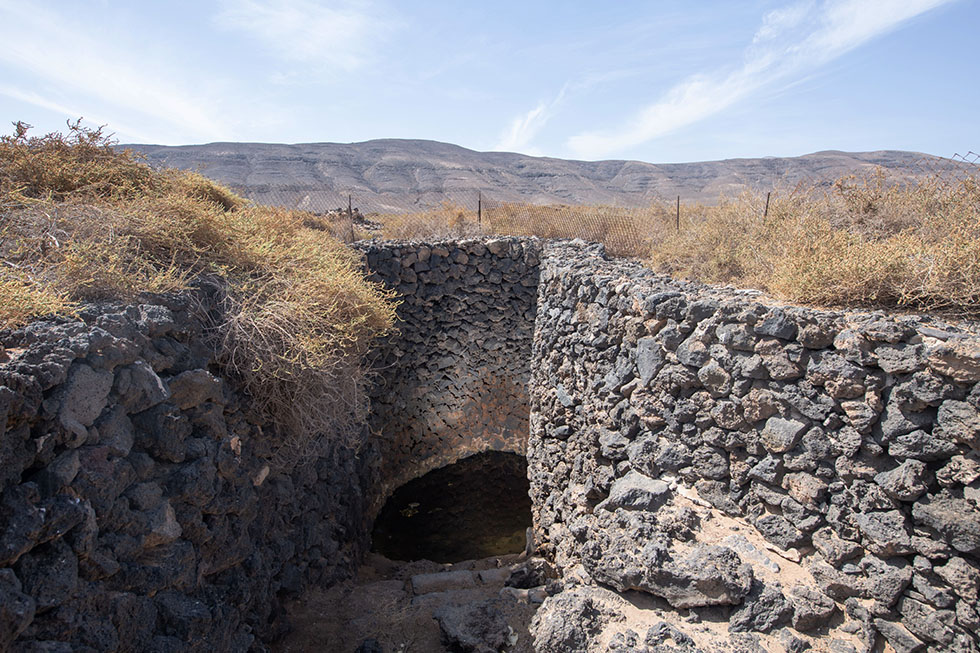
A notable discovery made by Antonio Tejera Gaspar and his team in recent decades points to possible European structures, including ancient wells made from volcanic stone. They propose that these may predate 1427, indicating that this region was actively utilized well before European colonization.
Central Insights in Betancuria
The search for European remnants now leads to Betancuria, Fuerteventura’s historic capital. Archaeologist Rosario Cerdeña suggests possible remnants of early European constructions near Las Peñitas, related to both Ajuy Port and the core area of Betancuria. The Franciscan convent of San Buenaventura, which may conceal the remains of its 15th-century predecessor, is highlighted as a critical site of interest.
Initial excavations have uncovered significant architectural remains, yet calls for further intervention grow louder, especially concerning the church of Santa María de Betancuria. While parts of the original structure are still visible, López makes a case for an archaeological examination to explore deeper layers that could unveil earlier European religious practices on the island.
The Human Aspect of Archaeology
Rosa emphasizes a broader methodological approach to archaeology in Fuerteventura, advocating for interdisciplinary collaboration. This includes studying historical architecture, underwater explorations, and funerary contexts that may relate to both indigenous and European inhabitants. Such comprehensive research is vital for understanding the impact of European arrival—in religious, political, and social spheres—on the indigenous ways of life.
The Forgotten Narrative
The post-conquest period in Fuerteventura often remains marginalized in historical narratives, overshadowed by earlier indigenous cultures. López argues that this era significantly altered the island’s trajectory, shaping contemporary Fuerteventura. Addressing this overlooked chapter is essential to appreciate the complexities of the island’s historical development and its cultural landscapes.
As excavations and discussions continue, the compelling story of Fuerteventura’s past remains an unfolding narrative—a bridge between its indigenous roots and the transformative influence of European presence. This ongoing pursuit of knowledge underlines the enduring relevance of archaeology in reconstructing societies long gone and exploring the intricate dynamics that have shaped Fuerteventura through the centuries.