On June 9th, the Puerto del Rosario City Hall expressed significant concerns to the Ministry of Transport, the Maritime Merchant Office, and the local senator for Fuerteventura regarding the future design of port facilities. This call for action signifies the urgency of ensuring that the design integrates all islands effectively while mitigating territorial imbalances that could arise. The city’s mayor, David de Vera, emphasized this proposed connection as a strategic infrastructure, highlighting that the port handles over 1.5 million tons of cargo annually. He argued that this substantial figure reinforces the port’s crucial role in the logistical network of the Canary Islands. Additionally, the Canary Islands Government has formally requested updates from the state on the status of the bidding process.
Expansion Amidst Challenges: Gran Canaria Takes the Lead
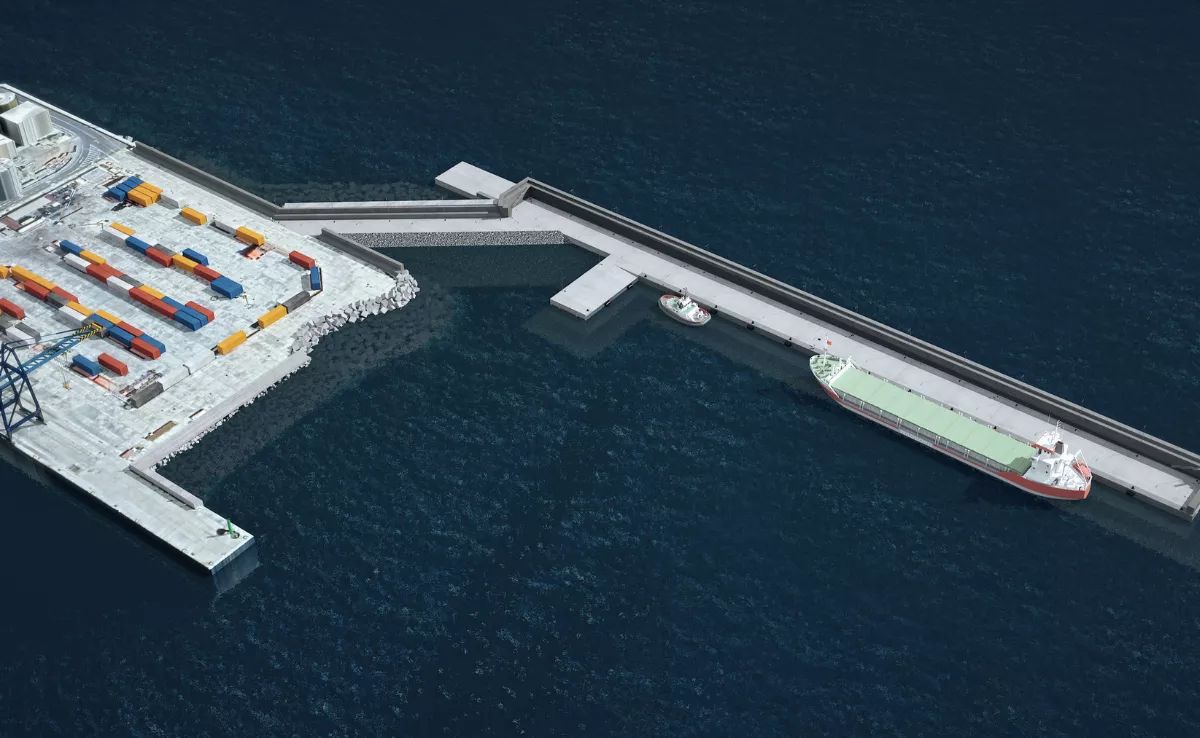
As conversations around expansion and integration unfold, a parallel story emerges: just when the connection seemed threatened, Fuerteventura embarked on a transformative journey with its most significant port infrastructure project in decades. The Council of Ministers has authorized the bidding for a new dock-mole in Puerto del Rosario, with an investment close to €43.9 million, aimed at enhancing port capacity—particularly in fuel traffic. However, the estimated final cost has rose to about €47 million, which is €21 million above the initial 2022 budget. The construction has been assigned to the UTE OHLA-SATO and will be co-financed with FEDER funds, improving protection against rough seas while allowing specialized tankers to dock, thus freeing the current mole for cruise traffic.
While this presents encouraging news—for more capacity, enhanced safety, and a brighter future—there exists an underlying issue worth noting. A striking 60% of this new dock construction is being executed in Gran Canaria, with only 40% taking place in Fuerteventura itself. This discrepancy stems from the lack of necessary materials on Fuerteventura to construct the required concrete boxes, which must be fabricated from specific cement and steel available only in Gran Canaria to be shipped by sea to the island. This reliance on the capital island exemplifies a broader systemic issue.
Who Holds the Power? The Connection Between Islands
This dependency on external resources is not merely a detail; it reflects a deeper structural concern. Currently, the three main state ports in the province—La Luz (Gran Canaria), Arrecife (Lanzarote), and Puerto del Rosario (Fuerteventura)—are all managed by a single entity, the Port Authority of Las Palmas, which operates from Gran Canaria. This centralized management means that strategic decisions affecting all three islands are effectively made from one location.
This scenario has reignited political debates surrounding the push for greater autonomy in ports for the eastern islands. Advocates do not aim to separate the ports from the state, but rather to enhance decision-making capacity. They propose either a separate Port Authority for the eastern islands or stipulations to ensure that leadership of the port authority rotates periodically to include representation from Fuerteventura or Lanzarote, preventing continuous dominance by leadership from Gran Canaria. This conversation has gained traction following the announcement of a new commercial route Agadir–La Luz, reigniting concerns about a “logistic centralism”. Critics highlight that while a long-distance route is pursued, the historical link between Puerto del Rosario–Tarfaya, only 140 kilometers from the major island, remains blocked due to alleged health risks—restrictions critics argue are not applied when goods enter through Gran Canaria.