Unveiling History Through Bones: Verónica Alberto Barroso’s Journey in Zooarchaeology
Verónica Alberto Barroso has dedicated 35 years of her life to an unusual yet profoundly significant profession: working with bones. With an enthusiasm that reveals her youthful spirit and unwavering passion for science, she expresses her love for her field. As a forensic archaeologist specializing in zooarchaeology and bioanthropology, Verónica’s work takes her on a journey through time, connecting the present with our ancestors. She is a key figure in Tibicena, a company focused on archaeology and heritage, where her expertise shines particularly when studying the remains of the ancient inhabitants of the Canary Islands.
A Land of Ancient People
The bones that Verónica examines are not random; they belong to the first inhabitants of the Canary Islands, a North African civilization that arrived over two millennia ago. Separated from their origins for a millennium until the Spanish conquest, these communities—such as the Majos, Canarios, Guanches, Benahoaritas, Gomeros, and Bimbaches—developed distinct yet interconnected cultures. Each group had its unique identity, shaped by its environment and circumstances.
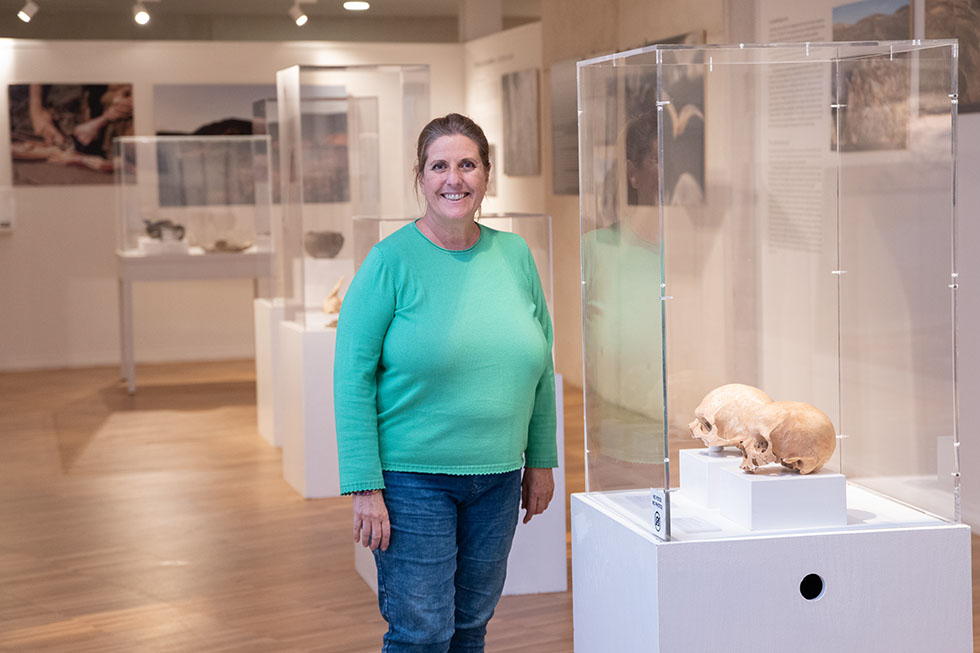
Verónica was recently at the Archaeological Museum of Betancuria, preparing to launch a lecture series titled “The Memory Held by Bones.” Standing beside a replica of an indigenous burial site unearthed at La Solana del Cuchillete, Verónica highlighted the contemporary relevance of her work, especially in light of a recent national debate concerning the exhibition of human remains in museums in Spain.
The Ethical Dilemma of Displaying Human Remains
The ethical implications surrounding the display of mummies and skeletons prompt diverse opinions. When questioned about this, Verónica passionately defends the practice. “For me, it’s the opposite of disrespect,” she asserts. “I’ve dedicated my life to studying these remains to connect with the individuals they belonged to. Remembering them is my way of honoring their existence.”
She highlights the Latin roots of the word “remember,” which means to pass twice through the heart—the seat of our feelings. For Verónica, honoring the past ensures that those who have come before us remain eternal. If we forget them, they cease to exist in our collective memory.
The Fragile Balance of Ancient Life
Verónica emphasizes the interconnectedness between modern people and their ancient counterparts. Despite the passage of centuries, the desires and fears of these past communities closely mirror our own. They faced challenges, had aspirations, and possessed a profound connection to their environment—an intricate relationship that dictated their daily lives.
Her research reveals that the physical attributes of the ancient Canarians were strikingly similar to modern inhabitants. In fact, historical records suggest that Fuerteventura’s population was the tallest in the entire archipelago, a feature that persisted well into the 20th century.
The Struggles of Existence
Life for the ancient Canarians was no easy task. Living in harmony with nature was essential for survival, especially in a place with scarce resources. The challenges of droughts and poor harvests posed enormous threats to their way of life. Verónica notes that their intimate understanding of their environment—knowing where to find water and edible plants—was vital.
She emphasizes their migratory nature, with the Canarians having arrived from elsewhere themselves, highlighting the importance of learning from history as we confront ongoing societal challenges. Understanding our shared past may illuminate our current societal structures and choices.
Insights from the Remains
The bones of these ancient peoples tell stories far beyond mere physical presence. They reveal insights into lifestyles, diets, diseases, and even social dynamics, including instances of violence—tools of social regulation in human communities. Verónica explains how the portrayal of violence is complex; while conflicts arose, the care for injured members also reflects the compassion present within their societies.
An enlightening moment in her research involved the discovery of a young man’s remains, unearthed in a burial site known as La Totina. Despite being brutally killed, the investigation into his past illuminates a culture with their own systems of justice, which may have included capital punishment for serious offenses.
The Invisible Roles of Women and Children
Verónica underscores the forgetfulness of history when it comes to women and children. Traditionally relegated to the shadows, their contributions and roles within ancient societies were as vital as those of men. Recent archaeological findings challenge historical assumptions, recognizing that both genders shared responsibilities, albeit differently.
The unearthing of a burial once thought to belong to a male adult and child was found to be a woman and her daughter, exemplifying the need to revisit historical narratives and acknowledge the significance of all community members.
Preserving Heritage for Future Generations
As she concludes her dialogue, Verónica imparts essential advice regarding the discovery of archaeological remains: before touching anything, it is crucial to contact appropriate authorities and preserve the context of what’s been found. She emphasizes that heritage is a collective responsibility, urging society to embrace and protect its history as a fundamental aspect of identity.
In her words, “Without history and roots, we are nothing.” Through her passion and commitment, Verónica plays an essential role in ensuring that the stories held within bones continue to be told and honored for generations to come.