Fuerteventura’s Entrepreneurial Surge: Harnessing the Island’s Unique Opportunities
Unlocking sustainable growth in the heart of the Canaries.
Fuerteventura, known for its pristine beaches and extensive natural parks, is rapidly evolving into a burgeoning hub for entrepreneurs and startups. With its strategic location, favorable tax regime, and growing digital infrastructure, the island is attracting innovative thinkers determined to make their mark. Local businesses are capitalizing on the tourism influx, pivoting beyond traditional sectors like hospitality to provide essential services and tech-driven solutions that cater to both locals and visitors.
The island’s government is supporting this entrepreneurial drive through various initiatives aimed at fostering innovation. Programs designed to ease access to funding and provide resources for budding entrepreneurs are beginning to pay dividends. Co-working spaces and incubators are blossoming, creating vibrant communities where ideas can grow and flourish. As a result, Fuerteventura is not just a destination for sun-seekers; it is transforming its economic landscape, making it ripe for investment and development in a range of industries from renewable energy to digital marketing.
Looking to the future, the opportunity for Fuerteventura lies in blending its natural assets with modern technological advancements. As sustainable practices take center stage globally, local businesses stand to benefit significantly by adopting green technologies and eco-friendly practices. By embracing innovation, Fuerteventura is positioning itself not only as a remarkable travel destination, but also as a versatile leader in the startup ecosystem. This emerging narrative underscores the island’s potential to thrive economically while preserving its natural charm.
Source: Gobierno de Canarias.
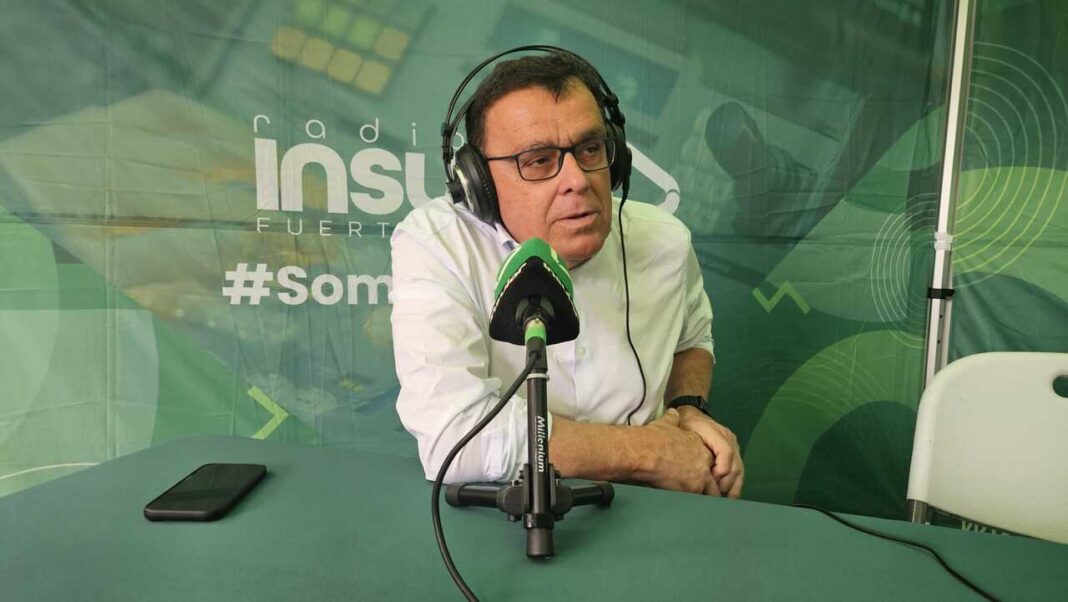
The counselor highlights the work carried out in recent years, since practically 2023, when there were three water emergencies declared in the Canary Islands, including the Majorera Island. According to Miranda, the balance made for Fuerteventura is positive. On the Island, the water distribution system, tanks, pipes and also the desalination plants themselves have been improved, where investment has been made in improving membranes. The priority objective is to ensure that “the water arrives and that it arrives with pressure”; one of the recurring demands of the population in different parts of the territory. One of the key pieces is the Puerto del Rosario treatment plant. Next Monday, he revealed, in the Government Council, “we are going to take the last step of financing the Puerto Rosario treatment plant”; an infrastructure that has been priced again and that will be approved “for a multi-year expenditure of 15 million.” The relevance of the project is not only urban or environmental. It also has a direct impact on the Majorero field, since this action will allow “shortly” to have between 3,000 and 4,000 cubic meters of water that “can be dedicated to the primary sector.” Miranda insists that the rains recorded this year in the Canary Islands have been a relief, especially for the primary sector, but they should not lead to a false sense of security. It is appreciated that it rained and it is recognized that this reduces pressure on the system, but the message is clear, he emphasizes: “we must not let our guard down” because climate change will continue to condition water availability in the coming years. The other major action that is put on the table is the southern desalination plant, defined as a “strategic work.” The next step will be to go through the Insular Water Council to definitively make the location official. “It will be made official that Matas Blancas will be the specific site where this desalination plant will be located,” he announces. This will allow the development of the basic project to be unblocked and, from there, begin the long path of necessary authorizations. It will not be an immediate process. As explained, the drafting of the basic project, entrusted to the Canary Islands Technological Institute, will be accompanied by a period of two or three years to process authorizations linked to access, electrical connections or brine discharges, among others. After different studies to project the most optimal place, and locate the infrastructure in Matas Blancas, “the seed has already been planted.” It will allow Fuerteventura to depend solely on production in the north to reinforce the southern area. Claiming the uniqueness of the Islands to guarantee effective support Manuel Miranda also reported the concern in the Government about the future of European financing for the primary sector in the period 2028-2036. The fear, he confessed, is that the new community distribution, conditioned by the increase in spending on defense and industry, could reduce support for essential activities for outermost regions such as the Canary Islands. For this reason, the demand defended is that the funds aimed at promoting the primary sector arrive “directly from Europe to the Canary Islands”, preserving the unique treatment that the Archipelago has historically had.
Originally reported by www.lavozdefuerteventura.com, rewritten by the Fuerteventura Times AI Editorial Desk.