Fuerteventura Embraces Renewable Energy: A New Era for Local Businesses
Harnessing the sun’s power lays the groundwork for sustainable growth and innovation in Fuerteventura’s economy.
Fuerteventura is embarking on an ambitious path toward sustainability, as local businesses increasingly turn their attention to renewable energy. The island, famed for its stunning natural landscapes and year-round sunshine, is now becoming a beacon for eco-conscious entrepreneurs. With its strategic location within the Canary Islands, Fuerteventura offers abundant opportunities for startups focusing on solar energy, wind power, and other renewable resources to thrive.
The government’s initiatives to incentivize green business practices are paving the way for an impressive transformation in the local economy. By fostering collaboration between established companies and emerging startups, Fuerteventura is crafting an environment ripe for innovation. As energy costs continue to rise globally, businesses that invest in renewable sources not only contribute to a healthier planet but also position themselves to gain a competitive edge. This transition promises to bolster job creation and ensure energy security for the island, making it an attractive location for prospective investors.
Moreover, the community’s commitment to sustainability is resonating with eco-aware consumers both locally and beyond. As more visitors and residents become conscious of their carbon footprints, businesses that embrace green solutions will likely see enhanced brand loyalty and market share. Fuerteventura is not just pivoting towards renewable energy—it’s setting a new standard for what it means to operate a successful and sustainable business in a changing world.
Source: Gobierno de Canarias
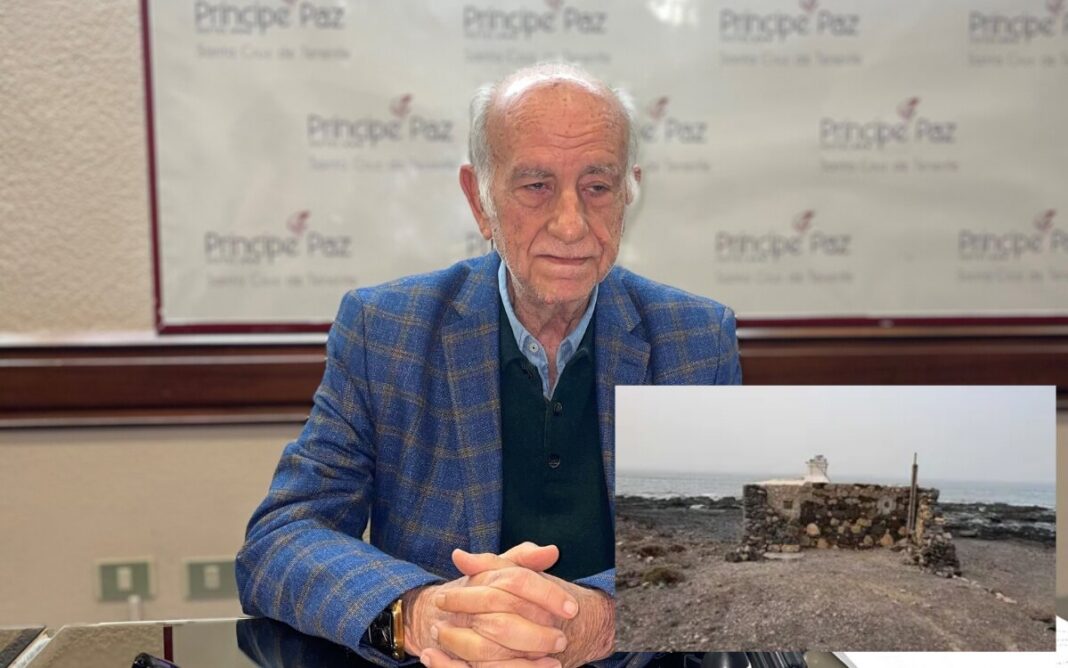
A new Cho Vito? Doña Pascuala Roger’s home, in Cueva de la Negra, “has become a symbol within the Canary Islands.” This is what José Luis Langa González, the family’s lawyer and president of the Canarian Platform of People Affected by the Coastal Law, maintains after the intervention planned by the Coastal Demarcation was paralyzed this Monday, due to a formal defect. The action could not be carried out as the minimum period of five days established for notification had not been respected, since Friday was a holiday in Fuerteventura. Something that, apparently, is unknown to the State Coastal Demarcation, which attended the event with a “totally exaggerated” display, although, Langa highlights, the Civil Guard behaved very well” and maintained “exquisite behavior in the face of this situation.” “On the 21st they did not enter, but the big question and the great unknown is whether they are going to try to enter again. I think so,” he points out. For this reason, he defends the need to continue acting “from all fronts” to prevent the loss of housing. The lawyer fears that a case similar to that of Cho Vito, in Tenerife, could be repeated, where the houses were demolished before subsequent resolutions favorable to those affected were reached. “We cannot allow it to happen like many years ago with the matter of the famous Cho Vito, who demolished the houses and then, after years, they agreed with him when everything was already demolished”, he states. The Coastal Law (1988), with its back to the reality of the Canary Islands In this line, it defends what the Roger family proclaims and that is that the Cueva de la Negra house is around 150 years old. According to Langa, there are documents, images and reports from historians that allow us to prove its history and its heritage relevance. In addition, it points out that it could be the only house that continues standing of those that existed in that area. For Langa, the importance of the property exceeds the particular conflict of the Roger family. He considers that it represents the struggle of numerous coastal areas of the islands against a Coastal Law that turns its back on the reality of the archipelago. It is, he asserts, a “pernicious” regulation because “it does not take into account the history, identity and uniqueness of the Canarian people.” coast, lives on the coast, will die on the coast and has been built on the coast,” he states. The president of the Canarian Platform of People Affected by the Coastal Law clarifies that his defense focuses on homes and centers existing before 1988. “We must clearly distinguish the homes, houses and centers before 1988 from all those constructions that may have been carried out after this date, without authorization and without permission,” he emphasizes. “I do not defend this type through the platform of constructions,” he adds. Langa demands greater involvement from the Canary Islands administrations. He recalls that the Fuerteventura Cabildo requested the Coastal Demarcation to immediately suspend any intervention after detecting the possible existence of archaeological vestiges in the environment. Despite this, he insisted, the operation moved this Monday to Cueva de la Negra, for the second time. That is why he calls on the institutions that must use all possible tools within the legal framework, he emphasizes. “To defend what is ours we cannot “Only more can be done, everything can be done,” he says. A pending modification, in the Congress of Deputies, Langa also asks to unite “the political will, the institutional will and the popular will.” He remembers that the proposal to modify the Coastal Law was approved, unanimously, in the Parliament of the Canary Islands, it passed through the Senate and remains pending processing in the Congress of Deputies. As long as this reform is not approved, the Canarian Platform of People Affected by the Coastal Law demands the suspension precautionary measure of the executions on homes and nuclei prior to 1988. Questioned about the transfer of Costas to the Canary Islands, José Luis Langa maintains that it was incomplete. He says that, despite the “big headlines” that announced the arrival of the powers, when he read the rule he concluded that they were “light powers.” The umbilical cord that united us with the State Administration was not cut.” Until the reform of the Law occurs, the transfer of powers is completed and Costas’s action does not become effective, the lawyer will continue to present writings and appeals to try to stop the eviction, the walling or an eventual demolition. “We are going to continue fighting legally, politically and institutionally,” he assures. “We have to unite our minds, our hands and everything within our reach to ensure that Mrs. Pascuala can live peacefully where all his ancestors lived,” he concludes.
Originally reported by www.lavozdefuerteventura.com, rewritten by the Fuerteventura Times AI Editorial Desk.