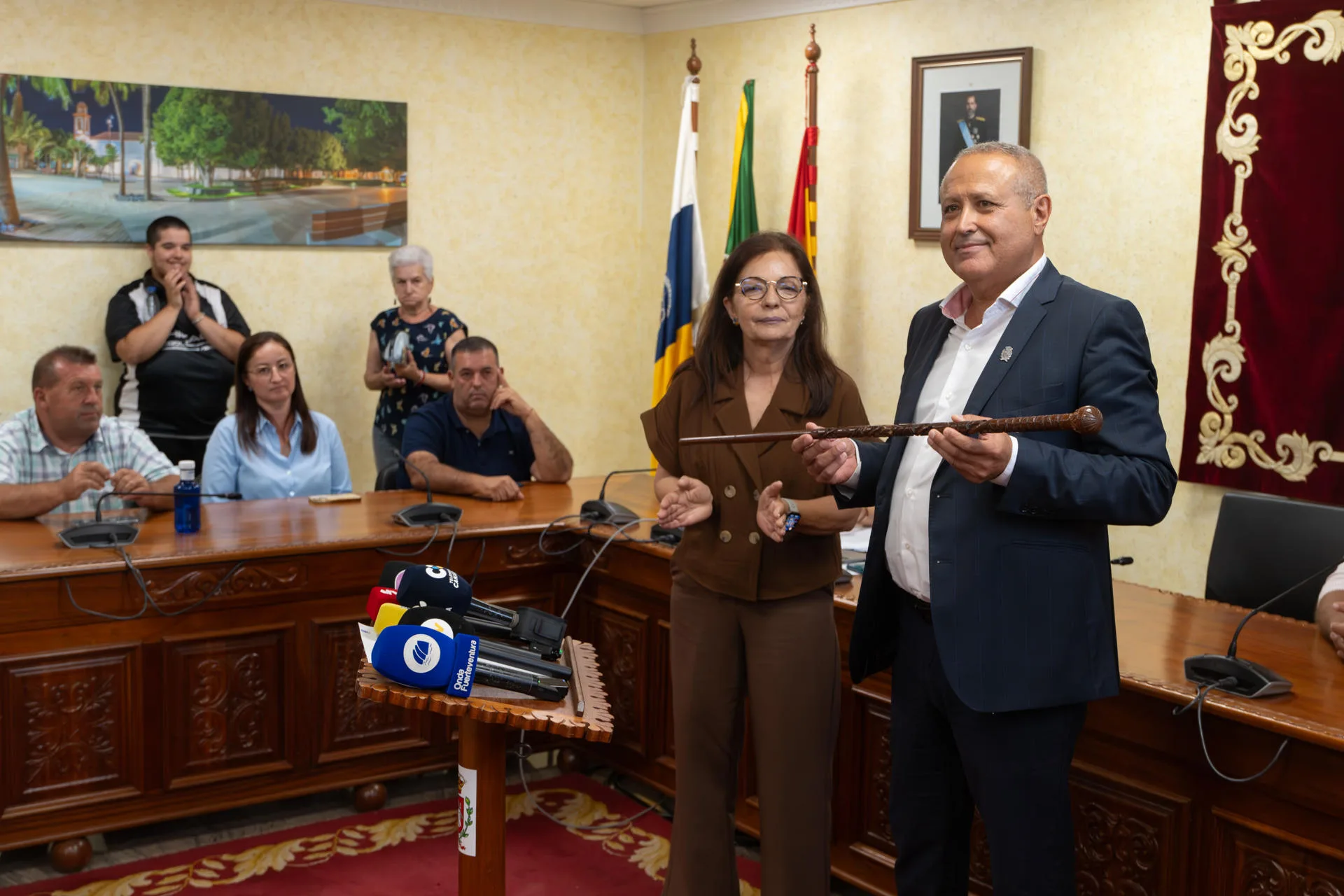
Antigua Town Council Enters a New Political Era
Antigua, a town known for its vibrant community and rich heritage, is stepping into a new chapter of political leadership after a recent motion of no confidence brought a major shift to its governance. On a pivotal Friday, the council saw Matías Peña’s reign come to an end as Juan Cabrera, a representative from Asambleas Municipales de Fuerteventura (AMF), was elected as the new mayor.
The Transition of Power
Juan Cabrera’s ascendancy to the mayoral seat was marked by a decisive vote in the municipal assembly, where he secured nine votes in favor compared to eight against. His election was made possible through a coalition that included members from the Partido Popular (PP), Coalición Canaria, and Contigo, alongside his own AMF representatives. This collaborative effort reflects a significant shift in political dynamics within the town council.
The opposition to Cabrera’s election primarily came from Alternativa por Antigua, which had garnered the highest vote percentage in the 2023 municipal elections, achieving 33.6% and securing seven council seats. The tension between the parties showcases the complexities of local governance, where alliances can shift and power balances are constantly recalibrated.
Priorities of the New Administration
In his inaugural speech, Cabrera made it clear that his administration’s primary focus would be on advancing pending projects essential to the community. Among his immediate goals are the repaving of roads and the renovation of playgrounds, emphasizing practical improvements that directly affect residents. Cabrera identified transparency and integrity as the cornerstones of his governance style, signaling a commitment to accountability that he hopes will resonate with the electorate.
Cabrera passionately asserted that the residents would be the heart of his administration’s activities, vowing to foster a new sense of democracy in Antigua. This populist approach reflects a refreshing emphasis on community engagement, presenting a stark contrast to the previous administration’s more authoritarian style.
Criticism of the Previous Administration
The motion of no confidence was largely driven by dissatisfaction with Matías Peña’s management. Critics highlighted several inadequacies, particularly regarding citizen safety, personnel policies, and the Slow execution of investments from various government bodies. The new coalition’s vocal frustrations about Peña’s leadership style, described as overly personalistic, revealed deep-seated issues regarding accountability and collaboration in governance.
David Alberto from Coalición Canaria vehemently supported the motion, critiquing Peña for what he termed “continuous discrepancies and breaches” in his administration. His concerns about public safety and the anticipated reduction of the local police force due to retirements underscore the pressing challenges facing Cabrera’s new team.
The Challenge of Restoring Trust
Joana Verde, spokesperson for the PP, emphasized the urgent task ahead for Cabrera’s administration—rebuilding citizens’ trust and unlocking stalled projects that are pivotal for Antigua’s development. Giuseppe Signorino of Contigo echoed these sentiments, calling for a fresh start focusing on community needs and effective management.
This delicate balancing act between restoring credibility and addressing long-standing issues will determine the success of Cabrera’s tenure.
Matías Peña’s Response
Meanwhile, Matías Peña, who had presided over Antigua since 2019, opted for a dignified exit, refraining from confrontation during the assembly meeting. Instead, he expressed gratitude for the efforts of municipal employees, reflecting a desire to depart from the political spotlight amicably. His unexpected silence in the face of such a significant political shift adds another layer of intrigue to the ongoing political saga.
The Future of Local Governance
As Antigua embarks on this new phase under Cabrera’s leadership, the implications of these political shifts extend beyond the town council. The recent developments signal a potential evolution in how local governance may adapt to the needs of its citizens. With increasing demands for transparency and efficiency, the new mayor’s approach will be scrutinized closely by constituents eager for tangible improvements in their community.
In this dynamic political landscape, the coming months will be crucial as Cabrera and his coalition navigate the complexities of local governance, striving to meet the expectations of those they serve while addressing the challenges that lie ahead.
:format(jpg):quality(99):watermark(f.elconfidencial.com/file/65c/43d/0ca/65c43d0ca5dbd5ff8f19b44167343db9.png,0,275,1)/f.elconfidencial.com/original/4f5/fef/deb/4f5fefdebfa7425ea76856f395a5bb6a.jpg "Man dies after capsizing a zodiac at Jandía Beach (Fuerteventura)")
