Fuerteventura: A Rising Hub for Digital Nomads
Subheadline: Fuerteventura’s unique blend of natural beauty and connectivity makes it an ideal destination for the remote workforce.
Fuerteventura is transforming into a prime destination for digital nomads, drawing in remote workers who seek both productivity and leisure. With its stunning landscapes and a burgeoning tech scene, the island offers a conducive environment for those who choose to work from paradise. Enhanced internet connectivity and co-working spaces are paving the way for a new wave of professionals looking to trade in their offices for sandy beaches and breathtaking sunsets.
The island’s appeal extends beyond just picturesque views. With a diverse local community and increasing infrastructural support, Fuerteventura is gradually positioning itself as a strategic locale for startups and entrepreneurs. Government initiatives aimed at fostering innovation and entrepreneurship, coupled with a lifestyle that many find irresistible, create a magnetic pull. As a result, local businesses are starting to adapt by offering services tailored to this evolving demographic, from accommodation and leisure activities to networking events.
As more remote workers discover the charm of Fuerteventura, the local economy is set to benefit significantly. Their presence can stimulate growth in various sectors, including hospitality, real estate, and technology. This trend underscores the potential for Fuerteventura to emerge as a leading destination on the global digital nomad map, catapulting the island into higher tiers of economic dynamism. With its ideal combination of natural beauty and digital-friendly amenities, it’s clear that this Canary Island is more than just a vacation spot—it’s becoming a smart business move.
Source: Gobierno de Canarias
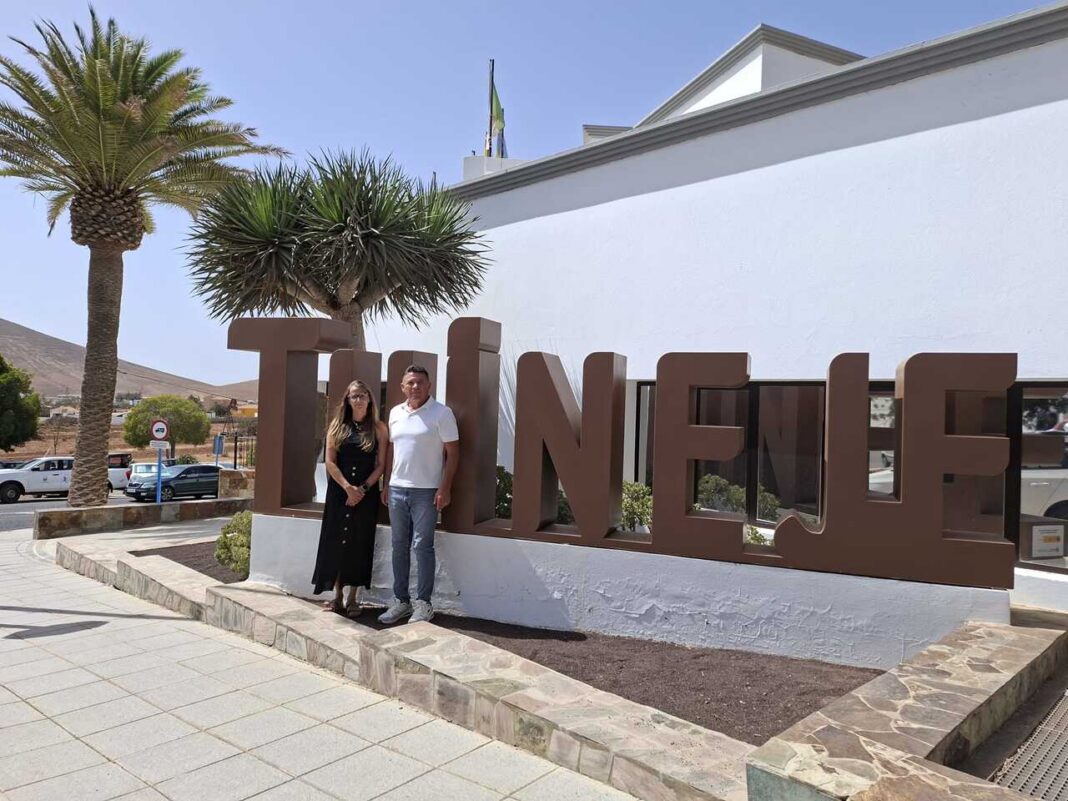
The Plenary Session of the Tuineje City Council unanimously approved the motion presented by Nueva Canarias-Bloque Canarista and Municipal Assemblies of Fuerteventura to demand that the Government of the Canary Islands substantially reinforce medical transportation in Fuerteventura. The initiative proposes incorporating 11 additional ambulances, five for urgent service and six for non-urgent medical transportation. The motion is signed by the councilors of the Mixed Group Carmelo Rodríguez Cabrera, from Nueva Canarias-Bloque Canarista, and Yurena Vera Ramos, from AMF, and is based on a reality that is difficult to hide: Fuerteventura cannot plan its health emergencies as if distances, population growth or the millions of tourists it receives each year did not exist. Currently, the island has nine ambulances for urgent medical transport: seven for basic life support and two for medical purposes. The proposal requests adding another five: three for basic life support and two for medicalized advanced life support, the latter equipped with medical, nursing and emergency health technicians. To these would be added another six units for non-urgent medical transport, going from the current eleven to a minimum of seventeen. Altogether, Fuerteventura would go from the current 20 ambulances to a minimum of 31. The problem is not only how many ambulances there are, but where they are when they are needed. NC and AMF warn that statistics can be misleading when analyzing an island more than one hundred kilometers long. The administrative existence of an ambulance does not necessarily mean that that unit is available when an emergency occurs. When an ambulance from Gran Tarajal has to transport a patient to the Fuerteventura General Hospital, in Puerto del Rosario, it may remain outside its usual area for a prolonged period. During that time, any new emergency requires resources to be mobilized from other points on the island, as long as these are not occupied either. This reality turns distances into a health variable. The motion itself recalls that medical transport workers have been warning for some time about the shortcomings of the system and the need to size it taking into account not only the number of units, but also the kilometers traveled, the time they remain occupied, the territorial dispersion and their real availability. For the proposing councilors, the issue is especially important for Tuineje and for the entire south of Majorero. “An ambulance can appear in a statistic as available for Fuerteventura and, yet, find itself carrying out a transfer dozens of kilometers from the place where the next emergency occurs. Healthcare must be planned from reality and not from a spreadsheet,” they maintain. Three ambulances announced do not solve the problem The proposal recognizes as positive the incorporation of three new ambulances announced by the Government of the Canary Islands, but warns that this increase cannot be used to consider the problem solved. NC and AMF consider that it is up to the Ministry of Health to demonstrate, with data, that the planned provision is sufficient for an island that continues to grow, that supports a significant floating tourist population and whose main centers are separated by great distances. The motion also recalls the enormous weight of basic life support ambulances in the Canary Islands system. During 2025 alone, they assumed 257,376 of the 316,712 urgent medical transport mobilizations in the Canary Islands, 81.3% of the total. A tourist island does not have the same population all year round. Another of the central points of the initiative is to definitively incorporate tourist pressure into health planning. NC and AMF demand that during times of greatest influx of visitors, specific reinforcements of ambulances be activated, as occurs in other tourist territories. “The population that needs health care in Fuerteventura does not remain stable for twelve months. Planning resources using only the registry means deliberately ignoring part of the reality of the island,” they point out. The initiative therefore asks the Government of the Canary Islands for specific reinforcement mechanisms during periods of greatest population and healthcare pressure. The workers also have something to say. The proposal also demands that the Canary Islands Government listen directly to health transport professionals. The workers, the councilors recall, know better than anyone where daily problems occur, how long each trip really lasts and what areas are temporarily worse covered when a unit has to cross the island. The motion requests creating an effective dialogue with its representatives and incorporating their experience into the evaluation, monitoring and planning of the service. NC and AMF also demand that the regional Executive comply with the agreement approved unanimously in the Parliament of the Canary Islands in April 2025 to professionally recognize Health Emergency Technicians (TES), a commitment that, more than a year later, remains pending. The initiative, approved unanimously by the Plenary of Tuineje, demands, in short, that public health stops calculating the needs of Fuerteventura only by counting ambulances and also begins to count distances, times, real population and effective response capacity. Because, when an emergency occurs, the difference between having an ambulance assigned and having it actually available is not a statistical question. It can be a matter of minutes.
Originally reported by www.lavozdefuerteventura.com, rewritten by the Fuerteventura Times AI Editorial Desk.