Fuerteventura’s Blue Flag Beaches: A Summer Highlight for 2026
As summer 2026 approaches, Fuerteventura proudly announces a total of 11 beaches recognized with the prestigious Blue Flag award—a noteworthy increase from the previous year, largely due to the restoration of Corralejo Viejo, located in La Oliva. This development signals a return to the standard witnessed in 2023 and 2024, although it remains shy of the 12 Blue Flags awarded in 2022, the year when the municipality of Antigua attained the accolade for Playa de El Castillo.
The Importance of Blue Flag
The Blue Flag is not just a symbol; it’s an assurance. It indicates that a beach meets specific criteria related to water quality, environmental education, and safety measures. The rejuvenation of Corralejo Viejo is a testament to improved water quality in Corralejo Bay, an area historically plagued by contamination, particularly from old septic systems. Contrarily, the main tourist beach in Antigua, which was awarded the Blue Flag in 2022, has not regained its title despite undergoing five assessments since.
Unique Coastal Characteristics of Betancuria
In stark contrast to many other municipalities, Betancuria’s coastline is predominantly comprised of cliffs, lacking sandy beaches typically suited for the amenities required for a Blue Flag designation. This geographical characteristic limits the services needed, such as lifeguard stations, waste management, and accessibility for individuals with reduced mobility.
Spain’s Leading Role in Blue Flags
Spain stands out on the global stage with a remarkable total of 794 Blue Flags awarded this year, an increase of 44 from 2025. Among these, 52 Blue Flags are attributed to the Canary Islands, making it the fifth-highest region despite being home to one of the only autonomous communities, along with Galicia, that spans over 1,500 km of coastline.
Breakdown of Blue Flags by Municipality
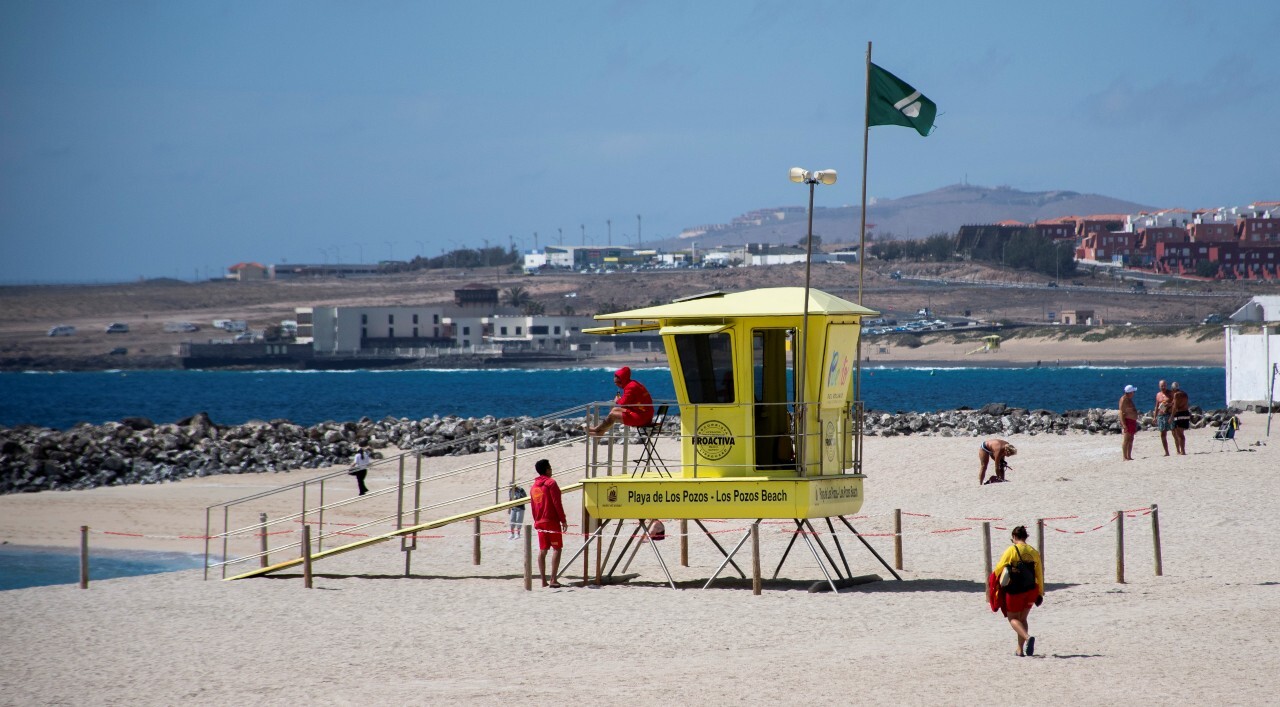
When analyzing the distribution of Blue Flags across Fuerteventura’s municipalities, Pájara leads the charge with four recognized beaches: Butihondo, Costa Calma, El Matorral, and Morro Jable. Following closely, La Oliva boasts three flags, covering Corralejo Viejo, the expansive beaches of Corralejo, and La Concha in El Cotillo. Puerto del Rosario maintains its status with three Blue Flags on Playa Blanca, Los Pozos, and Puerto Lajas, while Tuineje holds on to the Blue Flag for Playa de Gran Tarajal.
The Situation Across the Canary Islands
In the broader context of the Canary Islands, ADEAC has awarded a total of 52 Blue Flags to beaches across 29 municipalities, five more than in 2025. Notably, Gran Canaria tops the list with 15 recognized beaches, followed by Fuerteventura and Tenerife, each with 11. Lanzarote, after regaining four beaches in the municipality of Tías, reaches a total of six flags, with La Palma also claiming six, while El Hierro and La Gomera contribute two and one, respectively.
Absence of Canary Municipalities in Top Ten Rankings
Interestingly, despite being a well-connected tourist destination, no Canary Island municipality features in the top ten of Spanish municipalities by the number of Blue Flags. This honor goes to Sanxenxo, which leads the list with 21 awards, followed by key locations such as Vigo, Águilas, and Cartagena.
It’s essential to recognize that the Blue Flag is not a ranking system, but rather a recognition based on municipal applications. The evaluation measures various criteria, including water quality, environmental education, safety, and accessibility.
Key Factors Influencing Blue Flag Qualification
In 2026, Spain saw a total of 713 beaches apply for the Blue Flag, with 677 achieving the honor—indicating a 95% success rate among candidates. However, the common reasons for rejection include failure to meet the excellent water quality standards and violations of the Coastal Law due to overcrowding or unapproved facilities.
It’s worth noting that the current Blue Flag designation is valid for the 2026-2027 period and is part of a transitional arrangement due to upcoming changes in international accreditation requirements and European regulations. Still, ongoing compliance with criteria and regular monitoring throughout 2027 will determine the continuity of this esteemed recognition.