The Archaeological Discovery on Isla de Lobos: Evidence of Roman Economic Activity in the Canary Islands
Introduction to the Discovery
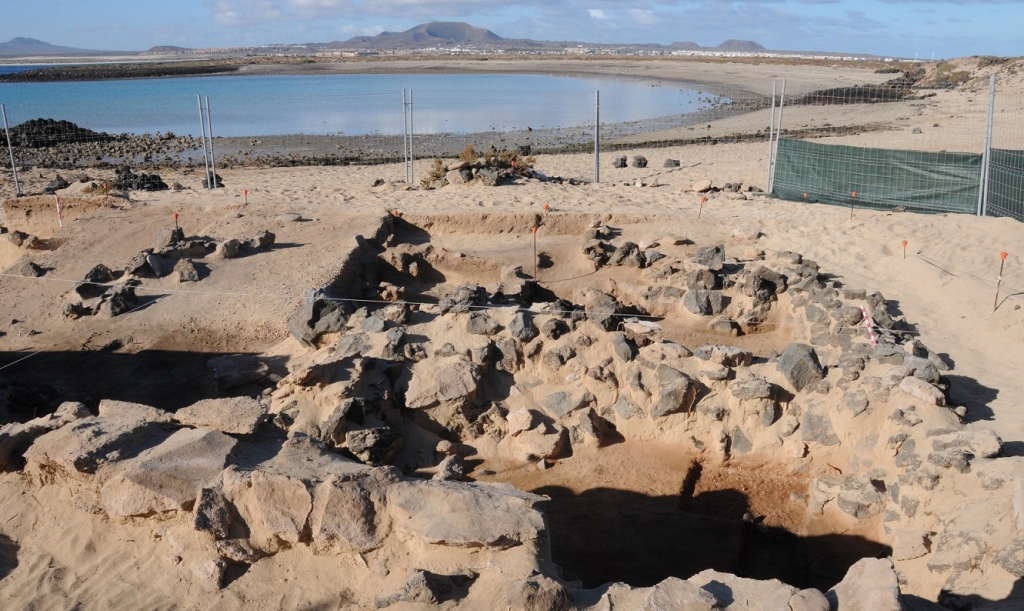
In the spring of 2012, a chance encounter along the shores of La Calera Beach on Isla de Lobos, nestled between Lanzarote and Fuerteventura in the northeastern Canary Islands, unveiled remnants of an intriguing past. Archaeologists stumbled upon ceramic fragments, notably parts of a Haltern 70 amphora, which when analyzed, were found associated with a notable shell accumulation. This shell mound was markedly different from those known in ancient Canarian cultures, revealing species diversity including abundant Patellae and Osilinus, along with significant quantities of Stramonita haemastoma (commonly known as purple snail). The distinctive anthropogenic fracture patterns on these shells hinted at their use in a specialized activity: purple dye production. Thus, Isla de Lobos emerged as a frontier of the Roman Empire’s economic activities during its high imperial period, indicating a significant economic presence in the Atlantic.
The Purple Dye Workshop: Lobos 1
Dubbed the Lobos 1 workshop, this archaeological site represents an advanced technological environment dedicated to the harvesting and production of purple dye, a luxury item highly sought after in ancient times. The shell heaps discovered feature MURICIDAE, with Stramonita haemastoma dominating at over 95%, alongside Hexaplex duplex and various other mollusks. The presence of these shells, exhibiting deformations typical of purple dye extraction processes, is correlated with combustion structures, thereby confirming its industrial purpose.
A Unique Specialization
One of the defining characteristics of the Lobos workshop is its singular focus on MURICIDAE, resulting in an impressive assemblage of material evidence that starkly contrasts with other known purple dye workshops, which usually report a more limited array of items. The proximity of this workshop to potential supply bases, such as Gades (modern-day Cádiz), suggests that it was likely a significant site for the production of purple dye, especially during a period classified as late-republican to early-imperial.
The Production Process
The journey of creating purple dye begins with the meticulous collection of MURICIDAE, from which the dye is extracted. This mollusk secretes a purplish pigment that has been historically coveted. Scholars believe that the workers, informally known as murileguli, refined their extraction strategies over time, utilizing various methods to gather these mollusks from the diverse marine environments surrounding the island. Manual harvesting during low tide or using nets were probable techniques deployed to maximize their catch.
Harvesting Techniques
Evidence suggests that workers employed multiple fishing techniques, including the use of bait such as mussels to lure the snails. Remnants of other mollusks found at the site, alongside descriptions in classical texts like Aristotle’s History of Animals, support this assumption, illustrating the depth of knowledge ancient Romans possessed regarding marine ecosystems.
Processing and Tools
The initial steps in processing involved securing the captured snails in enclosures fixed in the tidal zones of La Calera, resembling natural nurseries familiar in aquaculture. Archaeological analysis has revealed significant remains of tools used in the extraction and refinement processes. The workshops yielded numerous basalt anvils and hammers—tools essential for breaking open the shells to access the precious gland from which the dye is derived.
The Craftsmanship of the Murileguli
These tools were thoughtfully crafted from local materials, usually basalt or occasionally calcareous stone, showing wear and tear typical of intensive use. The anvils featured depressions designed for shell processing, while hammers possessed polished surfaces indicating prolonged engagement in the production process. Each murileguli likely had their own set of tools tailored for the precise handling of each mollusk they processed.
The Final Steps: Dye Extraction
The actual extraction of the dye involved a sequence of precise actions—cracking open the shells, removing the gland, and undergoing an alkaline treatment that might have included potash or lime to soften the secretions. Following this, the dye would be prepared in lead cauldrons, with evidence at the site confirming on-site production capabilities. Fragments of such cauldrons and combustion structures indicate that the workshop effectively facilitated multiple stages of dye processing, from extraction to preparation.
Unique Vessel Structures
Fragments of cauldrons, described as having reddish-purple adherences, point to their use in the dye extraction process. Notably, such artifacts represent some of the few of their kind uncovered in archaeologically significant contexts, with comparisons made to similar finds in other regions, underlining their distinctive role in producing dyes on a commercial scale.
Limitations of Current Understandings
Despite the wealth of evidence, it remains unclear how the final dye product was prepared for distribution. The absence of definitive containers or in-situ processing materials makes it challenging to ascertain whether the dye was sold as a viscous semi-solid, powder, or in other forms. This ambiguity could suggest that textiles reached the island, but archaeological indications of such activities are currently lacking in the record.
Distinguishing Lobos
In summary, the archaeological findings on Isla de Lobos paint a vividly nuanced picture of Roman economic activity in the Canary Islands. The site stands out as a specialized purple dye workshop, illuminating the intricate processes that ancient workers employed to craft this coveted color. The workshop’s outstanding assemblages, coupled with advanced processing techniques, mark Lobos as a significant point on the map of Roman industries within the Atlantic realm.
Author:
Mercedes del Arco Aguilar
Conservator of Archaeology
Archaeological Museum of Tenerife
Further Reading
For those interested in delving deeper into the subject, the following references offer valuable insights into the archaeological methodologies and historical contexts of the Isla de Lobos findings:
- Afonso Vargas, J. Á. (2016): “Microarchaeological Study of Sediments from Lobos 1 Site,” in A Roman Purple Workshop at the Ecumene’s Limits, Lobos 1 (Fuerteventura, Canary Islands). Preliminary Results.
- Bernal Casasola, D.; Alonso Villalobos, C.; and Gracia Prieto, F. J. (2011): “Aquaculture in Baetica: Insights from the Possible Aquarium-Vivero at the Haliéutic Site of Cabo Trafalgar (Cádiz),” Zephyrus, vol. 67, pp. 145-160.
- Cebrián Guimerá, R. (2016): “Lobos 1: A Purple Workshop,” in A Roman Purple Workshop at the Ecumene’s Limits, Lobos 1 (Fuerteventura, Canary Islands). Preliminary Results.