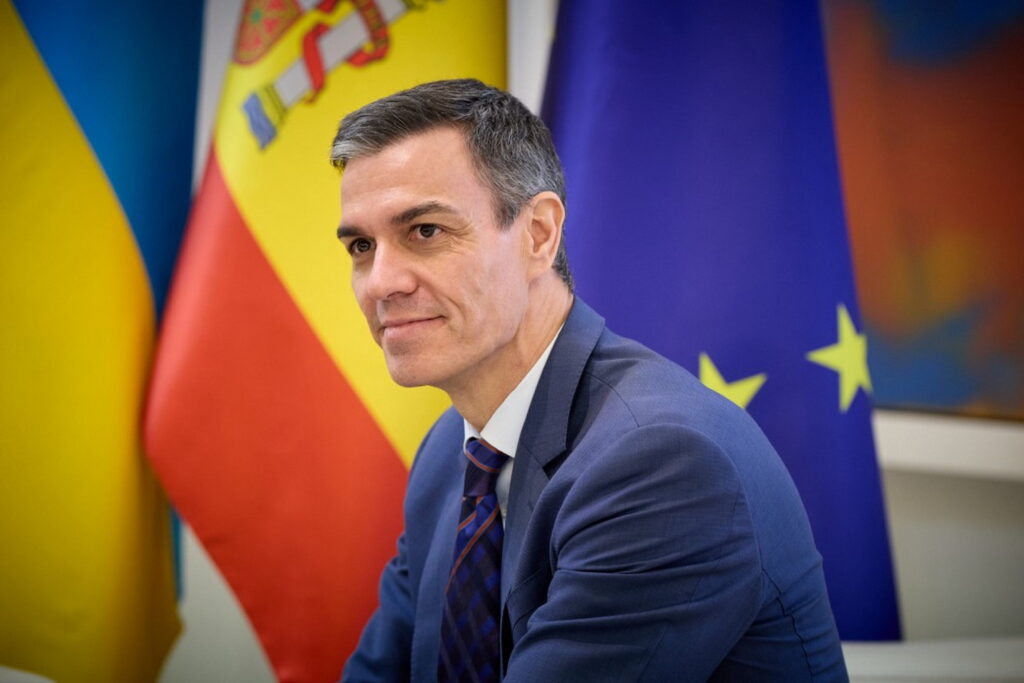
Pedro Sánchez: A Rising Star Amidst European Political Turmoil
In a landscape marked by widespread mistrust and declining approval ratings for many European leaders, Spanish Prime Minister Pedro Sánchez stands out as a notable exception. According to the latest April 2026 survey conducted by Polling Europe Euroscope, Sánchez is the only leader among major EU countries to see his approval ratings rise, showcasing a significant shift in public sentiment.
The Survey Insights
The survey, which was conducted between March 25 and April 7, 2025, reveals a stark contrast in the approval ratings of various political figures. While Sánchez’s ratings have improved, other prominent leaders such as Ursula von der Leyen, Giorgia Meloni, and Friedrich Merz have experienced double-digit declines. This trend highlights a growing sense of disillusionment among the electorate regarding their leaders.
Sánchez’s Approval Ratings
Sánchez’s approval rating now stands at 36%, with 13% of respondents viewing him “very positively” and 23% “fairly positively.” Notably, 28% of those surveyed expressed a negative opinion of him. His Approval Index is the only one to show a clear positive gap of +8 points, indicating a favorable shift in public perception. This marks a 4-point increase from the previous survey in February, suggesting that Sánchez is resonating well with a significant portion of the electorate.
Support for Sánchez is particularly strong among voters from the Socialists and Democrats (S&D) group, where 60% express positive opinions, and 51% from The Left. However, his appeal appears to wane among voters from the Greens (49%) and Renew Europe (39%).
Emmanuel Macron: A Mixed Bag
While Sánchez enjoys a rising approval rating, Emmanuel Macron remains the most popular leader in absolute terms, with 41% of respondents expressing positive opinions. However, this comes with a caveat: 44% of those surveyed hold negative views of him, resulting in an overall approval rating of -3. Macron’s support is notably strong among the “Ursula Majority,” with 60% approval from S&D and Renew Europe voters, and 50% from Green supporters.
Giorgia Meloni: A Significant Setback
Italian Prime Minister Giorgia Meloni faced a considerable drop in her popularity, with her approval rating falling to 36%—a staggering 11-point decline in just one month. Despite this setback, Meloni retains strong backing within the conservative and sovereigntist camp, garnering 62% approval among voters in the European Conservatives and Reformists (ECR) group.
Ursula von der Leyen: A Declining Reputation
In a concerning trend, Ursula von der Leyen, President of the European Commission, has reached a low point in the survey, with 50% of respondents expressing negative opinions. Her approval rating has plummeted to -17, marking a 12-point drop since February. This decline is the sharpest among the leaders analyzed, reflecting a growing discontent with her leadership.
Friedrich Merz and Other Leaders
Friedrich Merz, leader of the German opposition, also experienced a significant decline, with his approval rating falling to -10, a 14-point decrease from the previous month. His current approval stands at 29%. Meanwhile, Donald Tusk and Roberta Metsola have seen their ratings worsen, with Tusk at -9 and Metsola at -3. Metsola, in particular, struggles with limited recognition, as 51% of respondents admit they do not know enough about Maltese politics to form an opinion.
Methodology of the Survey
The survey was conducted online using the Computer-Assisted Web Interview (CAWI) method, targeting a representative sample of the EU population aged 18 and over. A total of 5,386 complete interviews were collected, ensuring a proportional distribution across the 27 EU countries. This methodology allows for a nuanced understanding of public opinion across different demographics and regions.
The Broader Context
The findings of this survey paint a complex picture of the current political landscape in Europe. While Sánchez’s rising approval ratings may signal a shift towards more favorable views of leadership in Spain, the overall trend of declining trust in key figures raises questions about the future of governance in the EU. As political leaders grapple with these challenges, the implications for policy-making and public engagement remain significant.