The Spanish Pacific: A New Perspective on Global History
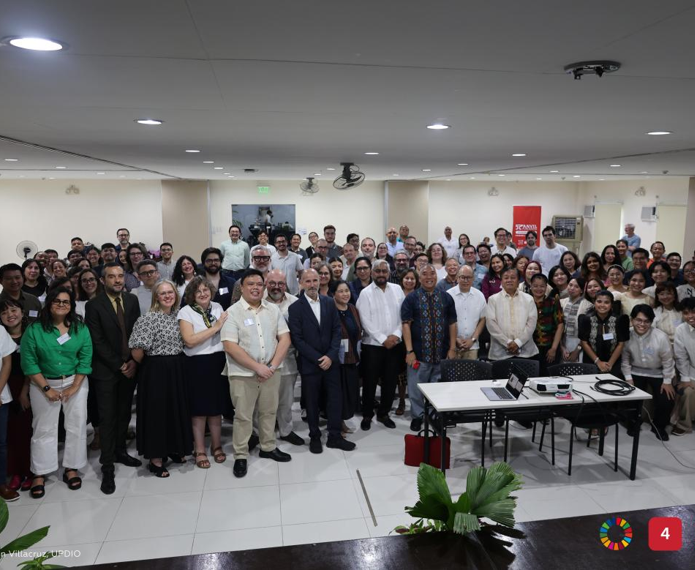
Recent studies by historians, scholars, and researchers focusing on the Spanish Pacific and the Galleon system from the 1400s to the 1800s have led to a compelling conclusion: “the center of the world is not the Atlantic but Asia, particularly China.” This assertion was a key takeaway from the international conference titled The Spanish Philippines: First International Conference of the Society for Early Transpacific Studies, hosted by the University of the Philippines Diliman (UPD) Department of European Languages (DEL).
The Galleon System: A Conduit of Global Interconnectedness
In his opening remarks, UPD Chancellor Edgardo Carlo L. Vistan II emphasized the significance of the Galleon system as a vital conduit for the exchange of people, ideas, technologies, artistic traditions, religious practices, and cultural identities. He noted that this system represented one of the earliest examples of global interconnectedness, where oceans were perceived as links rather than barriers. This perspective challenges the traditional Eurocentric view of history, placing the Philippines at the forefront of global commerce during this period.
The Role of the Philippines in Global Trade
Ricardo Padrón, PhD, the president of the Society of Early Transpacific Studies (SETS) and a professor at the University of Virginia, elaborated on the Philippines’ role as a “front door” to global commerce. He highlighted that navigation during this era was centered in Southeast Asia, positioning the Philippines as a crucial player in the transpacific trade network. This assertion underscores the importance of the region in shaping global economic dynamics long before the modern era.
Lost in Translation: Understanding Filipino History
Ambeth R. Ocampo, PhD, a prominent historian and professor at Ateneo de Manila University, delivered a keynote lecture titled Lost in Translation: Filipinas in the Spanish Pacific. He pointed out that contemporary Filipinos often feel disconnected from their past due to the complexities of time, language, and translation. Ocampo raised intriguing questions about the historical determination of the number of Philippine islands, famously stated as 7,107. He noted that even the National Mapping and Resource Information Authority (NAMRIA) could not definitively explain how this number was established, revealing gaps in historical understanding.
Cultural Exchange and Historical Misconceptions
Ocampo also shed light on the cultural exchanges that occurred during the Spanish colonization. He noted that many vegetables mentioned in the traditional Filipino song Bahay Kubo were not endemic to the Philippines but were introduced through various means, including pre-colonial trade and Spanish colonization. This observation highlights the fluidity of cultural identity and the complexities of historical narratives.
In a thought-provoking statement, Ocampo suggested that rather than framing Ferdinand Magellan’s arrival in the Philippines as a “discovery,” it would be more accurate to say, “Magellan arrived in the Philippines in 1521.” This reframing encourages a more nuanced understanding of historical events and their implications.
A Gathering of Scholars
The conference, which took place from June 9 to 11 at the Child Development Center Auditorium of the UPD College of Home Economics, was a significant event in the academic calendar. It attracted over 100 participants from various parts of the world, including America, Europe, and Asia. UPD College of Arts and Letters Dean Jimmuel C. Naval remarked on the conference’s importance, recognizing it as a testament to the university’s commitment to the study of Spanish language and culture.
Notable Speakers and Contributions
The conference featured a diverse lineup of speakers, including Ambassador Daniel Hernández Joseph of Mexico, Ambassador Miguel Utray of Spain, and Undersecretary Maria Theresa B. Dizon-De Vega from the Department of Foreign Affairs. Their contributions enriched the discussions and underscored the importance of international collaboration in understanding the historical complexities of the Spanish Pacific.
The inaugural conference of the Society for Early Transpacific Studies not only highlighted the historical significance of the Galleon trade but also opened new avenues for research and dialogue about the interconnectedness of cultures and economies across the Pacific. As scholars continue to explore these themes, the understanding of the Spanish Pacific’s role in global history will undoubtedly evolve, offering fresh insights into the past and its relevance to contemporary society.


