
Recently Demolished Old Wastewater Treatment Plant Paves the Way for Long-term Reed Control
The Saladar de Jandía stands as a key natural symbol of Fuerteventura, a unique ecosystem that has, time and again, been saved from the clutches of speculative urbanization that rose to prominence in the late 20th century. Its preservation not only reflects the local community’s concerns for biodiversity but also its commitment to environmental studies.
In this legislative term, the Cabildo of Fuerteventura renewed efforts to eradicate elements that distort the ecological harmony of this crucial natural haven. The strategy involves not only the removal of architectural eyesores, such as the defunct wastewater treatment plant, but also a concerted effort against invasive plant species that threaten the local flora. One of the main targets of this initiative is “carrizo” (cane), supported by funding from the Canarias Feder Program 2021-2027.
The demolition of the old wastewater treatment facility was a significant step towards naturalizing the area. With measures to curb the invasion of carrizo, including fencing to block freshwater access to the Saladar, the ongoing work strives to uphold the legacy of previous generations who fought for the preservation of this treasure, “El Saladar de Jandía.”
Stay Updated: Get Information from Fuerteventura and Canary Islands for FREE
If you wish to receive this and all other information from Fuerteventura and the Canary Islands punctually through our WhatsApp channel—note that this is not a chat and does not allow for comment exchanges—simply sign up for Noticias Fuerteventura’s channel.
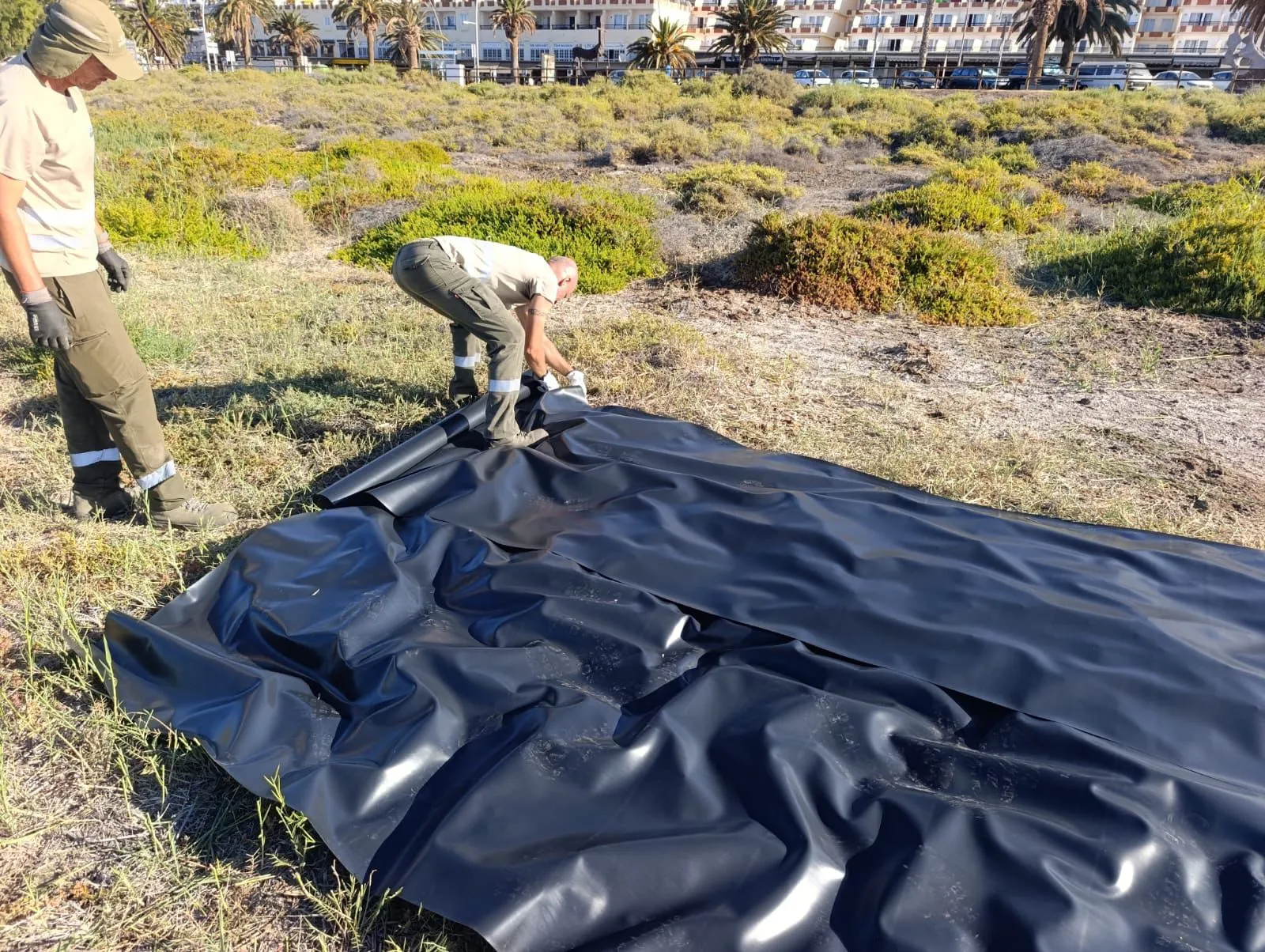
To tackle environmental issues effectively, a new technique is currently employed. This involves cutting the carrizo at its base and subsequently covering the exposed area with special textile sheets designed to prevent the invasive plant from regrowing. This innovative approach aims to restore the natural balance within the Saladar ecosystem.
Once the resurgence of the carrizo is under control in designated sections of El Saladar, the next focus will be to encourage the return of native flora to reclaim the areas previously overrun by invasive species. This process is set to unfold over a six-month period, covering approximately 2,000 square meters. The initiative promises to not only restore the landscape visually but also facilitate a return to biodiversity, which is vital for the ecological health of the region.
Efforts such as these not only safeguard Fuerteventura’s unique biodiversity but also enhance the environmental resilience of the island. The local community stands united in its commitment to protecting these natural resources for future generations to enjoy.