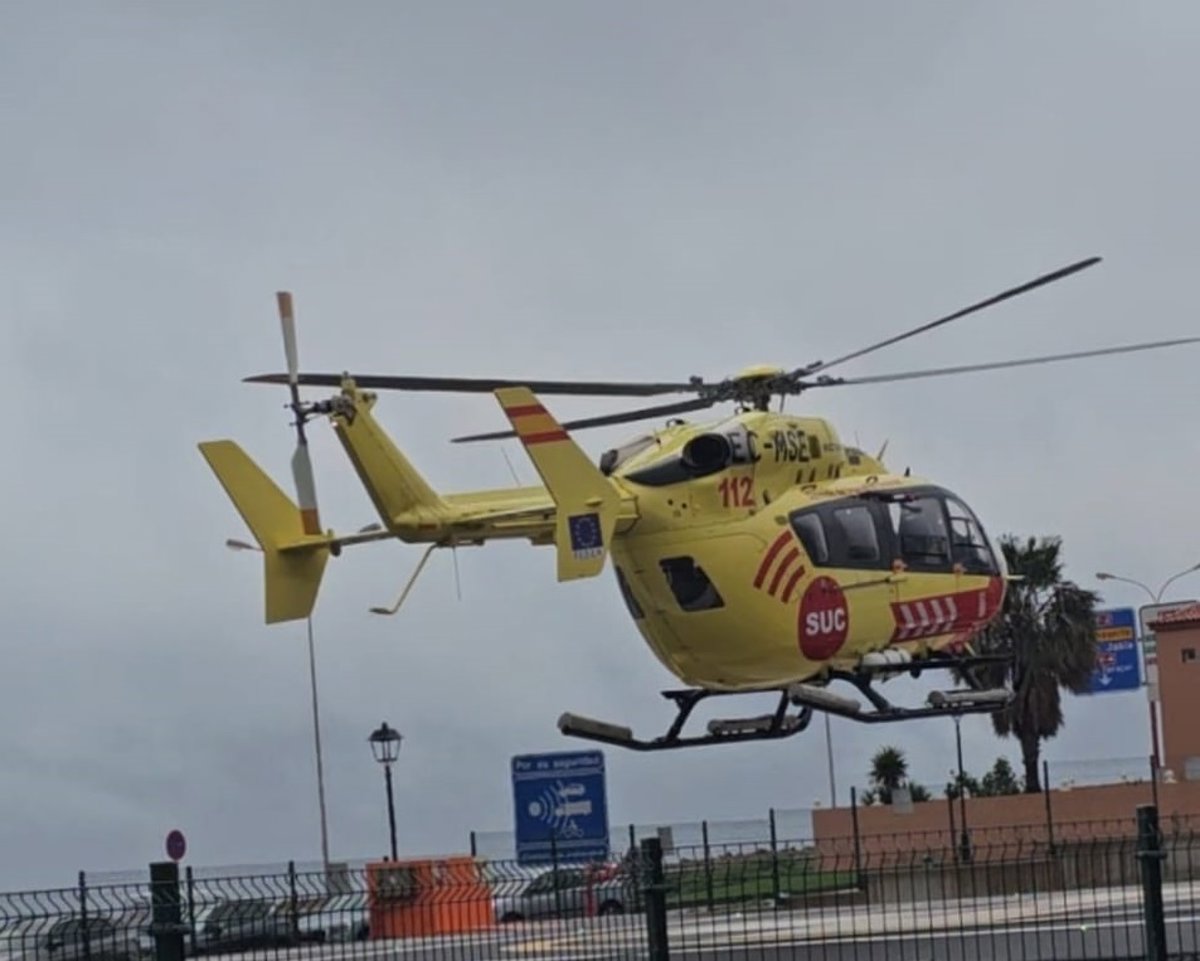
New Medical Helicopter Serves Fuerteventura: A Lifeline for Urgent Care
On March 23, the medical helicopter operated by the Canary Islands Emergency Services (SUC) based in Fuerteventura marked its inaugural mission just one hour after being officially presented. This advancement promises to enhance medical response capabilities throughout the islands, particularly for urgent cases that require specialized attention.
First Mission: A Race Against Time
The urgency of the situation became evident when, at 10:15 AM, the SUC’s healthcare coordinator received a call from a medical center in Jandía. They were requesting an immediate transfer of a 68-year-old man to the General Hospital of Fuerteventura for specialized emergency care. Unfortunately, the ambulance stationed in the south of the island was busy transporting another critical patient. As a result, the decision to activate the newly launched helicopter was made swiftly, underscoring the importance of having rapid medical transport available.
A Strategic Addition to the Medical Arsenal
This helicopter is the third one to be incorporated under a new contract aimed at bolstering healthcare across all the islands in the archipelago. Its operational base at Fuerteventura Airport is particularly strategic, given the geographical challenges that define the region. The presence of this helicopter not only enhances medical response times but also offers crucial support to the eastern islands, which often experience geographical isolation during emergencies.
Second Mission: Extending the Reach of Specialized Care
The helicopter’s capabilities were further demonstrated later that same day, at 9:00 PM, during its second mission. This time, it facilitated the urgent transfer of a critically ill patient from the Nuestra Señora de Los Reyes Hospital in El Hierro to the Hospital Universitario Nuestra Señora de la Candelaria in Tenerife. Such transfers are vital for patients requiring specialized treatment that may not be available locally.
Versatile Emergency Response
Equipped for quick medical intervention, the SUC’s medical helicopters are vital in multiple scenarios. They are mobilized not only for critical transfers between hospitals but also for urgent evacuations from inaccessible regions. Whether addressing severe medical conditions resulting from accidents or delivering specialized treatments, these helicopters are designed to extend life-saving capabilities across the diverse and often challenging terrain of the Canary Islands.
Conclusion: A Transformative Step for Healthcare
The introduction of the SUC medical helicopter marks a significant advancement in emergency medical services within the Canary Islands. Its rapid deployment capabilities and strategic location promise to improve patient outcomes in urgent situations, effectively transforming the landscape of healthcare delivery in an area that demands both speed and efficiency.