Legal Developments in Environmental Protection: Case of Góngora Gutiérrez Sand Extraction Project
On March 6, 2026, the High Court of Justice of the Canary Islands (TSJC) made a pivotal ruling regarding the environmental impact assessment (EIA) for the proposed sand extraction project by the company Góngora Gutiérrez. This decision, delivered from the court’s base in Las Palmas, has significant implications for both the environment and future industrial projects in sensitive areas.
Background of the Project
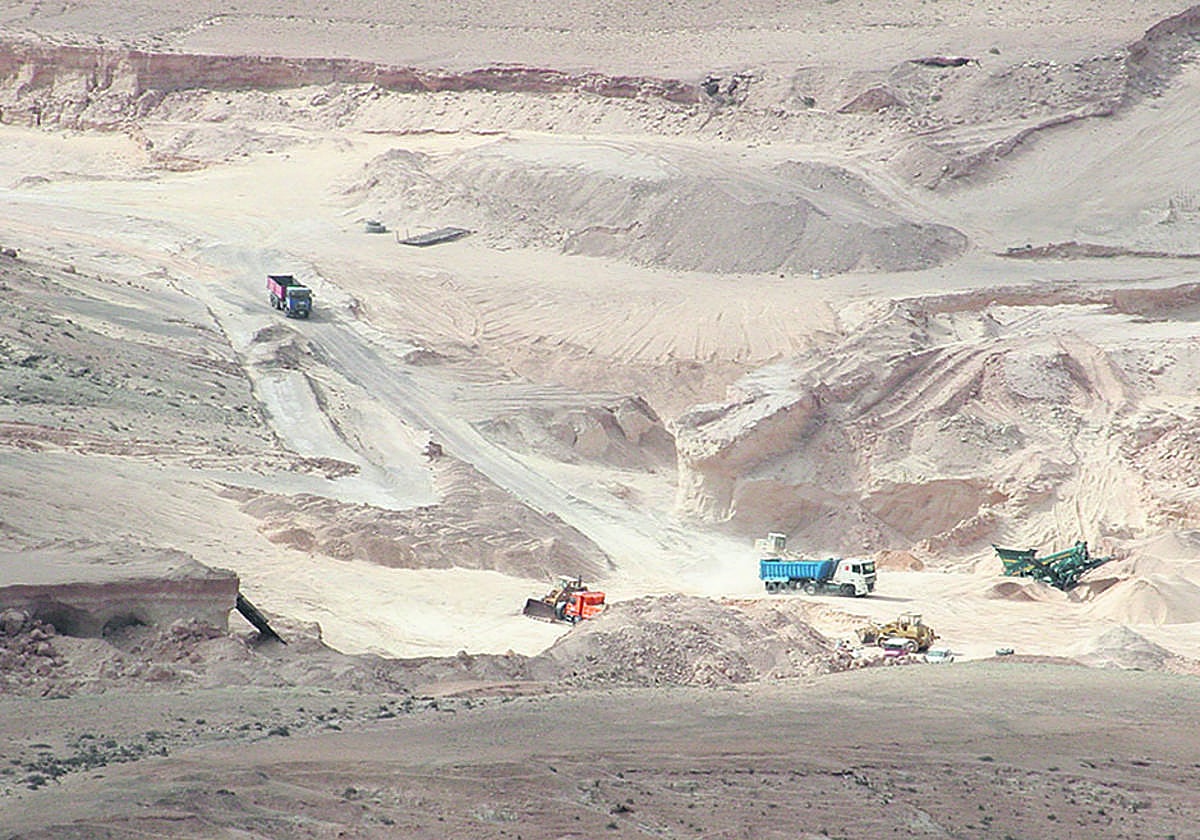
The contested project, named “Modification and Improvement of the Extraction of Resources from Section C) calcareous sands,” is identified in mining dossier C-36 and is intended for operation at the Arenera de Góngora and Gutiérrez site in Lajares. However, the proposal has sparked considerable debate due to its environmental implications, particularly in a region rich in biodiversity.
Inadmissibility of the Proposal
The court ruled to inadmit the company’s request for a new environmental impact review. This decision was primarily based on previous assessments indicating that environmental concerns had already been addressed in 2018 under dossier number 2018/561-ORD. The findings from that previous evaluation were decidedly unfavorable, leading to the denial of a similar project. The court emphasized that the documentation presented to support the new request lacked substantial differences from previous submissions.
Key Findings of the Court
One of the striking elements of the court’s ruling was its focus on the project’s geographical and operational consistency. The court noted that while the new proposal reduced the affected area from 801,700 square meters to 118,889 square meters, it still fell within the same perimeter as the earlier project. This meant that the environmental parameters that had been flagged in previous assessments remained unchanged.
Considering the time span of approximately 30 years for operational phases and similar annual production estimates, the court determined that the project did not propose significant alterations that would potentially mitigate environmental impacts.
Legal Framework of the Decision
The TSJC invoked Article 39.4 of the Environmental Assessment Law (Law 21/2013, enacted December 9, 2013). This provision authorizes the court to dismiss requests for projects that have previously undergone unfavorable EIAs when found to be similar in substance. The court’s stringent adherence to legislative guidelines underscores the seriousness with which it views environmental preservation.
Environmental Concerns in Protected Areas
A significant aspect of the court’s ruling focused on the ecological context of the extraction site. The project sits on rustic land that is part of a Special Protection Area (ZEP) for birds, known as Lajares, Esquinzo, and the coast of Jarugo. This designation highlights the area’s importance not only for avian species but also in the broader context of biodiversity conservation.
The tribunal pointedly mentioned that despite the reduced extraction area, no favorable assessments had been secured from relevant local authorities, including the Fuerteventura Island Council or the Biosphere Reserve Council. Notably, one of the primary threats to the hubara bird population on Fuerteventura has been identified as sand extraction, which adds another layer of complexity to the case.
Core Environmental Principles
The court reiterated that a mere reduction in the area affected by the project does not inherently ensure improved environmental outcomes. The decision highlights the need for comprehensive assessments that take into account the ecological significance of the surrounding environment over time.
In emphasizing that the project’s method of sand extraction and its operational duration remained virtually unchanged, the ruling clearly establishes that substantial modifications would be required to warrant a different assessment outcome.
Ongoing Legal and Environmental Implications
The TSJC’s decision underscores the tension between industrial development and environmental conservation in desiring to maintain ecological integrity. With public interest in preserving sensitive habitats growing, this ruling may set a precedent for future cases involving similar discrepancies between developmental ambitions and the principles of environmental protection.
This significant court ruling demonstrates the judiciary’s commitment to uphold environmental laws and safeguard natural habitats. As challenges regarding land use and environmental impacts continue to arise, it is crucial that both the legal framework and public awareness evolve in tandem to ensure sustainable development practices in the Canary Islands and beyond.