The World Premiere of The Violinist at Annecy: A New Era for Singapore Animation
Next week, the Annecy International Animation Film Festival will host the world premiere of The Violinist, a groundbreaking Asia-Europe co-production directed by Ervin Han and Disney veteran Raúl García. This ambitious project marks a significant milestone for Singapore, being the country’s first animated feature in over fifteen years and the first official co-production between Singapore and Spain.
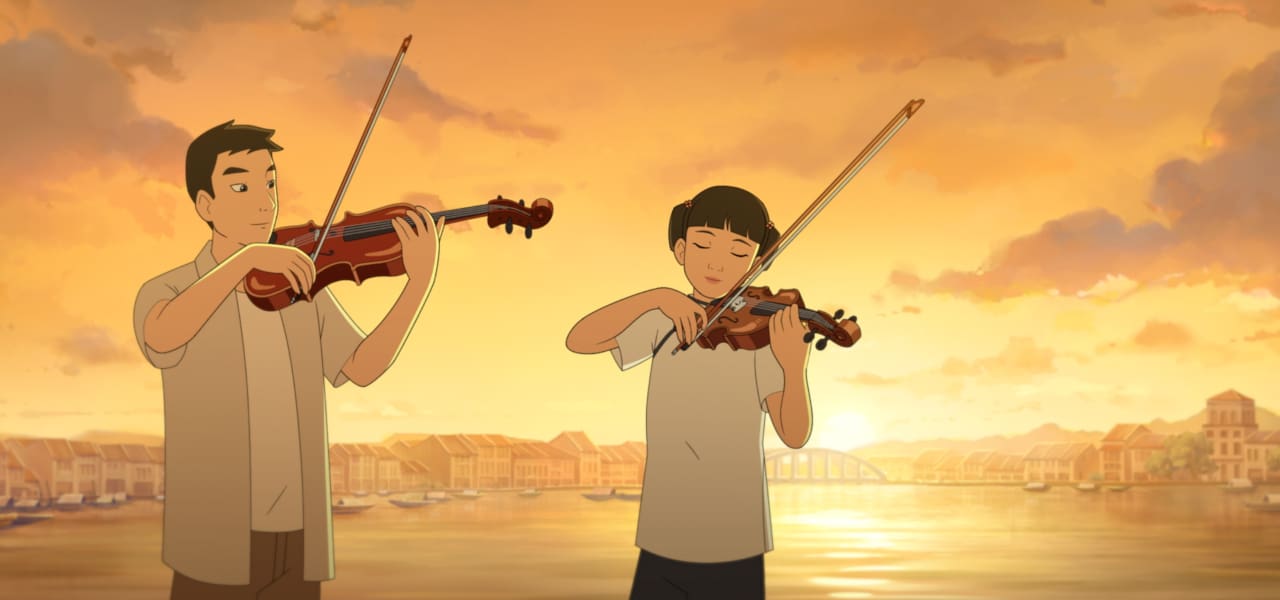
Produced by Singapore’s Robot Playground Media, Spain’s TV ON Producciones, and Italy’s Altri Occhi, The Violinist is a sweeping historical drama that spans nearly eight decades. The film begins in pre-WWII Singapore and unfolds against the backdrop of the Japanese occupation and the subsequent social and political upheaval across Southeast Asia. At its heart lies the poignant story of two childhood friends, Fei and Kai, whose lives are shaped by war, separation, and an enduring bond through music.
A Unique Co-Production Journey
The co-production structure of The Violinist is particularly noteworthy. Raúl García explains that navigating this collaboration was complex, especially given that it was the first of its kind between Spain and Singapore. “Financing a feature entirely on its own is very difficult for Singapore,” he notes. As more countries joined the project, the team had to ensure that the film maintained a seamless visual and narrative style, despite the diverse backgrounds of the artists involved.
Ervin Han, co-founder of Robot Playground Media, emphasizes the importance of telling local stories through animation. He began writing The Violinist on New Year’s Day in 2017, aiming to create a film that reflects Singapore’s rich history and culture. The partnership with García, who brought extensive experience to the project, was pivotal in shaping the film’s direction.
A Story Rooted in History and Emotion
The Violinist is not merely a historical account; it delves into how individuals experience and remember history. Han explains that the film focuses on the emotional truths of life—its bittersweet nature—rather than presenting a straightforward historical narrative. Music serves as a vital thread that connects the characters, allowing audiences to feel their struggles, dreams, and hopes.
García adds that music acts as a third protagonist in the film, enriching the emotional landscape. The score, crafted by composers Ricky Ho and Isabel Latorre, evolves alongside the characters, reflecting their journeys of self-discovery and grief.
Exploring Lesser-Known Histories
The film also aims to shed light on a part of World War II history that is often overlooked. Han points out that many international audiences are unaware of Southeast Asia’s colonial past and its impact on the region. By placing a love story within this historical context, the filmmakers hope to provide a deeper understanding of the complexities of that era.
García notes that Western narratives of World War II often overshadow the experiences of Southeast Asia. By humanizing these historical events through the lens of personal relationships, The Violinist seeks to offer a more nuanced perspective.
Innovative Animation Techniques
The film’s visual style is a blend of hand-drawn animation and CG-enhanced environments, a choice that reflects its ambitious scope. García explains that while the film primarily employs 2D animation to suit its emotional tone, certain sequences required the scale and dynamism that 3D environments can provide. The team experimented extensively to find a balance that maintained the film’s visual integrity.
Han is particularly proud of the collaboration with artists across Southeast Asia, which allowed for a diverse range of animation techniques. The use of CG is strategic, appearing only in key moments to heighten their impact.
Authentic Musical Representation
One of the standout features of The Violinist is its commitment to accurately depicting violin performances. García reveals that a dedicated team spent a year and a half studying violin techniques to ensure authenticity. This attention to detail is crucial, especially given the film’s title and its focus on music as a central theme.
The film’s score is designed to resonate emotionally with audiences, serving as both a narrative device and a reflection of the characters’ inner lives. The collaboration between Eastern and Western musical traditions underscores the film’s universal themes.
A Visual Identity of Its Own
The visual design of The Violinist draws inspiration from various artistic traditions, including anime, but it does not seek to imitate any single style. Instead, the filmmakers aimed to create a unique visual identity that complements the story. The historical montage sequences, for instance, utilize a visual language reminiscent of period illustrations, enhancing the film’s authenticity.
Han and García’s vision for The Violinist is not just about animation; it’s about creating a rich tapestry of human experiences, underscored by the universal language of music. As the film prepares for its premiere at Annecy, it stands as a testament to the potential of cross-cultural collaboration in animation, promising to resonate with audiences around the world.