U.S. Stock Market Slump Amid Fed Rate Hike Speculation
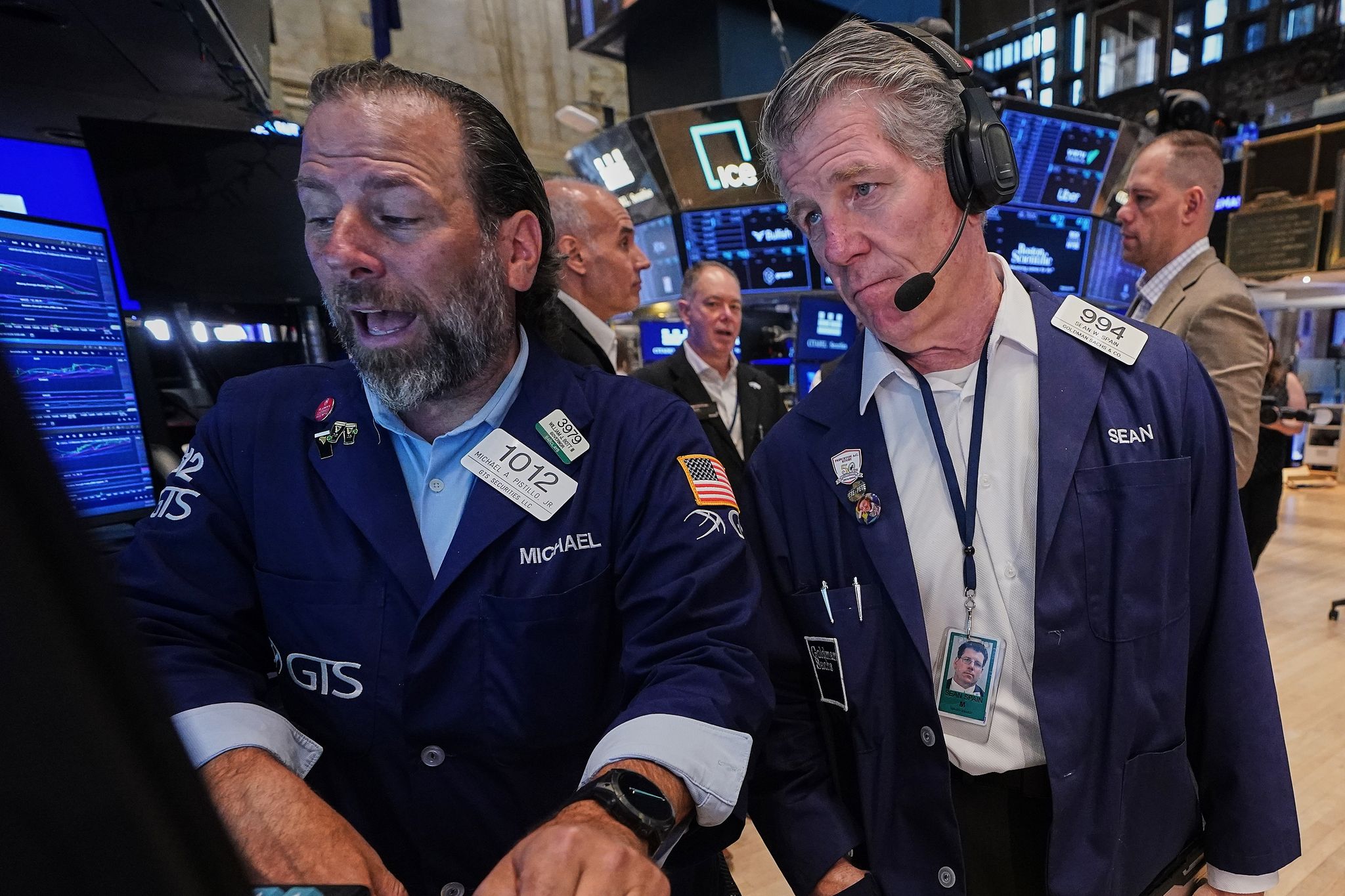
On a turbulent Wednesday in New York, U.S. stocks experienced a notable downturn, primarily driven by growing speculation that the Federal Reserve may implement interest rate hikes later this year to combat inflation. While higher interest rates can help curb rising prices at the cash register, they also have the potential to slow economic growth and negatively impact investment prices.
Market Reactions to Fed Projections
The S&P 500 index fell by 1.2%, erasing earlier modest gains after the Federal Reserve released projections indicating that nine out of 18 policymakers anticipate at least one increase in the main interest rate this year. The Dow Jones Industrial Average, which had surged by 280 points in the morning, ultimately dropped by 507 points, or 1%. The Nasdaq composite fared slightly worse, sinking 1.3% as investor sentiment shifted.
New Leadership at the Fed
A significant voice in the Fed’s decision-making process is its new Chairman, Kevin Warsh. In his inaugural press conference, Warsh refrained from providing a forecast for the federal funds rate through 2026. He emphasized a desire to revamp how the Fed communicates with financial markets and the general public. One of his first actions was to eliminate the practice of “forward guidance,” which had previously hinted at future interest rate movements.
Warsh expressed a preference for Wall Street to react to economic data—such as inflation and job market reports—based on their intrinsic value rather than on anticipated Fed responses. This shift aims to foster a more organic market reaction to economic indicators.
Wall Street’s Uneasy Response
Following the Fed’s latest projections, Wall Street’s reaction was anything but stable. Stocks fluctuated significantly, reflecting a sense of unease among investors. Although the Fed decided to maintain the federal funds rate at its current level during this meeting, the uncertainty surrounding future hikes loomed large.
Bond Market Movements
In the bond market, Treasury yields saw an uptick. The yield on the 10-year Treasury, which influences mortgage rates and other loans, rose to 4.49% from 4.43%. Meanwhile, the two-year Treasury yield, which closely tracks expectations for Fed actions, jumped to 4.21% from 4.05%. This increase in yields indicates that traders are increasingly betting on at least one rate hike this year, with the probability now sitting at 84%, a significant rise from 59.5% the previous day.
Global Economic Concerns
The global bond market is also feeling the pressure from high yields, driven by inflation concerns. These rising yields threaten to slow down economies and undermine investment prices across various sectors.
Stock Market Highlights
In the stock market, notable declines were observed among major tech companies. SpaceX, which had recently made headlines with its stock market debut, saw a 4.9% drop—its first loss since going public. Microsoft, Amazon, and Nvidia also contributed to the S&P 500’s decline, with drops of 3.8%, 3.5%, and 1.3%, respectively.
In contrast, La-Z-Boy experienced a remarkable surge of 14.8% after reporting stronger-than-expected profits and revenues, buoyed by sales from newly opened stores. However, the company’s CFO, Taylor Luebke, cautioned that they maintain a “measured view” of the broader sales environment.
Retail Sales and Consumer Sentiment
Despite the stock market’s struggles, a report released on the same day indicated that retailers across the U.S. experienced revenue growth at a faster pace in May than economists had anticipated. This development offers a glimmer of hope that robust consumer spending could help support the economy. However, persistent high inflation has left many U.S. shoppers feeling discouraged about their financial situations.
Oil Market Stability
In the oil market, prices remained relatively stable after earlier declines, buoyed by optimism surrounding a tentative U.S.-Iran deal aimed at restoring global oil flow. Iran is expected to take steps to reopen the Strait of Hormuz, which would facilitate crude oil deliveries from the Persian Gulf and potentially alleviate inflationary pressures. The price of Brent crude oil rose by 0.7% to $79.55, still above its pre-war price of around $70 but significantly lower than the $100-plus price seen just weeks ago.
Global Market Overview
Internationally, stock markets displayed mixed results. In Asia, South Korea’s Kospi index jumped by 1.6%, while Hong Kong’s Hang Seng index fell by 0.7%. These fluctuations reflect the ongoing uncertainty and varied responses to economic indicators across different regions.
As the financial landscape continues to evolve, investors remain vigilant, closely monitoring the Fed’s actions and their implications for the economy and markets.