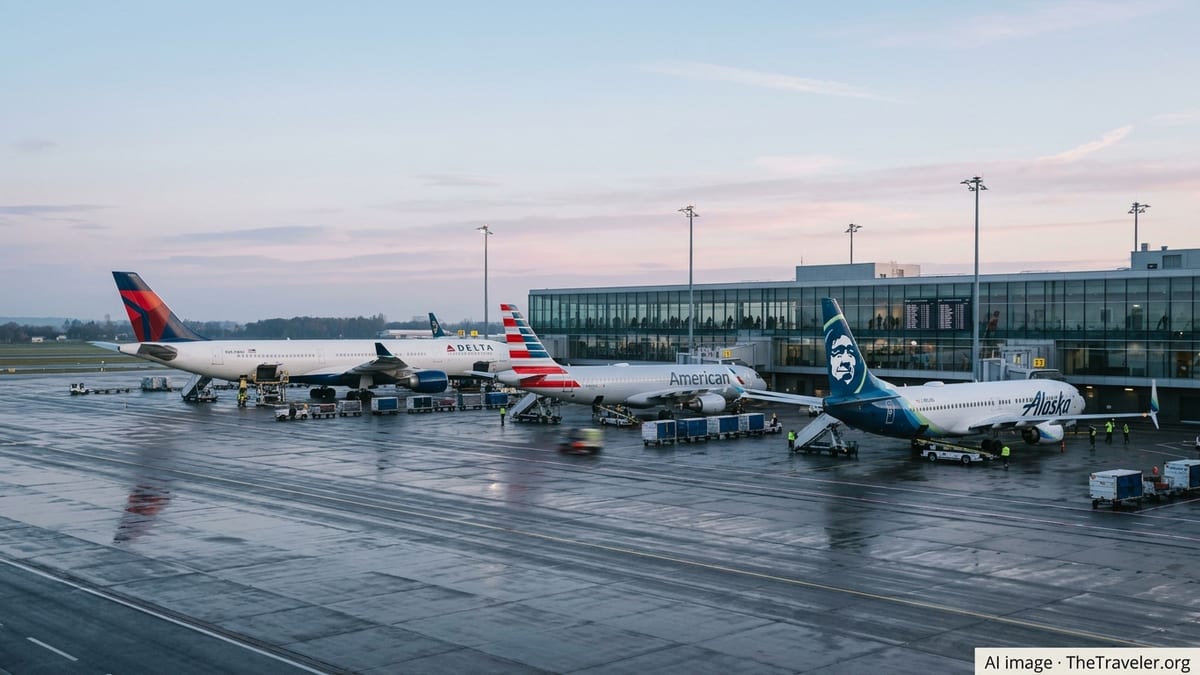
Emergency Safety Assessments Disrupt US–Europe Flights to Athens and Madrid
Emergency safety assessments at Delta Air Lines, Alaska Airlines, and American Airlines have led to targeted disruptions on select US–Europe routes, particularly affecting services to Athens and Madrid. This situation has raised concerns about consumer confidence and the resilience of tourism flows to Greece and Spain as the crucial summer peak season approaches.
Targeted Safety Reviews Ripple Across Transatlantic Networks
Recent operational updates indicate that Delta, Alaska, and American Airlines have intensified safety checks on parts of their long-haul fleets. While the majority of US–Europe flights remain unaffected, routes connecting US hubs with Athens and Madrid have experienced isolated cancellations, aircraft substitutions, and revised departure times. This adjustment is necessary to accommodate additional inspections, reflecting a broader industry trend of heightened scrutiny regarding aircraft maintenance practices, especially for long-haul flights.
Airlines have been reshuffling aircraft and crews to create inspection windows, a process that can temporarily strain transatlantic networks where aircraft typically operate on tight schedules. Athens and Madrid, which heavily depend on summer leisure demand, are among the first secondary European gateways to feel the impact of these changes.
Industry tracking data reveals that some flights have been removed from schedules days in advance, while others have been adjusted closer to departure. This results in a patchwork of disruptions that complicate advance planning for both individual travelers and tour operators relying on predictable flight schedules into Greece and Spain.
Athens and Madrid Face Fresh Uncertainty Ahead of Peak Season
The timing of these schedule changes is particularly sensitive for Greece and Spain. Tourism authorities in both countries have been projecting solid demand for the upcoming summer season, with North American arrivals anticipated to be a key growth driver following several record-breaking years for Mediterranean destinations. Athens has emerged as a popular starting point for island itineraries, while Madrid serves as both a cultural hub and a major connecting point to other Spanish cities.
Any sustained reduction in nonstop flights from the United States could undermine these optimistic forecasts. Even minor disruptions on US–Athens and US–Madrid routes can push travelers toward alternative gateways like Rome, Paris, or Barcelona, where flight capacity may be more stable. This shift in demand can have cascading effects, influencing hotel occupancy rates, local transport bookings, and tour availability in both Greece and mainland Spain.
Despite these challenges, tourism demand remains robust. Many travelers are opting to rebook via indirect routes rather than cancel their trips altogether. Travel agencies report that clients are increasingly shifting to one-stop itineraries through Northern and Western European hubs when nonstop options from US carriers become uncertain. This suggests that the immediate impact may be felt more in terms of yield and profitability for individual airlines rather than a sharp decline in visitor numbers to Greece and Spain.
Passenger Experience: Rebookings, Longer Routings, and Rising Anxiety
For passengers, the emergency safety reviews have resulted in a mix of cancellations, aircraft changes, and schedule shifts, often communicated on short notice. Travelers booked on nonstop flights to Athens and Madrid are increasingly being offered alternative routings through partner hubs or different European cities, which adds connections and longer journey times to itineraries that were initially marketed as direct flights.
Consumer forums and travel discussion boards reflect a growing sense of anxiety among travelers who are already concerned about weather disruptions and air traffic control delays across Europe. While many passengers appreciate the airlines’ cautious approach to maintenance, the operational uncertainty is prompting some to delay bookings or choose more flexible tickets that allow for last-minute changes.
Travel insurers and online travel agencies are also becoming involved as customers seek clarity on coverage for schedule changes driven by safety concerns. Policies often treat these disruptions differently from weather events or labor actions, and the latest wave of checks is testing how clearly those distinctions are communicated to travelers heading to Greece and Spain in the coming months.
Implications for Airlines, Alliances, and Competing Carriers
The operational strain linked to emergency safety reviews is forcing Delta, Alaska, and American Airlines to reassess their transatlantic deployment strategies, particularly on routes that are heavily leisure-focused. Athens and Madrid, which rely more on seasonal demand than corporate traffic, are particularly vulnerable to reductions when airlines need to free up aircraft for other markets or create additional maintenance slack in their fleets.
Alliances and joint ventures may help mitigate the impact. Partner airlines based in Europe can sometimes backfill capacity or carry rebooked passengers on shared itineraries, preserving connectivity even when a US-operated nonstop flight is temporarily removed from the schedule. However, coordinating these alliances takes time, and available seats during peak summer weeks are limited, meaning some travelers will inevitably face less convenient options.
These disruptions also create opportunities for rival carriers. European low-cost and hybrid airlines have been steadily increasing their presence in Mediterranean markets, and any extended capacity gap from major US carriers into Athens or Madrid could accelerate this trend. Competing North American airlines not affected by the current wave of safety checks may also see an opportunity to strengthen their brands in Greece and Spain by emphasizing schedule reliability and alternative gateways.
What Travelers to Greece and Spain Should Expect Next
Looking ahead, publicly available schedule data and airline communications suggest that the emergency safety reviews are likely to remain intense in the near term, with some potential for stabilization as inspection backlogs clear and maintenance programs settle into a new rhythm. However, the situation remains fluid, and further targeted adjustments on US–Athens and US–Madrid routes cannot be ruled out, especially around high-demand travel dates.
Travelers planning trips to Greece or Spain in the coming months should be prepared for possible changes, including equipment swaps, time shifts, or rebookings via intermediate hubs. Opting for flexible booking options, allowing for longer connection buffers, and closely monitoring airline notifications may help mitigate the practical impact of ongoing safety-related checks.
For the tourism sectors in Greece and Spain, these developments serve as a reminder of how closely their fortunes are tied to transatlantic airline operations. While demand fundamentals remain strong, the ability of carriers to provide consistent, reliable service into Athens and Madrid will be crucial in determining how confidently the upcoming peak season unfolds for hotels, tour operators, and the broader visitor economy.