Fuerteventura Times – Business & Startups
Resilient Entrepreneurship: Driving Economic Growth in Fuerteventura
In a climate where uncertainty often mars economic landscapes, Fuerteventura’s entrepreneurs are emerging as resilient pioneers, reshaping the business narrative of the island. Local startups are not just weathering challenges; they are thriving by harnessing innovation and adaptability, proving their vital role in the region’s economic revival.
A surge in digital startups and eco-conscious businesses is characterizing this transformation. Entrepreneurs are tapping into Fuerteventura’s unique strengths—its stunning natural landscapes and growing global connectivity—by developing sustainable tourism initiatives and tech-driven services that resonate with both locals and visitors. This strategy positions them not only to compete but also to redefine how business is conducted in the Canary Islands.
Investment in local talent is also on the rise, as seasoned professionals are returning to their roots to launch ventures and mentor the next generation of innovators. With a tight-knit community fostering collaboration and creativity, Fuerteventura’s startup ecosystem is gaining momentum, suggesting a promising future for those willing to take the plunge into entrepreneurship.
Source: Gobierno de Canarias
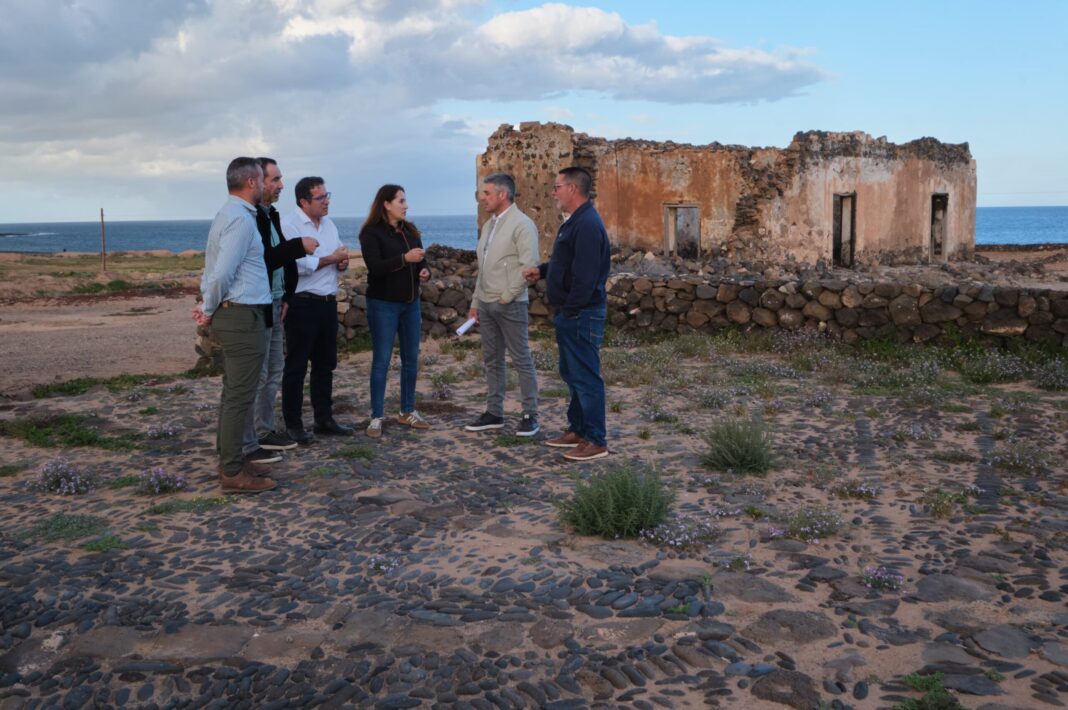
The Government of the Canary Islands contributes 100,000 euros for the recovery project of La Rosa de Juana Sánchez The Government of the Canary Islands, through the Department of Agriculture, Livestock, Fisheries and Food Sovereignty, has allocated 100,000 euros to support the project promoted by the Puerto del Rosario City Council for the recovery of La Rosa de Juana Sánchez with the main objective of safeguarding and enhancing the heritage of Fuerteventura. This emblematic space, located in the La Hondura neighborhood and cataloged with a Comprehensive Protection Degree, is one of the last complete testimonies of the architecture and life associated with the municipality’s traditional Majorera cattle ranch and has great historical value. This recovery, which began in 2025 with cleaning work carried out by local and island corporations, will include the removal of debris and restoration of artifacts and historical elements in dry stone, in order to adapt the space for social, cultural and educational purposes. The intervention, with a budget of 161,000 euros, will structurally consolidate the property and recover its surroundings with absolute fidelity to traditional techniques. The councilor of the area, Narvay Quintero, visited this week the land where this enclave is located together with the president of the Cabildo of Fuerteventura, Lola García, the mayor of Puerto del Rosario, David de Vera Cabrera, the general director of Livestock of the Government of the Canary Islands, Andrés Díaz Matoso, the insular councilor of Agriculture, Livestock and Fisheries, Enrique Pérez, and the councilor of the primary sector of the municipal corporation, David de León, to learn the details of the work that is being carried out. they are going to carry out. During the visit, Narvay Quintero stressed that this action “goes beyond the recovery of an architectural complex, because it involves rescuing an essential part of our history linked to livestock and the primary sector.” In this sense, he highlighted that “spaces like La Rosa de Juana Sánchez remind us how agricultural activity conditioned our way of life, from the organization of the territory to the way we lived and interacted,” and stressed that “livestock farming has been one of the economic and social pillars of Fuerteventura for generations, and recovering these enclaves is also recognizing the efforts of those who have sustained the Canarian countryside and preserving that legacy for future generations.” Lola García highlighted the value of the property, “which represents an exceptional testimony of traditional Majorera architecture. Therefore, since last year from the Cabildo and with the collaboration of the City Council, we carried out an intervention to clean and condition the space, which has allowed us to launch the project for its comprehensive rehabilitation.” For his part, David de Vera commented that “from the Port of Rosario we work so that the primary sector not only has a future in our municipality from a productive point of view, but also from the recognition of its cultural, identity and territorial value”, promoting the creation of neighborhood meeting spaces and through collaboration between administrations as a tool to achieve that objective. La Rosa de Juana Sánchez allows us to understand how life was structured around livestock exploitation. More than a simple rural home, it is a complete livestock settlement, representative of the organization of the territory for raising livestock, mainly goats of the Majorera breed. Its owner, Juana Sánchez Pérez, was known in oral memory for her ability to “make the land yield”, a reference to the inseparable link between livestock management and pastoral resources. With more than 25,800 square meters, it preserves all the elements linked to this activity, such as a pastoral home, corrals and a network of stone walls to delimit pastures, in addition to a threshing floor, part of the mixed subsistence economy that supported livestock families. The rehabilitation seeks to convert the space into the future Interpretation Center of the Majorera Livestock and Pastoral Landscape, which will allow not only to preserve this heritage, but also to reinforce its function as a space for dissemination and enhancement of the primary sector, contributing to keeping the memory of rural culture alive. This project will have a museum and exhibition area, a livestock classroom and multipurpose and event spaces, in addition to being an information point and the beginning of signposted itineraries that explain the pastoral landscape, which would make it a key nerve area for the activity and culture of the sector. This action is part of the strategy of the regional Executive aimed at protecting the agricultural and livestock heritage of the Canary Islands, understanding these spaces as essential elements of the identity of the Archipelago and as a tool to connect the past, present and future of the primary sector. It thus consolidates a commitment to sustainable development, population fixation and active conversation about the main island heritage.
Originally reported by radiosintonia.com, rewritten by the Fuerteventura Times AI Editorial Desk.