Emergency Situation in the Canary Islands Due to Heavy Rains
Recently, the Government of the Canary Islands announced an update regarding the emergency situation caused by heavy rainfall and the risk of flooding, particularly focusing on Gran Canaria. This declaration follows a pattern of extreme weather that has put several island communities on high alert.
Current Alerts and Warnings
As of early morning hours, Gran Canaria has been marked with a state of emergency due to relentless rains. In addition, the authorities have raised alerts for Tenerife, El Hierro, La Palma, and La Gomera as weather conditions remain precarious. Meanwhile, Fuerteventura and Lanzarote are on a pre-alert status, indicating that although conditions are not currently critical, they could escalate quickly.
These measures reflect a proactive approach taken by the regional government, relying on crucial data and projections from the Spanish Meteorological Agency and other resources. The updates are made in line with the Emergency Flood Risk Plan for the Canary Islands (Peinca), demonstrating a commitment to safeguarding lives and property.
Understanding the Weather Conditions
The emergency measures were first implemented early Tuesday when Gran Canaria experienced extreme rainfall, with certain locations recording over 150 liters of water per square meter within just a few hours. Fortunately, as the day progressed, there was a decline in rainfall intensity, allowing the government to lower the warning status from emergency to alert. However, renewed convective activity from a weather front identified as Therese has since prompted the reactivation of emergency status for Gran Canaria and alerts for Tenerife.
On the following Wednesday, the islands were expected to be positioned closely to the center of the storm front, resulting in disorganized yet possibly severe rainfall scattered across the archipelago. This unpredictability raises concerns for the residents in the affected areas.
Immediate Impact of Rainfall
The rainfall has been significant. Early reports indicate that over 20 liters of rain per square meter fell in various locations on La Palma and Tenerife during the night. The highest totals recorded by meteorologists came from astronomical observatories: 117.6 liters on Roque de los Muchachos and 84.2 liters at Izaña. The previous day alone saw a staggering 242.8 liters at Roque de los Muchachos in just 24 hours.
Risk of Further Flooding
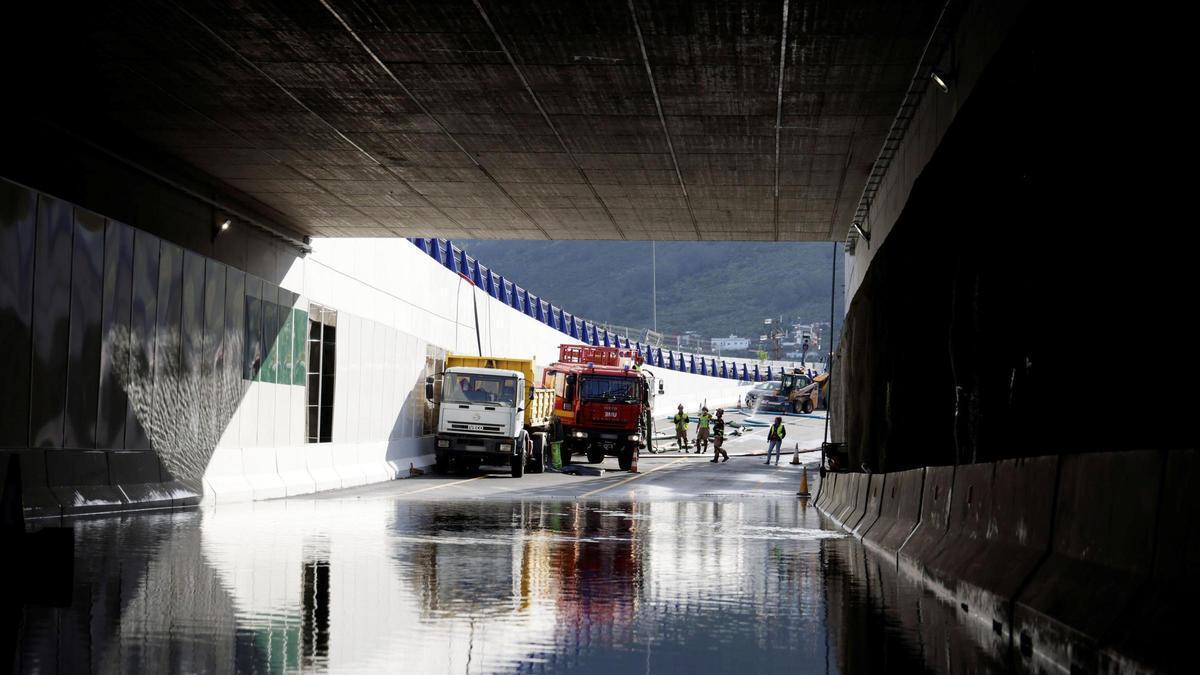
With the ground already saturated from extensive rainfall, further precipitation poses a heightened threat of flooding. Areas particularly vulnerable include the northern parts of Tenerife, and the eastern and southern regions of Gran Canaria, where continuous rainfall jeopardizes the structural integrity of waterways and led to the overflow of dams.
In the past 12 hours, substantial rain has been recorded, including 60 mm in one hour in Tacoronte and 30 mm in several areas surrounding the Valle de La Orotava. Similar heavy rainfall is anticipated on La Palma, especially affecting the northern and eastern coasts.
Broader Weather Warnings
Beyond the Canary Islands, a total of ten autonomous communities on the mainland are under weather warnings for wind, high waves, rain, and snow. Among these, Catalonia has been issued a severe orange alert due to anticipated waves of up to 10 meters and wind gusts reaching 120 kilometers per hour. Another region facing significant risk is Castellón in Valencia, where strong winds pose a danger to residents.
Government Response
In light of these harsh weather conditions, Spanish Prime Minister Pedro Sánchez has expressed his solidarity with the people of the Canary Islands. He stressed the importance of a unified response through the protective services available, recognizing the need for a coordinated effort to manage the ongoing challenges.
This unfolding situation highlights the interconnectedness of weather patterns and community resiliencies. The government’s proactive measures aim not only to mitigate the immediate effects of the storm but to prepare for potential future occurrences as well.