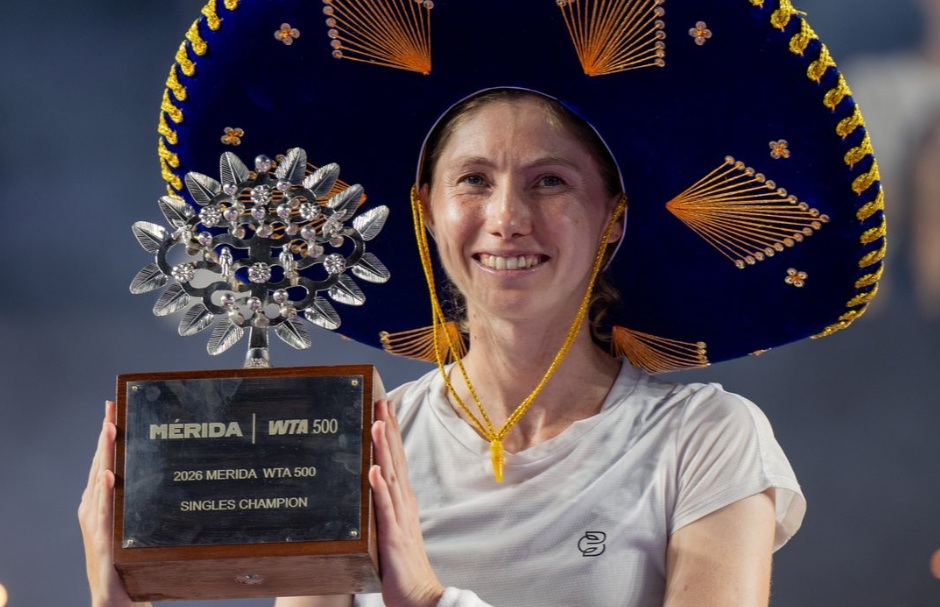
Cristina Bucsa: The Unconventional Rise of Spain’s New Tennis Star
Introduction to a Unique Journey
In the world of modern tennis, success is typically gauged by two intertwined metrics: titles and ranking positions, alongside the lucrative sponsorship deals that often accompany them. Most players find themselves in a predictable cycle where victories lead to endorsements. However, Cristina Bucsa stands out as a remarkable exception. As of this Monday, she has ascended to the pinnacle of Spanish tennis, becoming the new No. 1 after clinching her first career title at the WTA 500 in Mérida. This victory propelled her 32 spots up the rankings to No. 31, leaving behind notable players like Jessica Bouzas and Paula Badosa, the latter grappling with a persistent back injury.
A Different Path to Success
While Paula Badosa, a former world No. 2, quickly rose to fame after dominating her junior years, Bucsa’s journey has been markedly different. At 28, she finally tasted the sweetness of a major title, a stark contrast to Badosa’s early success and the sponsorship offers that flooded in for her. Bucsa, on the other hand, has largely shunned the spotlight, preferring to focus on her game rather than on social media or brand endorsements.
Roots in Cantabria
Bucsa’s story begins in Cantabria, northern Spain, where her family settled after moving from Moldova in 2001. She was just three years old at the time. By the age of seven, she had already made her mark as the regional under-10 champion, eventually winning national titles in every age category. Her upbringing in a supportive environment laid the groundwork for her tenacity and dedication to the sport.
The Role of Family Support
Central to Bucsa’s journey is her father, Ion Bucsa, a former Moldovan biathlete who competed in the Winter Olympics. Ion has been more than just a father; he has been her coach, physiotherapist, and nutritionist. His multifaceted support has been crucial in shaping her career. In interviews, Cristina has expressed gratitude for his guidance, noting that he has always encouraged her to step out of her comfort zone, particularly in seeking sponsorships.
Overcoming Challenges: A Wimbledon Anecdote
One of the most telling anecdotes about Bucsa occurred during her Wimbledon debut in 2019. Unlike her peers, who arrived with ample gear, Cristina faced a unique challenge: she had never played on grass and lacked the appropriate footwear. After a mix-up with an online order that only delivered sunglasses, she found herself scrambling. With no tennis shoes available, she resorted to purchasing golf shoes, which are not designed for tennis. Despite this setback, she managed to win a qualifying match, showcasing her resilience and determination.
Navigating the Sponsorship Landscape
Until recently, Bucsa was the only player in the world’s Top 100 without a clothing or racquet sponsor. She relied on her own resources to fund her outfits and equipment, choosing racquets based on personal preference rather than contractual obligations. However, in 2025, she finally signed with the clothing brand Country Club by Dasha, founded by former player Dasha Berezhnaya.
A Mind Beyond the Court
Beyond her athletic prowess, Bucsa is also a psychology student with a keen interest in philosophy. Despite her recent success, she remains largely absent from social media, preferring to maintain her privacy. While she has made some concessions regarding sponsorship, she continues to value her freedom, stating, “I like to be free; freedom is the best thing.”
The Future Ahead
With her recent title and newfound status as Spain’s No. 1, it may become increasingly difficult for Bucsa to maintain her low profile. Yet, her journey serves as an inspiring reminder that success can come in many forms, and that the path to achievement is often as unique as the individual walking it.
![[gpt_title] Rewrite this article’s title in the tone of *Fuerteventura Times* — calm, intelligent, and curiosity-driven. Keep it under 60 characters. Focus on themes like consciousness, healing, creativity, or neuroscience — avoid hype or clickbait. Make it sound soulful yet journalistic. Examples: “The Science of Stillness,” “Microdosing for Meaning,” “A New Age of Conscious Healing.” [/gpt_title]](https://static.wixstatic.com/media/11062b_1656820431464c0ab4e255832b9d380e~mv2.jpg/v1/fill/w_2500,h_1666,al_c/11062b_1656820431464c0ab4e255832b9d380e~mv2.jpg "[gpt_title] Rewrite this article’s title in the tone of *Fuerteventura Times* — calm, intelligent, and curiosity-driven. Keep it under 60 characters. Focus on themes like consciousness, healing, creativity, or neuroscience — avoid hype or clickbait. Make it sound soulful yet journalistic. Examples: “The Science of Stillness,” “Microdosing for Meaning,” “A New Age of Conscious Healing.” [/gpt_title]")
![[gpt_title] Write a natural, soulful, and wellness-driven headline (max 12 words) about Ayurveda, healing, or natural medicine. It should feel modern yet timeless — e.g., “The Science of Stillness,” “Nature’s Pharmacy,” or “Healing in the Everyday.” Avoid clickbait or sales tone. [/gpt_title]](https://cordis.europa.eu/docs/article/images/2026-02/463695.jpg "[gpt_title] Write a natural, soulful, and wellness-driven headline (max 12 words) about Ayurveda, healing, or natural medicine. It should feel modern yet timeless — e.g., “The Science of Stillness,” “Nature’s Pharmacy,” or “Healing in the Everyday.” Avoid clickbait or sales tone. [/gpt_title]")
