The Roman Occupation of Isla de Lobos: New Discoveries Unfold
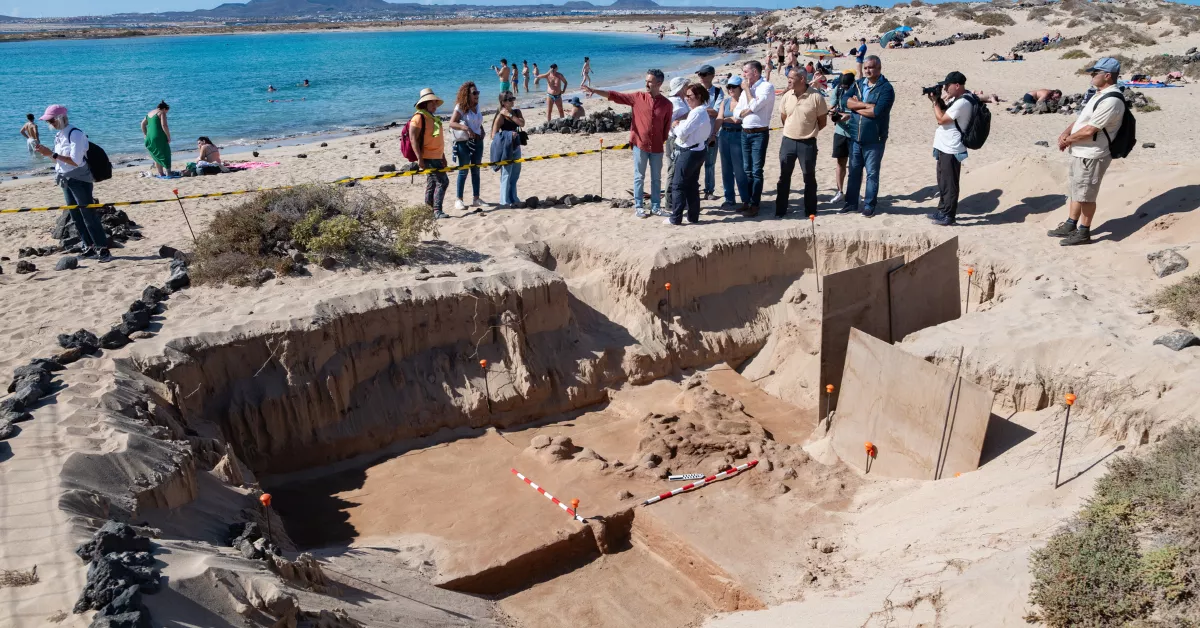
Isla de Lobos, a small island off the coast of Fuerteventura, is revealing more secrets about its Roman past. Recent archaeological investigations have expanded the known boundaries of Roman occupation beyond previously protected areas, shedding light on ancient activities in this beautiful, rugged landscape. The excavations, which began last month in the Roman purple dye workshop, have stirred excitement among historians and archaeologists alike.
The Team Behind the Discoveries
The archaeological work on Isla de Lobos is directed by a team of esteemed professionals in the field. Leading the research is Mercedes del Arco Aguilar, a conservator at the Museum of Nature and Archaeology (Muna) in Tenerife. She collaborates with Isidoro Hernández Sánchez, director of the Archaeological Museum of Fuerteventura, and María del Carmen del Arco Aguilar, a distinguished professor of Prehistory and an honorary faculty member at the University of La Laguna. Their combined expertise is pivotal in piecing together the island’s historical narratives.
Recent Findings
This latest campaign has unearthed a diverse array of artifacts, primarily ceramic and metal pieces, along with remnants of combustion structures and well-defined paved areas. According to a communication from the Cabildo of Tenerife, the discovery of these materials provides valuable insights into the daily lives and practices of the Roman inhabitants who once frequented the island.
Investigating Subsurface Anomalies
The focus of this round of excavations was driven by previous findings from georadar surveys conducted in the past year. These surveys revealed anomalies in the subsurface, prompting archaeologists to delve deeper into these unexplained areas. Mercedes del Arco Aguilar emphasized the importance of understanding these anomalies to better define the archaeological space and its significance.
The excavations also took place in the southern section of the purple dye workshop, dating back to the late Republican and high Imperial periods. In an expansive area measuring 26 square meters, researchers observed multiple layers of occupation, uncovering various new records, including purple dye shells, purpurigenic sediments, successive combustion structures, and a wide array of terrestrial and marine fauna remains.
Areas of Interest
Notably, these excavation efforts follow discoveries made last year when georadar applications identified potentially fertile regions in different sectors near La Calera beach, close to the Roman site on Isla de Lobos. The archaeological evidence indicates that this site dates back to between the 1st century BC and the 1st century AD, underscoring its historical importance.
The Initial Spark of Discovery
The story of Roman artifacts on Isla de Lobos began relatively recently. In 2012, a group of unsuspecting tourists stumbled upon fragments of pottery that were later identified as remains of a Roman amphora. This serendipitous find set off a chain reaction for archaeological exploration, leading to systematic digs and the current excavation campaign, which continues to uncover the rich tapestry of life on the island during Roman times.
The findings from Isla de Lobos not only enhance our understanding of the island’s past but also illustrate the significance of continual research and exploration. The contributions of the dedicated archaeological team enable us to glimpse into the everyday lives of those who lived in this region centuries ago, bridging the gap between past and present through tangible remnants of history.