Discovering the Hidden Gems of Fuerteventura
Fuerteventura, one of the jewels of the Canary Islands, often conjures images of expansive golden beaches and crystal-clear waters. However, our recent journey delved deep into the island’s less-trodden paths, exploring its mountainous terrain and rich historical tapestry. As we explored areas traditionally overlooked by tourists, the experience was nothing short of revelatory.
A Glimpse into History
During our explorations, we stumbled upon Olivia M. Stone’s book, Tenerife and Its Six Satellites, which offers a fascinating window into the Canary Islands of the late 19th century. Stone’s narrative presents a stark contrast to the vibrant tourist landscapes of today, showcasing a time when the archipelago was a raw, unfiltered version of itself. Fuerteventura’s essence shone through her eyes as she described a mostly barren but resilient landscape inhabited by hardworking people, rich in culture yet marked by challenges like emigration due to drought.
Embracing the Mountains
Contrary to the common perception of Fuerteventura as a flat expanse, we discovered the island’s mountainous features. Our adventure led us to the Cuchillos de Vigán, the rugged Malpaíses of the North, the areas around Tindaya, and the impressive Betancuria Massif. Olivia’s description of these terrain features was a reminder of the beauty that lies in its roughness.
Betancuria: The Historic Heart
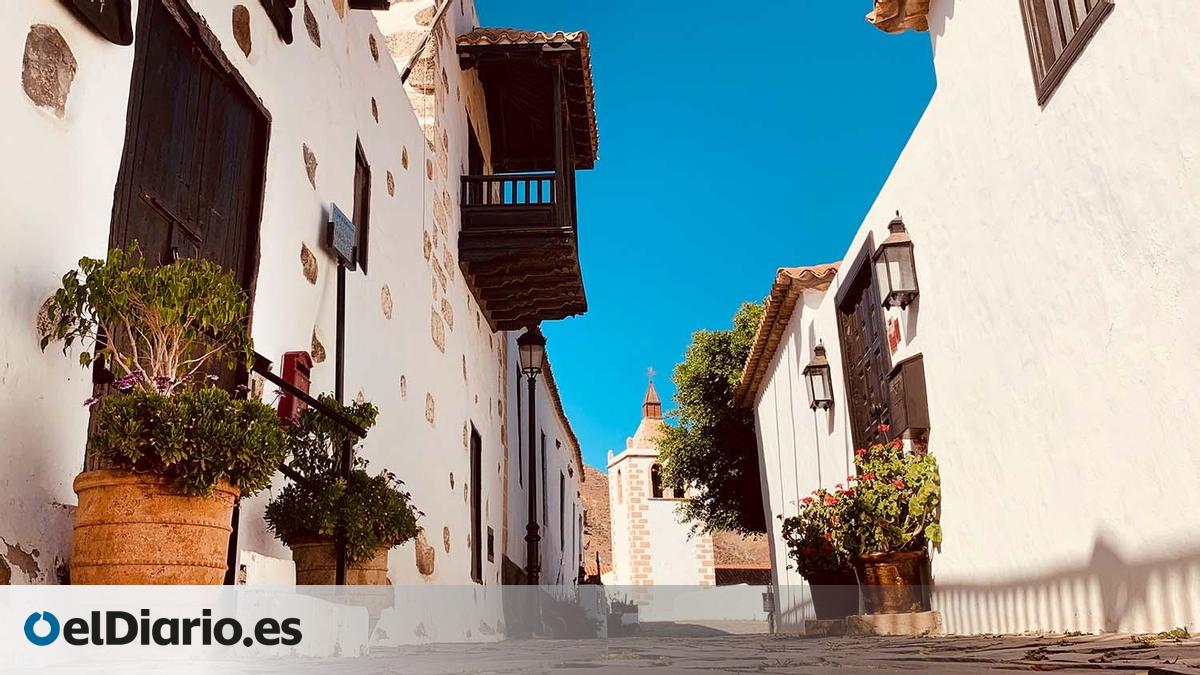
Betancuria, the first capital of the Canary Islands, is nestled in a stunning setting—a historical village that still retains its original charm. The remnants of its past are evident in its architecture and layout. Wandering its narrow streets, we marveled at the Iglesia de Santa María, the island’s most beautiful historic building, which beautifully blends Gothic elements with intricate wooden craftsmanship.
The nearby Convent of San Buenaventura, with its crumbling walls under the clear blue sky, stands as a poignant reminder of the passage of time. The Archaeological Museum of Fuerteventura allows visitors to dive deeper into the island’s ancient past, showcasing artifacts that narrate the stories of its pre-Hispanic inhabitants.
Journey to Vega del Río Palmas
Leaving Betancuria behind, we traveled along the FV-30 towards Pájara, driven by Olivia’s words that highlighted the relationship between water and the region’s lushness. The Iglesia de Nuestra Señora de La Peña marks the beginning of the Vega del Río Palmas, once a vibrant area with a river flowing through polished rock. While modern channeling has altered its flow, the lush greenery that flourishes here is a testament to the island’s natural beauty.
The landscape is dotted with traditional windmills, iconic reminders of a time when they harnessed the winds to pump water for irrigation. Birdwatching is another treat here, with opportunities to spot crows and other wildlife.
The Coastal Allure of Ajuy
Our journey led us down to the rocky Playa de Ajuy, a stunning black sand beach surrounded by commanding cliffs—a stark contrast to Fuerteventura’s more typical allure. The picturesque village of Ajuy retains its character as a fishing community, with old lime kilns dotting the shoreline.
Ajuy invites exploration not only for its beauty but also its geological significance. The region is famed for its fossilized dunes, dating back over 120 million years, showcasing an earth-rich history. The stunning sunsets viewed from these cliffs are acclaimed for their breathtaking spectacle.
Intrigue at Pájara
Before arriving at Ajuy, we made a notable stop in Pájara, home to the remarkable Church of Nuestra Señora de Regla. The ornate façade raises eyebrows due to its potential Aztec influences—an artistic mystery that intrigues visitors. The artistic construction, with its unique sculptures, invites speculation about a historical connection to ancient Mesoamerican cultures. Local experts, however, attribute its design to indigenous artistry interpreted through the lens of European influence.
Natural Wonders Await
From the mountains to the coast, Fuerteventura unfolds like a rich tapestry of history, culture, and natural beauty. Each village and landmark breathes life into the narratives that have shaped this island. Beyond the idyllic beaches, Fuerteventura reveals itself as a landscape of biographical significance, inviting travelers to step off the beaten path and discover its treasures. Whether you’re standing atop the Morro Velosa or gazing down at the lush Vega del Río Palmas, the island’s hidden gems paint a picture of resilience and hidden richness waiting to be uncovered.