Exploring the Natural Wonders of Las Peñitas
Nestled within the stunning landscapes of Fuerteventura, the Las Peñitas area is a jewel of natural beauty protected within the Parque Rural de Betancuria. Spanning over 16,210 hectares, this is the largest protected natural space on the island. Established as a protected area in 1987 and reclassified as a rural park in 1994, it has also been designated as a Special Protection Area for Birds (SPA) and a Special Conservation Area (SCA) since 2009. Despite these protections, the area experiences significant visitor traffic, raising important questions about conservation and responsible tourism.
The Allure of Las Peñitas
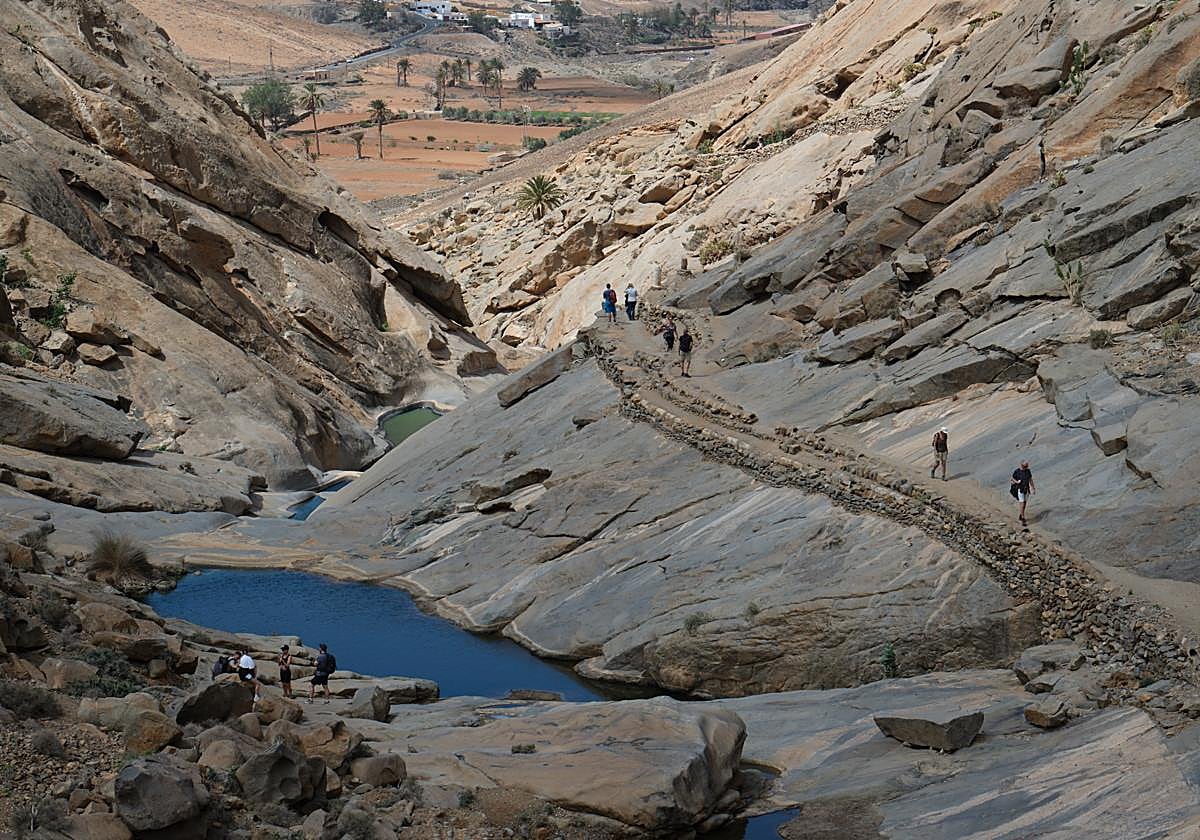
Las Peñitas captivates visitors with its dramatic rock formations and unique geological features. One of the main attractions is a remarkable rock arch, popularly frequented by “selfie seekers” eager to capture their memorable moments against the breathtaking backdrop. Over time, this arch has garnered such attention that it has been whimsically nicknamed “the elephant.” The magnetism of Las Peñitas for tourists, particularly those with a penchant for photography, raises concerns about the environmental impact of heavy foot traffic.
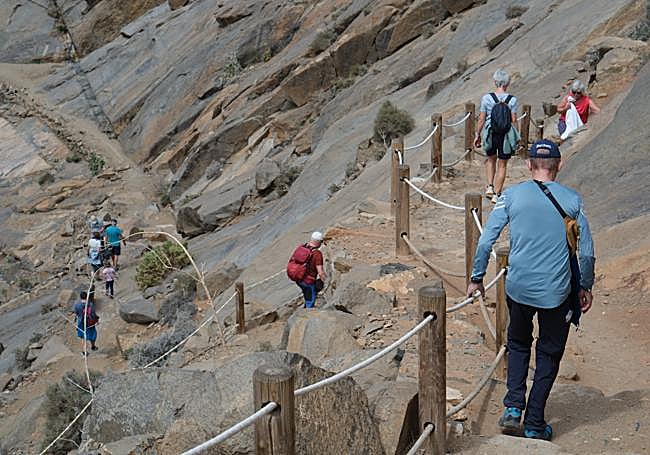
Daily visitors of all ages traverse the Las Peñitas trail
(Javier Melián / Acfi Press)
Hiking Trails and Visitor Impact
The trails around Las Peñitas offer diverse experiences for both new and seasoned hikers. The most common route follows the path from Vega de Río Palmas to Buen Paso, where many adventurers stick to marked trails. Others, however, venture off the beaten path, drawn to the alluring pools of water or the stunning shapes of the cliffs. While this adds an element of adventure, it also poses a direct threat to the area’s delicate ecology.
Conversely, fewer hikers choose to ascend from Buen Paso, often navigating the slippery ground of the barranco with little regard for their surroundings. This lack of adherence to the paths and the associated erosion highlight the pressing need for better visitor management and restrictions.
The Irresistible Charm of La Ermita de la Peña
A noteworthy stop along the hike is the Hermitage of La Peña, a quaint white structure nestled amidst the cliffs. This site frequently serves as a hive of activity, with visitors entering and exiting in droves. The picturesque image of the hermitage cameoed against a backdrop of imposing rock formations makes it a highly sought-after photo opportunity, further contributing to the foot traffic that can strain the natural resources of the area.
Climbing Enthusiasts and Conservation Regulations
While most visitors are there for hiking and enjoying the scenery, a small number of enthusiastic climbers often seek to scale the impressive rock faces. Nevertheless, climbing in Las Peñitas is technically against the rules outlined in the Plan of Use and Management (PRUG) for the Parque Rural de Betancuria, established in 2009. This plan categorizes many areas, including the Las Peñitas dam, as restricted zones to protect their ecological integrity. Unfortunately, despite these regulations, the traces of climbing activities—like hooks and anchors—are evident on the ancient plutonic rocks of the region, lasting remnants of the climbers’ adventures.
The Allure of Ajuy Caves
Not too far from Las Peñitas lie the Ajuy Caves, another stunning natural feature that lacks restrictions for visitors. During peak hours, crowds can be seen forming lines to access the stony steps that lead down to these fascinating formations. As part of the same rural park, the caves are protected not only as a conservation area but also as a natural monument, blending the allure of geology with vibrant local history.
Every encounter in Las Peñitas brings to light the delicate balance between tourism and conservation. While the beauty of this remarkable landscape is undeniable, the draw of its wonders calls for a more reflective approach to how we interact with such precious environments. Efforts toward sustainable tourism are critical in ensuring that both natural beauty and wildlife can thrive for generations to come.