Victor Jiménez: El Torero and The Golden Age of Canarian Rock
On a Saturday afternoon, a tall and slender boy named Víctor Jiménez—better known by his nickname El Torero—walks along an unpaved street in Puerto del Rosario. Clad in a black t-shirt and tight pants, he sports a spike-studded bracelet on his left wrist while cradling a guitar case in his right hand. Although this scene is fictional, the essence of El Torero resonates with the vibrant spirit of a musician who thrived in the 1990s. According to Héctor Santana, founder and frontman of the iconic band Barreno, “You cannot talk about rock in those years without mentioning El Torero. He was one of the first punk rockers to roam around with his guitar and spiked bracelets.”
The Rise of Canarian Rock in the 90s
The 1990s marked a golden era for rock music in the Canary Islands, and Fuerteventura played a significant role in this thriving movement. The island witnessed the rise of influential bands like Barreno and Quijotes Urbanos, which shared the stage with various rock groups including Tabique, Káiser, and Demonios. David Mahoh Rica from the band Vértigo recalls, “Each band had its unique storytelling style.” This diversity significantly enriched the local rock scene.
To fully appreciate the musical landscape of Fuerteventura during this period, one must consider the broader context of the island’s development. Before the economic expansion in the early 2000s, Fuerteventura had a population of less than half of what it is today, and many towns still had unpaved streets. Access to musical instruments was limited due to the scarcity of specialized shops and exorbitant prices.
Despite these challenges, the spark of rock ignited on the island, leading to the emergence of festivals throughout the archipelago. This created a dynamic network of venues where bands could showcase their original compositions. Agustín Hierro, better known as Tintín, a lyricist and guitarist for Quijotes Urbanos, states, “In the 90s, there was a stronger emphasis on local bands, which was crucial because musicians need live shows; a band cannot survive on rehearsals alone.”
Barreno: A Cultural Collective
Barreno stands out as a cornerstone of the Canarian rock scene. Formed in 1989 by a group of friends in a garage in the Fabelo neighborhood, Barreno traversed the stages of Fuerteventura and toured nearly all the Canary Islands over the next decade. “We played 37 concerts in one year! How many bands can say that?” exclaims Santana.
While they garnered attention beyond the island and were invited to major festivals like Fiestas del Cristo de La Laguna, the band eventually faced internal strife. Though the Cabildo of Fuerteventura offered to finance a recording, they declined, valuing their artistic integrity over external validation. “We rejected it because we didn’t want the Cabildo logo appearing on our album. With the lyrics we wrote, it would have felt like betrayal,” admits Santana.
In the 90s, Barreno wasn’t only about concerts; it also functioned as a cultural collective. They organized festivals and distributed alternative cultural material, ranging from records to fanzines, promoting both Spanish and Latin American music. However, around the year 2000, Barreno dissolved due to disagreements within the band, yet it continued to operate as a cultural entity.
Gran Tarajal: A Creative Hub
Gran Tarajal was another key player during this era, providing a unique experience for the local music scene. Accompanied by the collective Tiempo Sur and the Youth Week, this southern town hosted up to fifteen groups from various genres, including jazz, salsa, folk, and rock. “It’s always beneficial when musicians share space, even across different styles,” argues Domingo Ruano, a local music teacher and musician.
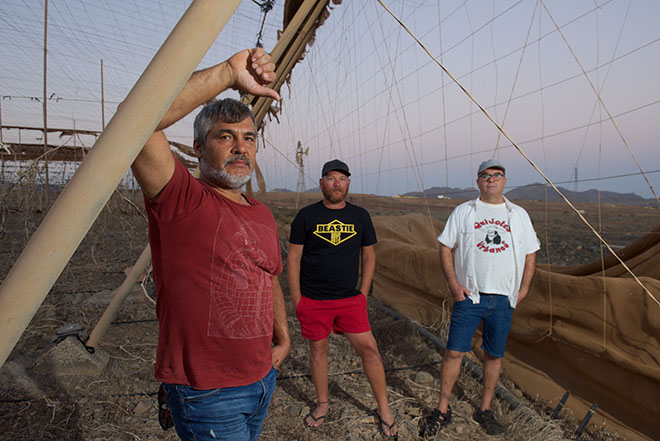
It was in this vibrant atmosphere that Quijotes Urbanos emerged, paralleling Barreno’s path. Active between 1991 and 2000, the band consisted of a group of friends, including an ex-member of Faros Rotos, the pioneering group from the previous decade. “We didn’t know much about music; we learned through rehearsals,” recalls drummer Víctor Cubas.
Quijotes Urbanos quickly gained traction and earned invitations to larger stages, including national events like the Campus Rock in Gran Canaria and Festimad in Madrid, where they performed before audiences of up to 15,000. David Mahoh recalls, “I started in music because of Quijotes. They were the catalyst for my passion.”
However, by the end of the 20th century, Quijotes ended their journey. Tintín reflects, “At one point, I had two kids, and we were constantly traveling. Balancing work and family was tough.” Some band members later regrouped under the name Kruger, performing both old tracks and covers of Basque rock.
Festivals: The Cornerstone of the Scene
The 90s rock scene wouldn’t have flourished without the multitude of festivals across the island. These events, ranging from broad festivals like Potaje Salvaje to smaller local gatherings during patron festivities, provided essential platforms for bands to perform. Jonás Martín, a fanzine editor from Lanzarote, notes, “Potaje Salvaje was one of the most powerful festivals in all of the Canaries.”
As the decade concluded, however, the landscape shifted dramatically. Barreno and Quijotes Urbanos faded into history, alongside various other bands. The festival circuit also dwindled. While rock didn’t die, the decline of performance venues led to the dissolution of numerous bands, even as new ones emerged in the following two decades. “The 90s were rich with festivals, bands, associations, fanzines, and radio shows, but there’s hardly any generational relay now,” remarks Martín. “Another big issue is the dwindling audience.”
Challenges for Contemporary Bands
Today’s musicians repeatedly cite the lack of live performance opportunities as their most significant challenge. Apart from rare exceptions, venues are often dominated by tribute and cover bands, compelling original artists to pursue their passion as a hobby. “If classic rock bands had to compete with tribute bands, many might never have come into existence,” warns Martín.
Additionally, the management of cultural resources plays a crucial role in this decline. “If you spend all your budget on big-name bands from outside and don’t support local acts, eventually, young musicians become disheartened and stop playing,” voices Tintín. Bruno de Vera echoes this sentiment: “There’s a shift in mindset regarding performing; back then, we would have paid to play.”
Presently, the rock festival scene is nearly extinguished, retaining only remnants like the ongoing Lebrancho event in the capital and occasional private initiatives such as Invicto Rock in Corralejo. Santana remains a fervent advocate for revival, organizing events like Fabelo Rock and holding discussions with local authorities to resurrect once-popular concerts.
The Unyielding Spirit of Rock
Despite the passage of twenty years since Barreno disbanded, Santana remains unwavering in his dedication to rock music. He claims to have more than a hundred songs written, predominantly reflecting the same critical tone established during his Barreno days. Paradoxically, he finds composing love songs notably more challenging.
As the ghosts of the past linger, Santana feels a sense of incompleteness regarding Barreno. “When we parted, we were at our peak. We had a tour lined up for the Peninsula,” he reflects wistfully, extinguishing a cigarette in the ashtray, still driven by the ambition to carry the rock legacy forward.