Irene Montero’s Fuerteventura Vacation: A Blend of History, Controversy, and Environmental Concerns
The captivating island of Fuerteventura recently became the backdrop for a vacation taken by Irene Montero, the former Spanish Minister for Equality and current Member of the European Parliament representing Podemos. Sharing her experiences on social media, Montero balanced the beauty of Fuerteventura with a poignant reminder of its historical complexities, igniting a mixture of admiration and controversy along the way.
A Trip Down Memory Lane
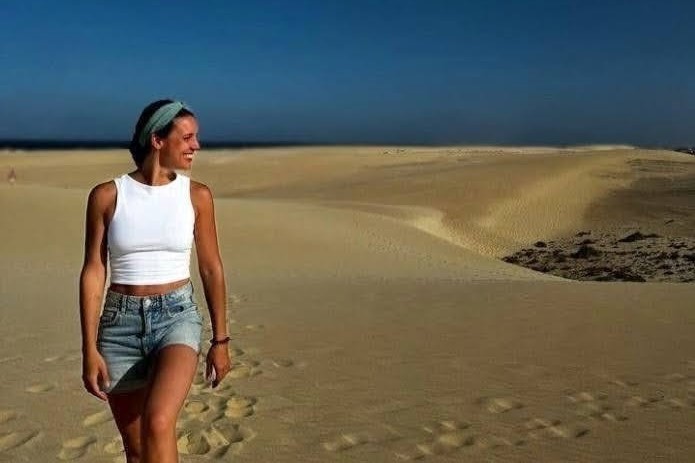
In her social media posts, Montero highlighted Fuerteventura’s breathtaking landscapes, such as the natural parks of Isla de Lobos and the Corralejo Dunes, as well as the idyllic beaches of Sotavento. However, she also drew attention to the island’s darker past as a site of exile for historical figures like anarchist Buenaventura Durruti and writer Miguel de Unamuno. Durruti, known for his staunch leftist beliefs, was deported to the island in 1932, while Unamuno faced exile in 1924—a notable aspect as this year marks the centenary of his banishment.
Montero’s posts reflect Unamuno’s appreciation for Fuerteventura, where he remarked on the island’s impoverished state while celebrating the nobility of its people, the majoreros. This historical lens served not only as a backdrop for her vacation but also an opportunity to engage with significant social discussions, meshing leisure with a remembrance of the past.
Environmental Concerns
Yet, the positivity attached to Montero’s posts quickly shifted when local authorities criticized her for what they perceived as environmental negligence. The Ayuntamiento of La Oliva issued a statement accusing her of promoting the collection of stones and shells for decorative purposes. This practice, they argued, goes against existing laws protecting natural heritage.
Montero’s Instagram activity—featuring decorative stones and painted shells—was said to potentially disturb local ecosystems. The town’s response was an attempt to highlight the importance of environmental sensitivity, especially given the ongoing issues Fuerteventura faces, including erosion and habitat degradation.
Historical Context of Oppression
Montero didn’t shy away from addressing the island’s complex relationship with political repression, particularly during the Franco regime. In her narration, she spotlighted the history of Fuerteventura as a “prison island” for political prisoners, including LGTBI individuals who were subjected to forced labor at Tefía concentration camp. Her acknowledgment of this somber history resonated with those wishing to bring attention to past injustices.
While drawing from history, Montero quoted survivor Antoni Ruiz, who recounted the harsh conditions endured by those imprisoned. Though Ruiz was not confined in Tefía—the camp functioned from 1954 to 1966—his account brought to light the enduring pain associated with Franco-era policies.
The Impact of Misinformation
Despite the weight of her historical references, the narrative surrounding Montero often spirals into misinformation. Critics have targeted her education and work history, labeling her as “unqualified” for her political roles due to her previous job as a supermarket cashier during her university studies. In reality, Montero holds a degree in Psychology from the Universidad Autónoma de Madrid and pursued further education in the field.
These unfounded criticisms serve to distract from substantive discussions about her political influence and the matters at hand, such as the implications of her recent vacation postings.
Backlash from Local Authorities
The aforementioned statement from the Ayuntamiento of La Oliva culminated in Montero facing backlash for her actions. While the town emphasized the need to protect environmental resources, they pointed out that the allegations made were not adequately substantiated. They called out the narrative being spun around her actions, arguing that it detracted from broader environmental issues faced by the area.
In defense of her actions, Montero responded via Instagram, describing the municipal allegations as a “ridiculous rumor.” This fiery rebuttal exemplified her characteristic determination to confront misinformation directly.
Montero’s ongoing relationship with public scrutiny as a young female politician in Spain showcases the challenges faced by women in political spheres, where their actions are often magnified and misconstrued.
Through her vacation narratives, Irene Montero touches on historical memory, current environmental issues, and the pervasive influence of misinformation. Her engagement with past injustices intersects thoughtfully with her holiday experience, reminding us that every corner of the world has a story to tell—one that is often layered with both beauty and complexity.