Fuerteventura’s Tech Scene: Fostering Innovation and Growth
Emerging startups are reshaping the island’s economic landscape with fresh ideas and technology.
Fuerteventura, often celebrated for its breathtaking beaches and vibrant culture, is now capturing the entrepreneurial spotlight as an emerging hub for tech startups. With a growing number of innovative ventures popping up, the island is redefining its economic identity, attracting both local talent and international investors eager to tap into this dynamic market. The move towards a tech-centric economy not only promises to diversify job opportunities but also positions Fuerteventura as a competitive player in the global startup arena.
Key to this transformation is the supportive infrastructure being established by local authorities and organizations. Initiatives designed to nurture entrepreneurship—such as tech incubators, mentorship programs, and networking events—are fostering a community where ideas can flourish. Entrepreneurs are finding valuable resources right at their doorstep, empowering them to turn their concepts into viable businesses. This synergy between startups and local government is catalyzing a wave of innovation that could ultimately benefit the entire island.
In addition to the tech-focused economic growth, the environmental sustainability of these ventures remains a priority. Many startups are capitalizing on Fuerteventura’s natural resources and unique environment to develop eco-friendly solutions. By intertwining technology with sustainable practices, they not only contribute to a greener future but also appeal to a global market increasingly concerned with corporate social responsibility. As this ecosystem continues to evolve, Fuerteventura stands ready to embrace a new era of economic prosperity driven by creativity and technology.
Source: Gobierno de Canarias
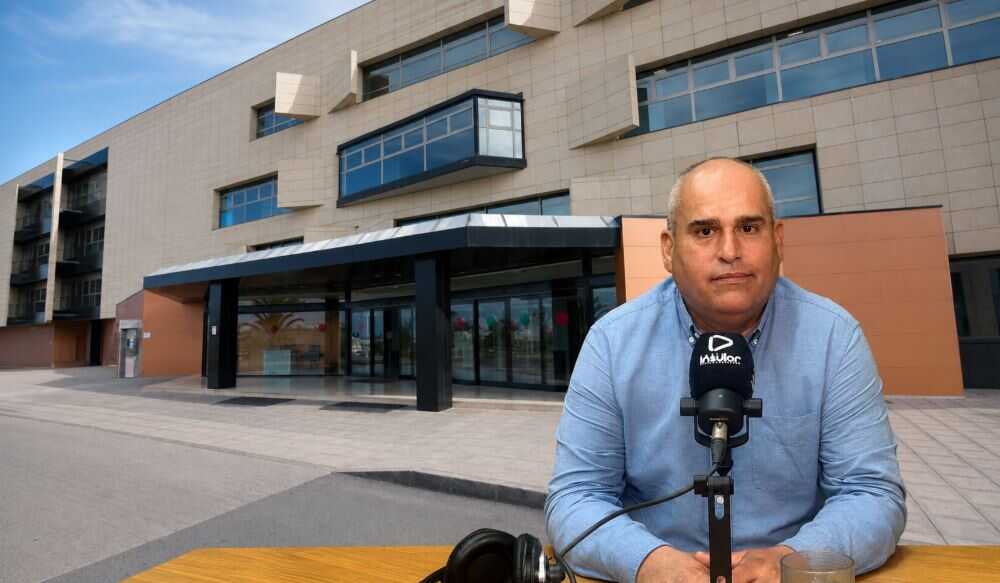
Fuerteventura is beginning to see some of the health demands that for years brought citizens onto the streets materialize. The radiotherapy bunker, the medical helicopter based on the Island and the already awarded drafting of the future Southern Specialized Care Center mark, for the director of the Fuerteventura Health Area, Tomás Pérez, a change of stage in Majorera health planning. In an interview on the program La Voz de Fuerteventura, on Radio Insular, Pérez defended that “this legislature we have been able to respond to those historical demands that the island of Fuerteventura had.” He did so by reviewing the state of the main health infrastructures, from the south to the north, and denouncing that the last legislature was lost “without a single step being taken in infrastructure.” The health official recalled that many of the current demands have their origin in those citizen mobilizations of a decade ago, when Fuerteventura demanded decent healthcare. Among them, the radiotherapy bunker, which today serves “around 200 patients annually” and prevents people undergoing cancer treatment from traveling outside the Island, he stressed. “Above all, it is the quality of life that patients gain by avoiding traveling abroad,” stressed Pérez, who recalled the trips that many patients and families had to endure for years to receive treatment. “Today we save that and receive treatment equivalent to what we would receive anywhere else,” he explained. He also placed among the advances the hemodynamics unit and the medicalized helicopter, another of the Island’s historical claims. In the cardiological field, he noted that before there were patients who took days to be transferred after a heart attack to undergo a catheterization, a situation that, according to him, “has been significantly corrected.” The CAE: a “brutal” infrastructure But the big project on the table is the Southern CAE, the drafting of which was recently awarded. Pérez was clear when describing the importance of this infrastructure for Pájara and for the entire south of the Island. “Our population in the south is the part of the population of the Canary Islands that suffers the most from the issue of double insularity, which has the greatest distance from specialized care.” For this reason, he defended that the center “is called to be a before and after in specialized care for our population.” The project has a writing period of nine months. The Health Area’s forecast is that the final document will be ready “in the first quarter of next year” and that, from there, it will be possible to “run to put out to tender the works.” The CAE is based on a functional plan of 16,000 useful square meters, although the final building will be larger by incorporating corridors, connections, differentiated circulations and technical spaces. Pérez did not hide the size of the project. “We are talking about a large center,” he noted, before defining it as “a brutal infrastructure.” The future CAE will include services such as radiology, pain unit, home hospitalization, rehabilitation and physiotherapy, in addition to three small operating rooms for outpatient surgery. The south also concentrates other relevant actions. In Morro Jable, the reform of the health center is being tendered, with a budget of 225,000 euros, to improve emergencies, accessibility, medical and nursing bedrooms, facades and spaces linked to the medicalized ambulance. In Costa Calma, Health is working on the expansion of the local office, which will incorporate the southern hemodialysis service until the CAE is operational. Pérez confirmed that currently “hemodialysis there is no service in the south right now.” Gran Tarajal Health Center In Gran Tarajal, the Health Area is working on accepting land next to the health center to allow an expansion of about 4,600 square meters, which would mean “practically doubling the current capacity.” Meanwhile, a location has been rented to move services such as mental health, early care, physiotherapy and rehabilitation, temporarily until the expansion is completed, with the aim of relieving the pressure on the current building. Antigua and Betancuria, basic health area Pérez explained that Health has requested land next to the Antigua Health Center to be able to implement a proper continuous emergency care point. The current building does not allow for this expansion and, as he explained, the option of growing on the upper floor is ruled out due to technical difficulties. which would imply intervening on the structure. The director of the Area was especially critical of the delays regarding the transfer of land in this municipality. “Of all the municipalities on the island, the one with which we have had the most difficulty working continuously and obtaining adequate land offers has always been with Antigua,” he stated. In fact, he revealed that a letter was sent to the Antigua City Council in November, regarding a plot adjacent to the current center that Health considers suitable. October or November, there was a reiteration of that letter in February and still to this day there is documentation that has not been sent.” He also referred to the future El Castillo clinic, a demand that, as he defended, the current team has reactivated upon understanding that this population must have its own center and not depend on El Matorral, as would have been projected in the last legislature, according to the director of the Health area. Even more so, taking into account that the idea is that both Antigua and Betancuria integrate a basic Health unit that does not depend of Puerto del Rosario as until now. On the other hand, the local El Matorral clinic has a functional plan, topographical and geotechnical studies, and is pending bidding for the drafting of the project. Corralejo Health Center 2 In the north, the new Corralejo Health Center has already been awarded. 3,500 square meters on a single floor and will allow doubling the healthcare capacity of an area stressed by population growth. In El Cotillo, Pérez recalled that a local office is already in operation in a space provided by the City Council, however, he asserted, “it is not giving up” having its own building and is maintaining a plot near the soccer field, pending the City Council’s resolution of the necessary urban planning procedures for its transfer to the General Hospital. Fuerteventura in 20 years Less announced, but of enormous strategic importance, is the future master plan of the General Hospital of Fuerteventura. Pérez announced that the Area wants to put out to tender “shortly” its drafting to define how the Island’s reference hospital should grow in the next 20 years, taking into account the impact of the Southern CAE and demographic evolution. next 20 years and how we must grow in the General Hospital of Fuerteventura to respond to the population,” he explained. The Health Area works on the municipal parking attached to the hospital, a plot with a health rating that the City Council gives up, although with the condition that any action preserves, “at least, the same number of parking spaces”, whether through an underground, high-rise or other type of solution. The health manager recalled that the hospital environment currently has about 670 spaces, but admitted that at certain times of the day “It is very difficult to leave the hospital,” so the future master plan must also contemplate a solution to the parking problem. Mobilizations of ambulance professionals Health emergency technicians are mobilized Pérez also referred to the labor conflict that the ambulance service workers have with the employers and expressed his desire that “it be resolved as soon as possible” and in a satisfactory manner for the professionals. The director of the Area recalled that the new tenders for urgent and non-urgent medical transport in the Canary Islands are pending. contests that Fuerteventura awaits “avidly” because they would allow updating resources that, as he admitted, “do not currently respond to the healthcare and population needs.” In this context, he announced that the Island aspires to double the number of advanced life support ambulances, with two more sanitized ambulances, until it has four resources of this type. Regarding the PSOE complaint in Parliament for the alleged waste of 3,500 bags of blood plasma and the suspension of surgical interventions due to lack of stocks, Pérez avoided entering into the management of the Donation and Hemotherapy Institute, which he said he was unaware of, but he did want to make clear the information regarding Fuerteventura. “In Fuerteventura, no operation has been suspended for reasons of blood supply, neither in 2023, nor 2024, nor 2025, nor 2026,” he stated, before describing the information as “alarmist” in what affects the Health Area that he directs.
Originally reported by www.lavozdefuerteventura.com, rewritten by the Fuerteventura Times AI Editorial Desk.