The Rise of Sustainable Startups in Fuerteventura
How eco-friendly innovations are shaping the island’s economic landscape.
Fuerteventura is transforming its economic narrative by embracing sustainability. The island, long celebrated for its stunning beaches and idyllic landscapes, is now becoming a hotbed for eco-conscious startups. These ventures not only contribute to the local economy but also set a powerful example of how businesses can thrive while prioritizing environmental responsibility. From renewable energy companies to sustainable tourism initiatives, Fuerteventura is carving out a niche that marries economic growth with environmental stewardship.
One standout in this landscape is a new wave of entrepreneurs using local resources to create innovative, sustainable products. Organic farming ventures are cultivating both local land and the interest of ethically-minded consumers, while eco-friendly travel services ensure that visitors engage with the natural beauty of the island without leaving a heavy footprint. This collective shift towards sustainability is fostering a unique synergy among businesses, driving collaboration and encouraging a community that prioritizes ecological awareness.
As Fuerteventura continues to attract attention with its commitment to sustainability, these startups are not just enhancing the island’s economy; they are redefining its identity. By championing green practices, they are paving the way for future generations, proving that economic success and environmental responsibility can indeed go hand in hand. The impact of this entrepreneurial spirit is palpable, signaling a promising future for both the island and its inhabitants.
Source: Gobierno de Canarias.
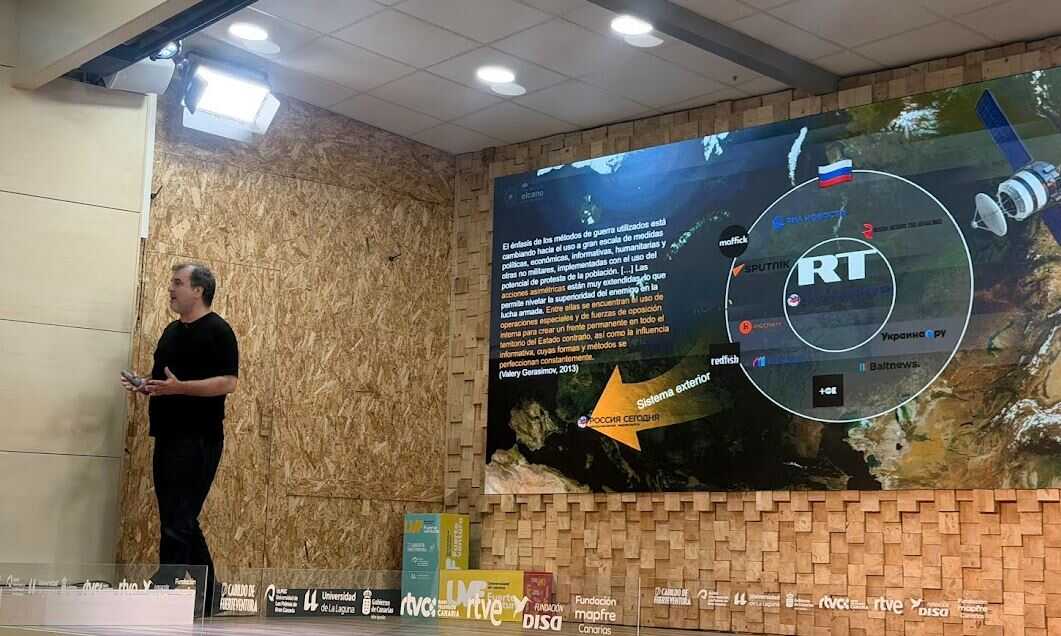
The IV Summer University of Fuerteventura (UVF) held its second day this Tuesday focused on one of the great challenges of today’s society: the influence of technology, algorithms and digital platforms on information, public opinion and the functioning of democracies. The program brought together leading specialists in political communication, journalism, technopolitics and digital analysis to reflect on how new technological tools are transforming the way citizens inform themselves, participate in public debate and make decisions. The day began with the intervention of the political scientist, communicator and president of the Political Communication Association (ACOP), Ana Salazar, who offered the conference titled “Democracy is no longer played only in institutions; it is also played in algorithms, platforms and data.” During his presentation, Salazar analyzed the growing role of large technological platforms in shaping public conversation and warned about the impact that algorithms and massive data management have on democratic processes and the traditional balances of political and social power. Public debate and social networks The second presentation of the morning was given by Eva Campos, professor at the University of Valladolid, who addressed the influence of the media and social networks on political coexistence. Under the title “Public conversation in digital times”, the researcher delved into phenomena such as polarization, the loss of intermediation of traditional media and the new channels of dissemination of disinformation that proliferate in digital environments. Journalism in the face of misinformation After the break, journalist Lucía Méndez offered the conference “Journalism, defenseless in the face of algorithmic misinformation”, where she reflected on the difficulties faced by the media in a scenario dominated by digital platforms and algorithmic systems that condition the visibility of content. Méndez defended the importance of reinforcing essential values of journalism such as the verification of information, the contrast of sources and professional rigor to combat the growing spread of fake news and manipulated content. The morning concluded with the intervention of Ángel Badillo, principal researcher at the Elcano Royal Institute and professor at the University of Salamanca, who analyzed disinformation as a structural phenomenon capable of influencing political, social and cultural processes. Media literacy and climate change The programming continued in the afternoon with the workshop “How not to swallow with millstones”, taught by Patricia Delponti and Nieves Santana, focused on misinformation related to climate change. The specialists offered tools to identify information manipulation strategies and analyze the construction of misleading or denialist discourses, emphasizing the importance of media and scientific literacy to develop a critical citizenry prepared for current information challenges. From the Fuerteventura Town Council, the Minister of Education and Youth, Adargoma Hernández, highlighted the quality of the presentations and the importance of addressing one of the great challenges of our time: guaranteeing informed citizenship in a context marked by the overabundance of information and the growing influence of digital platforms. For her part, the island president, Lola García, valued the capacity of the Summer University to bring current debates and social relevance related to democracy, coexistence and communication to the island. The IV Summer University of Fuerteventura will continue over the next few days with new conferences, workshops and debate tables dedicated to analyzing the challenges of information and communication in contemporary society.
Originally reported by www.lavozdefuerteventura.com, rewritten by the Fuerteventura Times AI Editorial Desk.