Fuerteventura’s Multifaceted Progress Under President Lola García
On June 26, 2023, Lola García, the newly appointed president of the Cabildo of Fuerteventura, firmly gripped the institution’s leadership baton. As she completed her three-year mandate, she evaluated her journey during an ordinary plenary session, responding transparently to questions from council member Águeda Montelongo.
The Water Crisis: A Tipping Point
Reflecting on her early days in office, García revisited challenging times, especially regarding water scarcity. Fuerteventura, notoriously arid, faced severe droughts, with families waiting over twenty days for a drop of water. “We were at a critical point,” she candidly acknowledged, recalling the frustration of addressing frequent pipe failures and an erratic supply chain.
Water management became the cornerstone of her administration. She vividly described the overwhelming pressure — fixing one problem only for another to arise moments later, creating a frustrating cycle. There were days filled with tears, leading her to ponder resigning if the situation didn’t improve: “If things don’t change, I would have to responsibly withdraw from my position.”
Emergency Measures and Investments
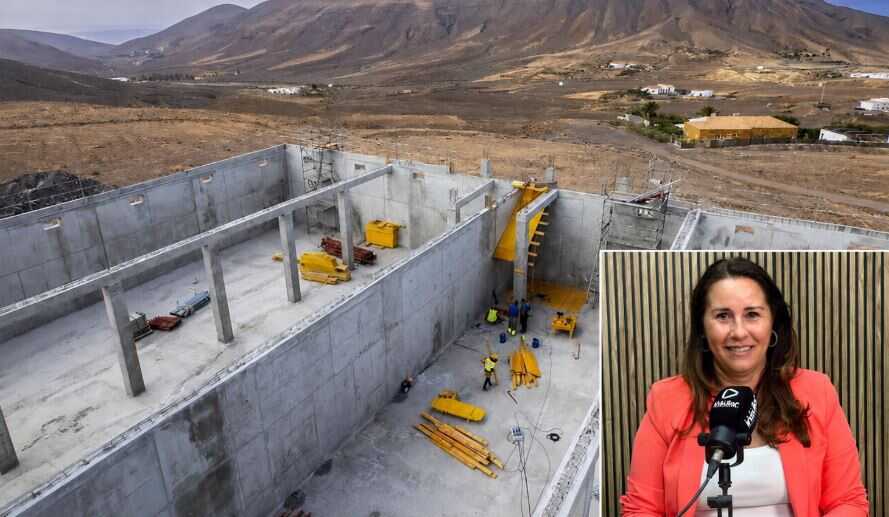
The administration declared a state of emergency, not just for the situation but also for the essential projects aimed at alleviating the water crisis. Previously capable of producing 34,000 cubic meters of water, Fuerteventura has now surpassed 50,000. The increase in storage capacity was equally notable, rising from 60,000 to nearly 90,000 cubic meters. García proudly noted an 80% reduction in service interruptions due to pipe failures and a staggering 90% decrease in reliance on external water sources.
Her narrative pointed out critical infrastructure improvements, including enhancements to water treatment plants in Gran Tarajal, Corralejo, and Puerto del Rosario, alongside the construction of new reservoirs and pumping stations. The transformation included phasing out old asbestos pipes in Gran Tarajal.
A Robust Financial Commitment
García highlighted a considerable financial commitment, with over 60 million euros earmarked for hydraulic investments. Notably, the Cabildo achieved significant energy cost savings, reducing expenses for water production from 18 million euros to around 6 million. Despite these achievements, she underscored the continual need for improvement, hinting at plans for a new desalination plant in the Matas Blancas area.
Advancements in Irrigation and Agriculture
Significant strides were made in irrigational infrastructure too. Now nearing completion, a southern irrigation network, funded by a coalition of governmental bodies, represents a historic milestone for Fuerteventura. This dual water supply system will cater separately to human consumption and agricultural needs, a first for the island. Plans are also underway for a similar initiative in the north to support local farmers.
Enhancing Social Infrastructure
In addition to water management, García spotlighted advancements in social infrastructures—an area historically lagging in Fuerteventura. Presenting a robust 55 million euro agenda, she detailed the development of essential facilities, including the Gran Tarajal Residence and Day Center, alongside proposed centers aimed at supporting different regions.
An upcoming mental health residence is set to open this summer, promising 30 new placements, a significant boost in community support—an area that had been critically underfunded.
Housing Initiatives: Bridging the Gap
Housing emerged as another focal point during her address. Responding to opposition criticisms, especially from the Popular Party, García affirmed that her administration was proactively addressing housing shortages. With 176 homes already contracted through the Canary Island Housing Institute and a budget exceeding 53 million euros, the Cabildo is actively constructing homes rather than merely proposing land development.
Additionally, García mentioned a strategic endeavor involving vacant and unfinished properties, analyzing their potential for public housing rather than consuming more land. Collaborating with various stakeholders, including the Sareb, aims to bring these properties back to life efficiently.
Commitment to Transport and Public Services
In transport, García addressed concerns surrounding the ALSA service, emphasizing uninterrupted progress towards future licensing of public transport services. With user numbers skyrocketing post-implementation of free transport, the operational budget for this service has expanded from 4 million to 6 million euros.
Moreover, García condemned acts of vandalism affecting public transportation, appealing to the community to value public services. “This is public money, not private,” she stressed, highlighting the detrimental impact of vandalism on public transport facilities.
Vision for the Future
Wrapping up her reflection, Lola García expressed her deep motivation to continue her work. Recognizing ongoing projects that need to be completed, she remained optimistic about future developments. Eager to secure another term, she hinted at her intention to run for reelection in the 2027 elections, hoping to garner support from the Asamblea Majorera.
In this evolving landscape, García embodies the aspirations of Fuerteventura as it strides toward a more sustainable and resilient future, balancing immediate necessities with long-term strategic planning. Thus, her administration’s journey continues to unfold with unyielded hope and determination.