Exploring the Soundscapes of Fuerteventura: Pablo Sanz’s Artistic Venture
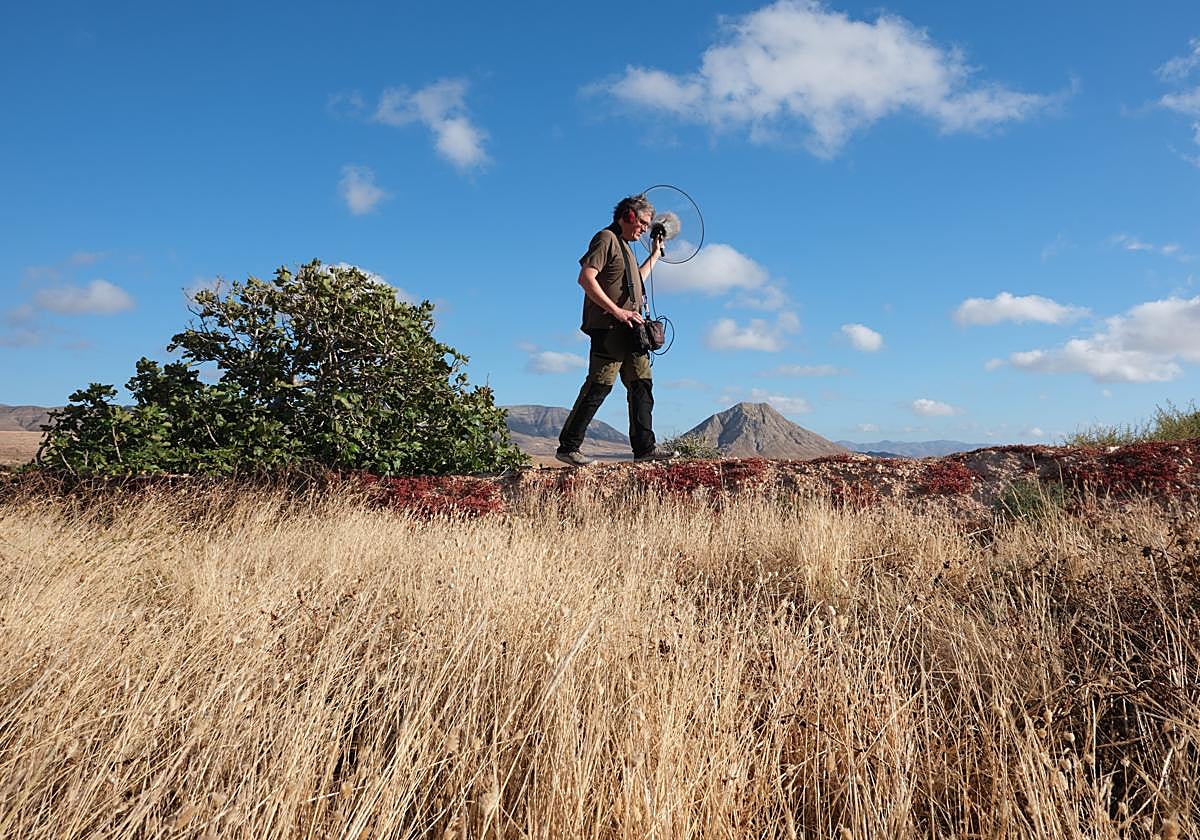
In the quiet, sun-drenched afternoon of Lajares, Fuerteventura, a unique exploration of sound ecology unfolds. Pablo Sanz, an artist, composer, and researcher, traverses the island with a team of microphones and parabolic kits, seeking to unravel the intricate relationships between sound and the environment. This article delves into Sanz’s compelling project, “Tierras Raras,” which investigates the sonic landscapes amid concerns of rare earth mineral mining in the area.
The Sound of Silence Transformed
As Sanz journeys through the arid landscapes sprinkled with chirate and a solitary fig tree, he masterfully transforms the profound silence of Fuerteventura into a rich tapestry of sounds and sonorities. The quietude is interrupted only by the flutter of birds or the rustling plants, but through Sanz’s work, it becomes a chorus of natural life. What was once simply silence morphs into a “constellation of sounds,” revealing the depth of life that coexists within this seemingly barren landscape.
Funding and Artistic Vision
The project received funding from the Ministry of Culture for Artistic Production and Research, allowing Sanz to dive deeper into the sound ecologies of Fuerteventura. Spanning from April to June 2026, fieldwork is conducted across three municipalities—Puerto del Rosario, Pájara, and La Oliva—where prospects for mining rights loom. However, Sanz’s investigation extends beyond these areas, as he remains keenly aware of other ecologically rich and sonically significant locations worthy of exploration.
Capturing the Atmosphere
Through a rigorous commitment, Sanz and his collaborator, Palma Edith Christian Martínez, have amassed over 600 hours of real-time recordings. This unusual partnership allows them to explore not only the sounds generated by the myriad forms of life present but also to capture fleeting atmospheric changes—each unique detail contributing to their immersive understanding of the environment.
They understand that sound is never perceived in isolation; rather, it emerges in relation to its surroundings—whether it’s the distance, the architectural formations, or even the listener’s own ears. Each sound, recorded by microphones with varying sensitivity, transforms the listener’s experience, as it mimics not merely human perception but that of various organisms like birds and insects.
Innovative Recording Techniques
Acquiring a profound understanding of this sonic world involves using diverse recording techniques. From hydrophones capturing underwater sounds to contact microphones that detect vibrations in the earth or vegetation, each tool plays a crucial role. Moreover, ultrasonic devices extend their auditory palette, allowing them to grasp the nuances often overlooked by the human ear.
Unfortunate Misses and Unforeseen Challenges
Despite their meticulous planning, challenges arose. During their time in Ajuy, working under the second exploration permit, they missed capturing a 4.5 magnitude earthquake. In another instance, an ambitious long-term recording setup beside a secluded watering hole fell victim to local goats, which found their cables irresistible, halting the recording prematurely. Such experiences underscore the unpredictability inherent in fieldwork.
An Engaging Sound Ecology
Their explorations have revealed the fascinating interplay of various sounds—wind, rocks, flora, and fauna—all within the expanse of what once seemed like desolation. They encounter unexpected voices from the environment, such as the enchanting calls of the alcaudón real and the myriad unidentified sounds bubbling in the waters of isolated pools.
The Composition Phase
Following their fieldwork, Sanz enters the composition phase, where all captured auditory materials are woven into an artistic narrative. He envisions presenting this project in Fuerteventura through an engaging sound installation, an immersive space where audiences can venture in and experience the soundscape fully enveloped in the environment’s auditory essence.
Beyond Documentation
Sanz’s intention diverges from merely cataloging sounds or creating a simulated soundscape of Fuerteventura. He aims to create an experience resembling a shared space where sound and audience interact dynamically. His delicate compositions strive for a nuanced representation of the island’s ecological sounds, inviting listeners to inhabit this unique audio realm.
A Global Impact
Pablo Sanz’s work has resonated globally, showcased at prominent venues such as the Museo Reina Sofía, Matadero, and Café Oto, as well as festivals like the Acoustic Ecology Festival in Brooklyn. He has collaborated on radio projects across Europe, publishing works in collaboration with various international labels. His artistic journey exhibits a compelling blend of sound art and ecological consciousness, enriching our understanding of the world around us.
The Journey Continues
As Sanz and Martínez push the boundaries of sound exploration, they invite us to engage with nature’s hidden narratives shared through sound. Their project echoes a profound respect for the interconnectedness of life and the unique auditory experiences that remain patiently waiting to be unveiled, making each recording expedition a vital piece of the broader environmental conversation.