The European Union: A Complex Tapestry of Sovereignty, Solidarity, and Geopolitics
For years, the European Union (EU) has positioned itself as a beacon of political unity, built on shared values and deeper integration. This vision is encapsulated in its common currency, the euro, a single market that facilitates trade, educational cooperation, and ambitious green transition initiatives. The EU has also championed principles like free movement, solidarity among member states, migration management, and collective security. Recently, discussions surrounding a common European defense have emerged as the latest chapter in this ongoing integration narrative.
However, the reality of the EU’s functioning is far more intricate. Instead of merely acting as a partnership among sovereign states, the EU has morphed into a political structure that not only governs common policies but also increasingly shapes the domestic and foreign policy agendas of its member states. This evolution raises critical questions about the essence of the EU: Is it genuinely a union based on solidarity, or has it become a political project influenced by powerful lobbying interests?
The Migration Crisis in Ceuta: A Case Study
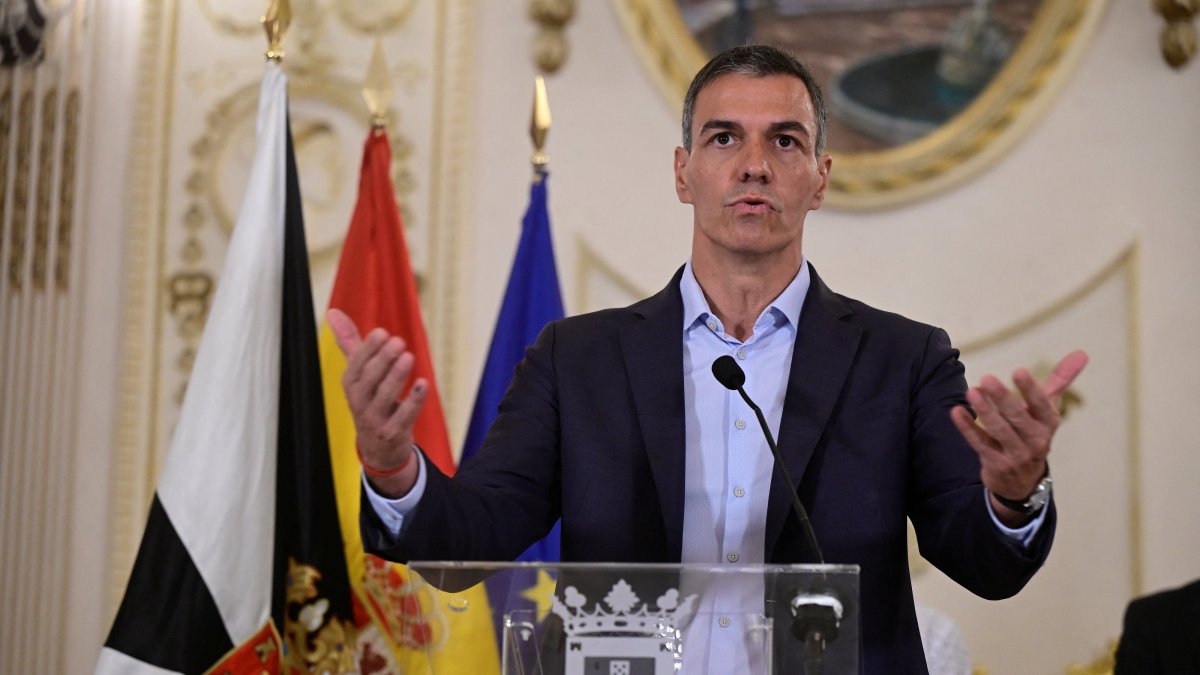
The recent migration crisis in Ceuta, a Spanish enclave in North Africa, has reignited this debate. Approximately 60,000 irregular migrants crossed the border into Ceuta in a matter of hours, prompting a swift response from Madrid. Prime Minister Pedro Sanchez characterized the incident not just as a migration crisis but as a violation of Spain’s sovereignty and the EU’s external borders. This situation has prompted discussions about the geopolitical dimensions of migration and its potential use as a tool for political leverage.
In 2021, a similar crisis unfolded when thousands of migrants crossed into Spain from Morocco amid diplomatic tensions over Western Sahara. Following that incident, Morocco reinforced its border controls, and Spain shifted its long-standing position by endorsing Morocco’s autonomy proposal for Western Sahara. This shift has led many observers to view migration as a potential source of political leverage over Spain, creating a precarious situation that hangs over the country like the Sword of Damocles.
Geopolitical Maneuvering: The Role of Israel
The recent surge in migration coincided with the implementation phase of a Gaza peace plan, which Spain’s government had vocally supported. The timing of the crisis led some commentators to interpret it as geopolitical revenge from Israel against Sanchez’s administration, allegedly facilitated through Morocco. Since signing the Abraham Accords in 2020, Morocco has become one of Israel’s closest strategic partners, complicating the dynamics of this situation.
Israel’s criticism of Spain intensified after Madrid recognized the State of Palestine, leading to accusations from Israeli officials that Sanchez was “rewarding Hamas.” This backdrop set the stage for a potential warning from Israel to the Sanchez administration, as the country sought to exert pressure through both EU channels and domestic political dynamics.
The relationship between Israel and Spain’s far-right VOX party adds another layer to this complex narrative. VOX leader Santiago Abascal has expressed unwavering support for Israel, and the party’s pro-Israel stance aligns with Israel’s regional interests. Weakening Sanchez politically while strengthening pro-Israel forces like VOX could serve to align Spain more closely with Israel’s geopolitical objectives.
The EU’s Response: A Test of Solidarity
In the face of the Ceuta crisis, the response from Spain’s EU allies has been strikingly muted. Instead of offering the expected support, the EU’s reaction transformed into an additional mechanism of pressure. Under the EU’s Pact on Migration and Asylum, protecting the EU’s external borders is defined as a shared responsibility. Yet, when Spain faced a sudden influx of migrants, the EU’s response was to call for tougher measures rather than activating the common mechanisms designed for such crises.
This situation raises fundamental questions about the EU’s reliability and credibility. The principle of “sacred European solidarity” appears to falter when one of its member states is under political pressure. Spain found itself increasingly isolated within the EU, prompting Sanchez to argue that some governments acted out of prejudice and misinformation, undermining European unity.
Selective Security Agenda: A Double Standard?
The Ceuta crisis has reignited discussions about Europe’s security priorities. The EU has committed substantial resources to the security of non-member Ukraine, framing it as a common European responsibility. Yet, when Spain, which safeguards one of the EU’s external borders, faced a migration crisis, Brussels opted for political pressure rather than collective action. This inconsistency has led to criticism that the EU’s responses vary depending on the crisis, raising questions about its impartiality.
The Ceuta crisis serves as a significant stress test for European integration, common border management, and political solidarity. If the EU cannot respond collectively during times of crisis, confidence in future joint security and defense initiatives will inevitably wane. The EU increasingly appears to function as a political project aimed at shaping Europe into a unified strategic voice, potentially sidelining member states that pursue independent foreign policies.
The Broader Implications
The contrast between the EU’s support for Ukraine and its lack of solidarity with Spain during the Ceuta crisis raises legitimate questions about the application of democratic standards. Does the EU prioritize geopolitical alignment over its proclaimed values? Furthermore, can the EU maintain unity when the interests of its member states conflict with those of influential political actors and interest groups?
If the EU is willing to influence the legal systems, agricultural policies, and social agendas of its member states, why does it falter in supporting one of them during a migration crisis? This situation echoes long-standing criticisms of Brussels, where power increasingly resides with technocrats who may be more accountable to the institutions that appoint them than to the citizens of Europe.
In navigating these complex dynamics, the EU faces a crucial challenge: to reconcile its foundational principles of solidarity and cooperation with the realities of geopolitical maneuvering and national interests. The unfolding events in Ceuta serve as a poignant reminder of the delicate balance that defines the European Union today.


