Navigating the Winds of Change: Fuerteventura’s Tourism Industry Adaptation
Adapting to evolving consumer demands positions Fuerteventura’s tourism sector for a robust recovery.
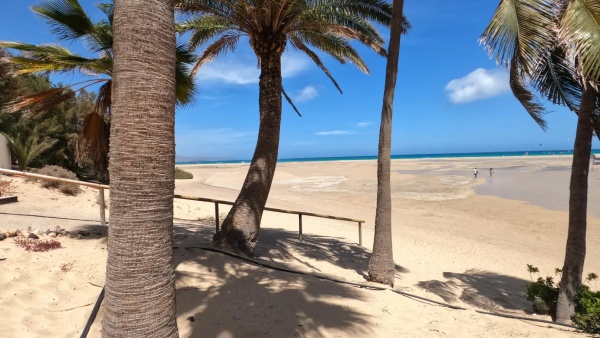
Fuerteventura, known for its stunning beaches and serene landscapes, is undergoing a significant transformation in its tourism sector. As global travel trends shift and new consumer preferences take root, the island’s businesses are pivoting to meet the challenges head-on. With a focus on sustainability and authenticity, local enterprises are reimagining experiences to attract a more discerning travel audience. From eco-friendly accommodations to immersive cultural tours, Fuerteventura is investing in quality over quantity, fostering a distinct identity that resonates with today’s mindful travelers.
Moreover, Fuerteventura’s strategic marketing efforts are gaining traction. The local government and tourism board are actively facilitating partnerships that amplify the island’s appeal. This collaborative approach not only boosts visibility but also fosters innovation among businesses, encouraging them to offer unique packages and services. Events celebrating local culture and gastronomy are being ramped up, inviting visitors to connect with the island in ways that are both enriching and memorable. These initiatives are not merely responses to current trends; they represent a calculated strategy to elevate the entire tourism ecosystem.
As the island shifts towards a sustainable tourism model, its businesses are laying a more resilient foundation for future growth. By emphasizing environmental consciousness and embracing a narrative of cultural richness, Fuerteventura is poised to enhance its appeal in a competitive market. This adaptive mindset, coupled with collaborative strategies, heralds a promising future for one of Spain’s most cherished islands.
Source: Gobierno de Canarias
Fuerteventura has always sold itself to the world as an oasis of endless beaches and tranquility. However, for those trying to build a life there in 2026, the island has become a mousetrap. The recent report published by El Español (Enclave ODS) uncovers a reality that has been brewing for years and that has now exploded: the residential rental market has disappeared, cannibalized by tourism and parasitized by digital crime. The premise is devastating: “Goodbye to housing.” It’s not that there are no houses; There are no houses to live in. The real estate stock has turned massively towards tourist exploitation or seasonal rentals (digital nomads and foreigners who spend the winter), breaking the social contract that allows a community to function. The scary fact: 90% of scams in Fuerteventura The statistic that heads the headlines is chilling: it is estimated that up to 90% of the advertisements that residents find on real estate portals or social networks are fraudulent or do not comply with the legality of the rental of their habitual residence. Why is this happening? Desperation is the scammer’s best ally. The modus operandi: Faced with no offer, when a “normal” apartment appears at an “affordable” price, people jump. Scammers ask for deposits in advance through immediate transfers to “reserve” the apartment before viewing it, claiming that there is a lot of demand. When the tenant arrives at the address, the house does not exist, or it is already rented, or it is a tourist apartment whose owner knows nothing. Helplessness: Many victims do not report out of shame or because the amounts (500-1000 euros) are considered minor crimes, perpetuating the cycle of impunity. The dictatorship of the “short season” The underlying problem is not only the criminals, but the legal and economic structure of the market. The owners have done the math: renting to a tourist for weeks or to a European teleworker for three winter months is infinitely more profitable (and supposedly safer against non-payments) than renting to a local family for five years. This has generated a phenomenon of “work homelessness.” People with payroll, permanent contracts and solvency—nurses, police officers, teachers, hospitality workers—are forced to live in: Vans or caravans. Shared rooms at studio prices in Madrid. Precarious occupations or “couch-surfing” in friends’ houses. The “long-term” market (the traditional rental regulated by the LAU) is an endangered species in Fuerteventura. The collapse of essential services This housing crisis has a domino effect that threatens the viability of Fuerteventura. If there are no houses, there are no workers. Health and Education: The Fuerteventura hospital and schools have serious problems filling vacancies. What doctor wants to move to the island if his entire salary goes to a vacation rental or if he simply cannot find a roof over his head? Services Sector: The tourist paradox is cruel. Hotels and restaurants need staff to serve tourists, but those workers have nowhere to live because the houses are occupied… by tourists. The whiting biting its tail is suffocating the real economy. Total gentrification Fuerteventura is undergoing a process of accelerated gentrification that does not expel residents from one neighborhood to another, but rather expels them from the island. Residential land is becoming, de facto, dispersed hotel land. Residents report that they feel like second-class citizens in their own land. Housing has ceased to be a constitutional right and has become a global speculative financial asset, where an investment fund or a private owner prefers to have the house empty or operating on Airbnb rather than “taking a risk” with a local tenant. Either it is regulated or it is closed. The situation described in 2026 is unsustainable. You cannot maintain a society with tourists alone; residents are needed to maintain vital infrastructure. The cry for help from Fuerteventura demands urgent measures: from the effective limitation of tourist licenses and the prosecution of scams, to the construction of public housing and tax incentives for long-term rentals. If action is not taken now, Fuerteventura will cease to be a living island and become a simple holiday theme park.
Originally reported by gndiario.com, rewritten by the Fuerteventura Times AI Editorial Desk.