Major Water Infrastructure Upgrades in La Oliva, Fuerteventura
The Consorcio de Abastecimiento de Aguas a Fuerteventura (CAAF) recently announced a series of significant hydraulic projects aimed at enhancing water supply in the municipality of La Oliva. With a total investment surpassing ten million euros, these efforts are tailored to rejuvenate municipal networks, upgrade production and distribution facilities, and expand conduits to meet both current and future water demands in the northern region of the island.
Upgrading Water Networks
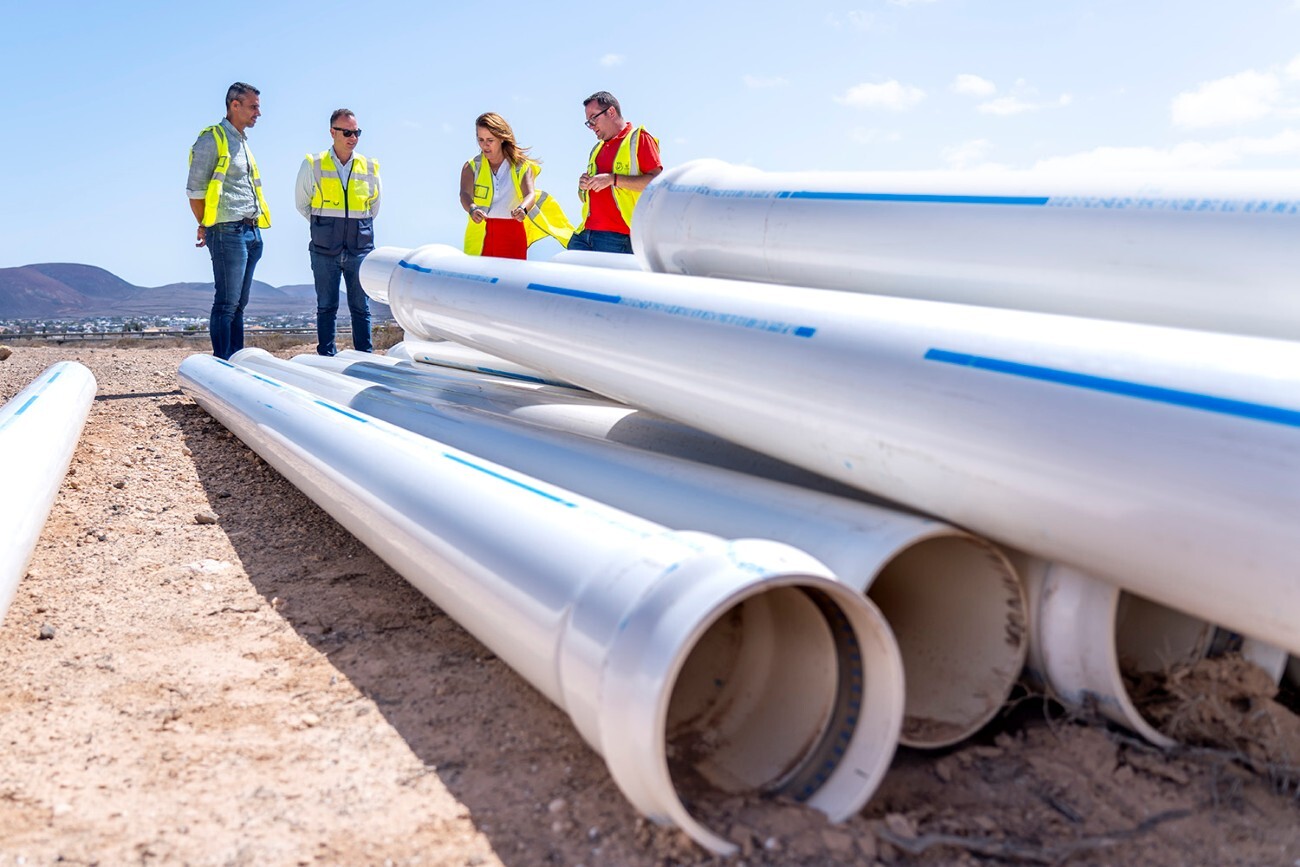
One of the cornerstone initiatives involves the replacement of over 4,500 meters of pipelines across various localities including Villaverde, El Cotillo, Corralejo, and Vallebrón. This initiative is a proactive measure aimed at minimizing issues linked to the aging infrastructure, ensuring a more reliable water supply for residents and visitors alike.
Among these enhancements, the complete overhaul of the distribution network in Corralejo stands out. Backed by a substantial investment of more than three million euros from the Government of the Canary Islands, this project is designed to significantly improve the efficiency and reliability of water distributions in one of the area’s most densely populated and water-intensive regions.
Enhancements to Desalination Facilities
In addition to network upgrades, the CAAF is undertaking enhancements at the Corralejo Seawater Desalination Plant (EDAM). This facility is crucial for meeting the heightened water demand, and the planned enhancements, funded with an investment of three million euros, aim to optimize its capacity and operational reliability. Furthermore, the plant’s transformation center is set for a renovation with an allocated budget of 200,000 euros.
An innovative feature of the upgrades includes remineralization techniques using calcite beds, with an expenditure totaling 372,048.33 euros. This technology ensures the quality of desalinated water, making it safe and palatable for consumers.
Storage and Distribution Improvements
The initiatives encompass significant storage and distribution repairs as well. One of the key projects is the repair of the second tank of Tamaragua, costing approximately 31,030 euros. This is complemented by essential connections between various reservoirs and internal networks. For instance, the connection between the Morro Francisco reservoir and Lajares, which has already seen an investment of 2.2 million euros, will facilitate better water flow between these critical areas.
The focus on gravity-fed conduits is also noteworthy. Currently in advanced stages is the connection between the La Oliva and Lajares reservoirs, valued at 1,197,434.03 euros. Additionally, the La Oliva to Tindaya conduct is complete, having absorbed an investment of 1,500,528.51 euros. Plans for a new reservoir in Tindaya are also underway, reflecting the proactive stance of CAAF in ensuring a robust water supply system.
Community and Government Collaboration
The projects not only highlight the financial commitment but also the collaborative efforts among various stakeholders. Lola García, President of the Fuerteventura Council, remarked that this investment signifies a strong commitment to the water security of La Oliva. Echoing her sentiments, Adargoma Hernández, the island’s Water Minister, described the overarching plan as holistic, cascading through the entire hydraulic system. Mayor Isaí Blanco emphasized that these interventions would result in fewer service interruptions, improved pressure, and a more consistent water supply for residents.
Future Directions
The CAAF has signaled its intention to continue implementing this suite of projects in collaboration with the Fuerteventura Council, the Government of the Canary Islands, and the La Oliva Town Hall. This collective effort underscores a forward-thinking approach to water management in Fuerteventura, aiming to secure a sustainable and reliable water supply for years to come.
With meticulous planning and execution underway, the residents of La Oliva can look forward to a revitalized hydraulic infrastructure that promises improved water quality and accessibility.