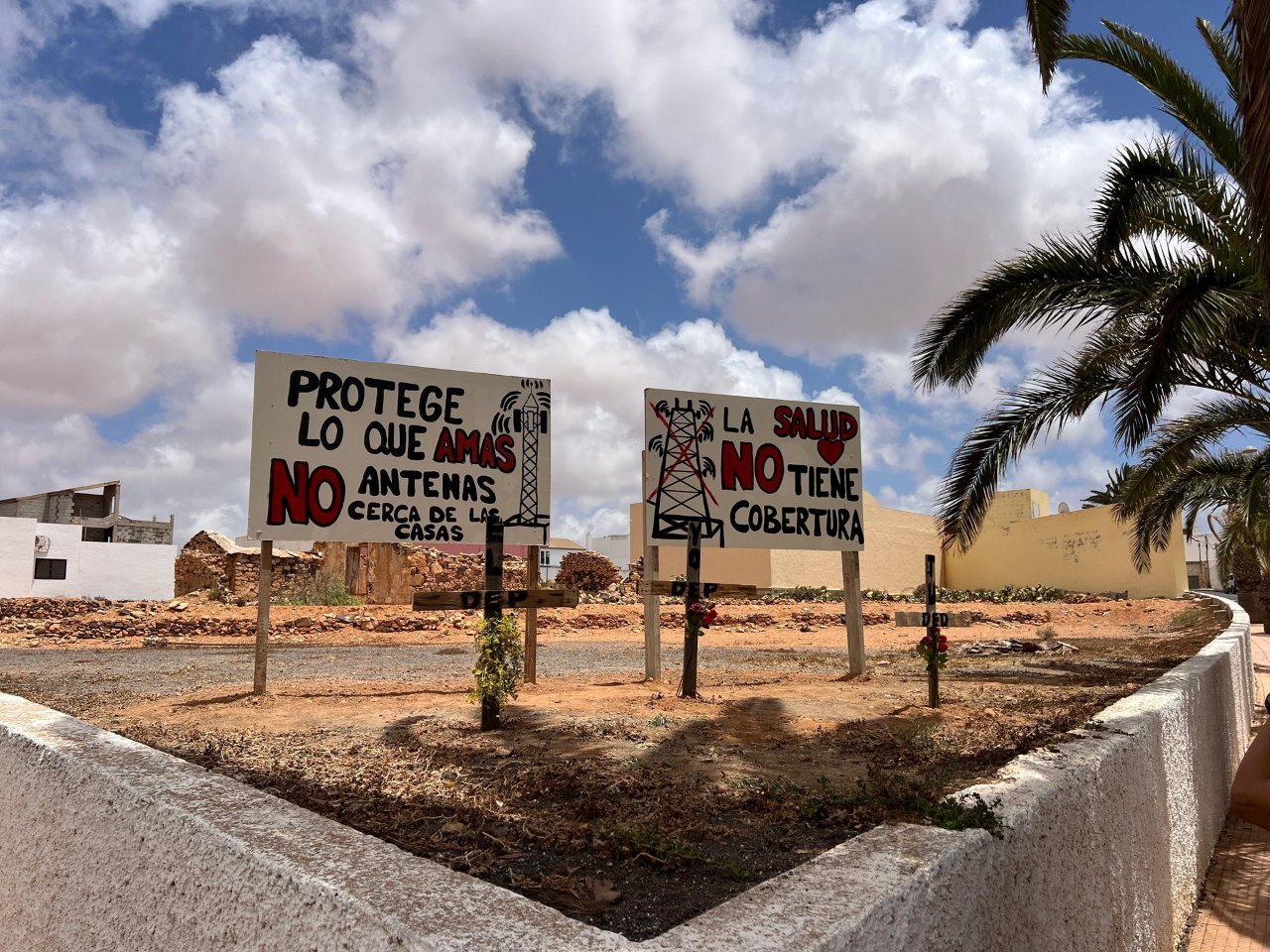
The Antenna Controversy in Antigua, Fuerteventura: A Community’s Struggle
This morning, a long-standing controversy in Fuerteventura reached a resolution. The issue began in mid-July when a group of residents in Antigua discovered a large trench being excavated along Camino de las Piletas. This trench was intended for the installation of a 30-meter-high antenna—a project that had not been communicated to residents prior to its announcement.
A Public Outcry
As reported by sources such as La Voz de Fuerteventura, the local council had been aware of the antenna project for five months before it became public knowledge. Many residents condemned this silence as “obscurantism.” Alarmed by the potential impact on their health and lives, the community rallied together, organizing protests and voicing their concerns. The residents’ fears were compounded by a lack of public information about the antenna’s implications.
Health Concerns: Fact vs. Fear
While the proximity of the antenna to homes instilled understandable anxiety among the local populace, it also brought to the forefront broader concerns regarding health. People expressed trepidation about whether such installations might pose health risks. However, it is crucial to note that no scientific evidence currently substantiates claims that telecommunications installations, particularly mobile phone antennas, are linked to adverse health effects. This disconnect between public fears and scientific consensus was not addressed by various public representatives during the debates.
A Resolution Emerges
On September 10, a significant breakthrough occurred in the conflict. Both the Spanish government and the Antigua Town Hall announced that the telecommunications company would seek an alternative location for the antenna. This decision was hailed as a victory by the residents and the public institutions that backed their protests.
Economic and Social Implications
Despite resolving the antenna issue, the way this matter garnered attention starkly contrasts with other pressing needs on the island. The focused response from higher authorities regarding an antenna placement highlights the disparity in address and urgency given to long-standing issues that impact daily life, such as deficiencies in police staffing, inadequate public services, water supply agreements, and housing crises.
Government Involvement
The situation escalated to the point where two ministers intervened: Óscar López, Minister for Digital Transformation, and Ángel Víctor Torres, Minister for Territorial Policy and Democratic Memory. They mediated a meeting in Madrid that included the Mayor of Antigua, Matías Peña, and the CEO of the involved telecommunications company, Patrick Farges. The outcome of this high-level discussion was a joint agreement to halt the initial site placement and explore alternative locations that would not disturb residents while still providing quality service.
The Officials’ Perspectives
In a statement, the Spanish government avoided directly addressing the public protests but emphasized its commitment to improving digital connectivity across the island. “We will always contribute to finding solutions to ensure that citizens and businesses can access the benefits of the digital society, no matter where they live,” stated Minister López.
Mayor Peña expressed satisfaction with the decision and pointed out that the agreement represents the best outcome for the municipality. He highlighted the immediate response from the ministers concerning his request for mediation, underscoring the collaborative spirit fostered by this incident.
The Telecommunications Company’s Stance
The telecommunications company, TOTEM, agreed to relocate the antenna. This shift aims to restore mobile coverage for the over 14,800 residents of Antigua who had been left without service due to the previous site’s inoperability. The government reassured the public that the new location would balance the necessity for coverage with community welfare.
Through the lens of this conflict, it becomes apparent that while a single antenna installation can provoke a significant public response, there are underlying issues in local governance and social priorities that remain unaddressed in Fuerteventura.