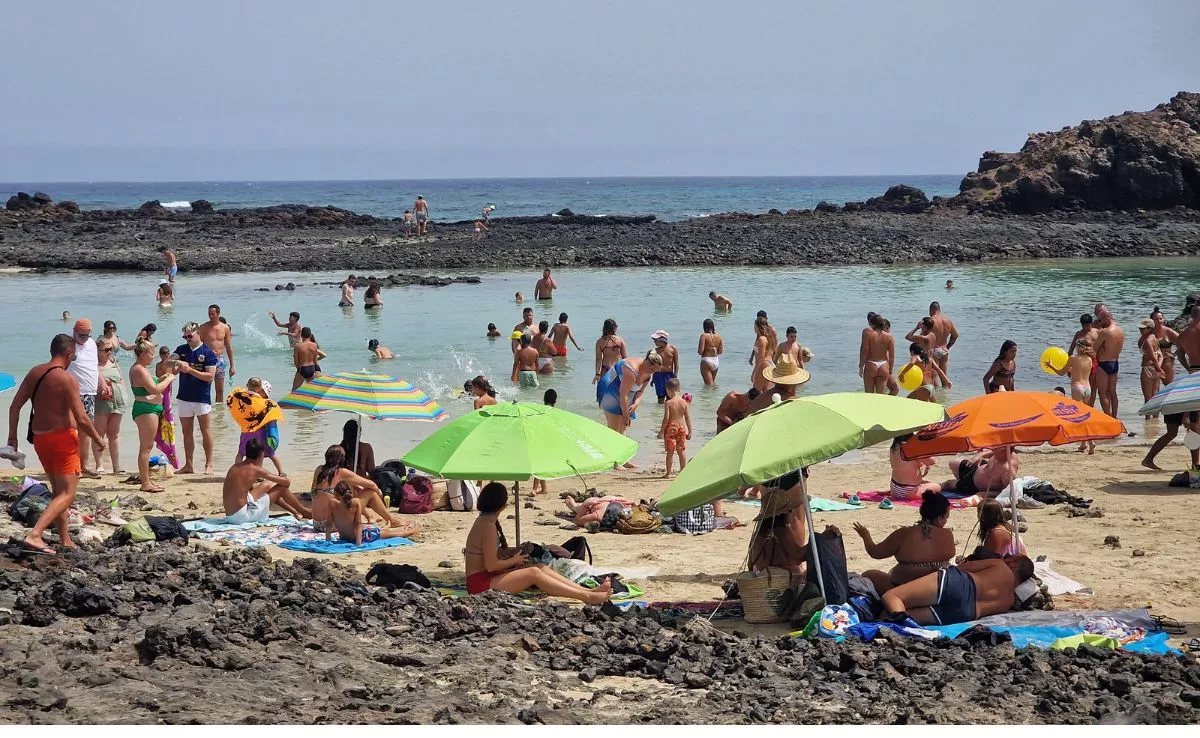
The Overcrowding Crisis on Isla de Lobos: A Protected Paradise Under Siege
Declared a Natural Park in 1982, Isla de Lobos is a small island off the north coast of Fuerteventura, renowned for its stunning landscapes and unique wildlife. However, the island is facing an unprecedented crisis fueled by mass tourism that far exceeds its sustainable capacity. Under its Master Plan for Use and Management (PRUG), Isla de Lobos is legally permitted to host only 400 visitors daily, divided into two shifts of 200. Yet, during peak tourist seasons, this number often skyrockets—sometimes reaching nearly 3,000 visitors per day, resulting in a staggering 700% overcapacity.
Challenges of Compliance and Enforcement
Sofía Menéndez, president of Agonane-Ecologistas en Acción and an environmental journalist, raises significant concerns about the lack of enforcement. “Every natural area has its PRUG, but these regulations are rarely followed. Ideally, at least four environmental agents should be present, yet they are often absent. People have learned when they will show up, and the place has become chaotic,” she states. This lack of oversight severely undermines efforts to maintain the ecological integrity of the island.
Unregulated Boat Traffic
The current system for controlling visitor access through an online permit system, known as LobosPass, has proven ineffective. Menéndez notes that “in Corralejo, excursion operators sell trips without verifying permits, and once tourists are on the island, there is no monitoring of who enters or exits.” The problem is further exacerbated by the influx of water taxis, private sailing boats, and tourist catamarans dropping off passengers without regulations. “By 10 a.m., it feels like a nightclub—catamarans blasting reggaeton and jet skis racing around the island. I’ve witnessed significant stress on vulnerable plants and wildlife,” she explains.
Illegal Overnight Stays
Another alarming trend is the surge of illegal rentals, where some have repurposed traditional huts as vacation homes, operating under platforms like Airbnb. “Some astute individuals have turned these properties into tourist accommodations, utilizing public land as if it were private. The island feels like a small village now,” says Menéndez. This situation is worsened by the presence of poachers, nocturnal shellfish gatherers, and visitors who stay overnight, despite such activities being strictly forbidden. “The true carrying capacity multiplies through those unsupervised individuals who remain overnight,” she adds.
Difficulties in Effective Control
A technical review of the PRUG submitted to the Fuerteventura Natural Spaces Patronage acknowledges the challenges of visitor control. The absence of physical boundaries on Isla de Lobos complicates monitoring efforts. The review also highlights environmental indicators pointing to erosion caused by foot traffic, the emergence of unofficial paths, and the degradation of vital habitats, particularly in dune and saline areas. Additionally, the island’s existing infrastructure—covering water supply, sanitation, and waste management—falls significantly short of what is required to handle the actual volume of visitors.
Institutional Negligence
Luis del Pozo, spokesperson for SOS Fuerteventura, concurs with Menéndez that the situation has spiraled out of control due to a lack of surveillance. “This isn’t just an issue for Isla de Lobos, but it is particularly evident there: the island planning has explicitly stated for over 20 years that no more than 200 people should be present at any time. Yet in summer, visitor numbers often triple without any regulation,” he explains. Del Pozo stresses that the necessary resources exist—ranging from environmental agents to local law enforcement—but often lack coordinated application. “A strategic effort during peak periods could create a strong deterrent. Operators would then understand that inspections could occur at any moment.”
The Debate Over Solutions: Ecotaxes vs. Genuine Control
In response to the mounting issues, the local government has proposed increasing enforcement and introducing an ecotax to limit uncontrolled tourism. However, Menéndez views this as a temporary fix if not coupled with rigorous monitoring. “What’s the point of charging if there’s nobody to oversee the rules? The focus should be on ensuring a constant presence of environmental agents who are strict and vigilant,” she argues.
A Grim Outlook for the Future
Menéndez portrays a bleak future if current conditions persist: “If we don’t take decisive action, in just ten years, Isla de Lobos will be a devastated space. Species are already disappearing due to these circumstances.” She encapsulates the urgent need for regulation succinctly: “What we need is to enforce the law and apply the PRUG effectively.” However, as it stands, the clash between tourism interests and responsible environmental stewardship is steering the island toward a precarious crossroads, with potential irreversible consequences for this natural haven.