A Green Renaissance: The Transformation of Jandía’s Barrancos
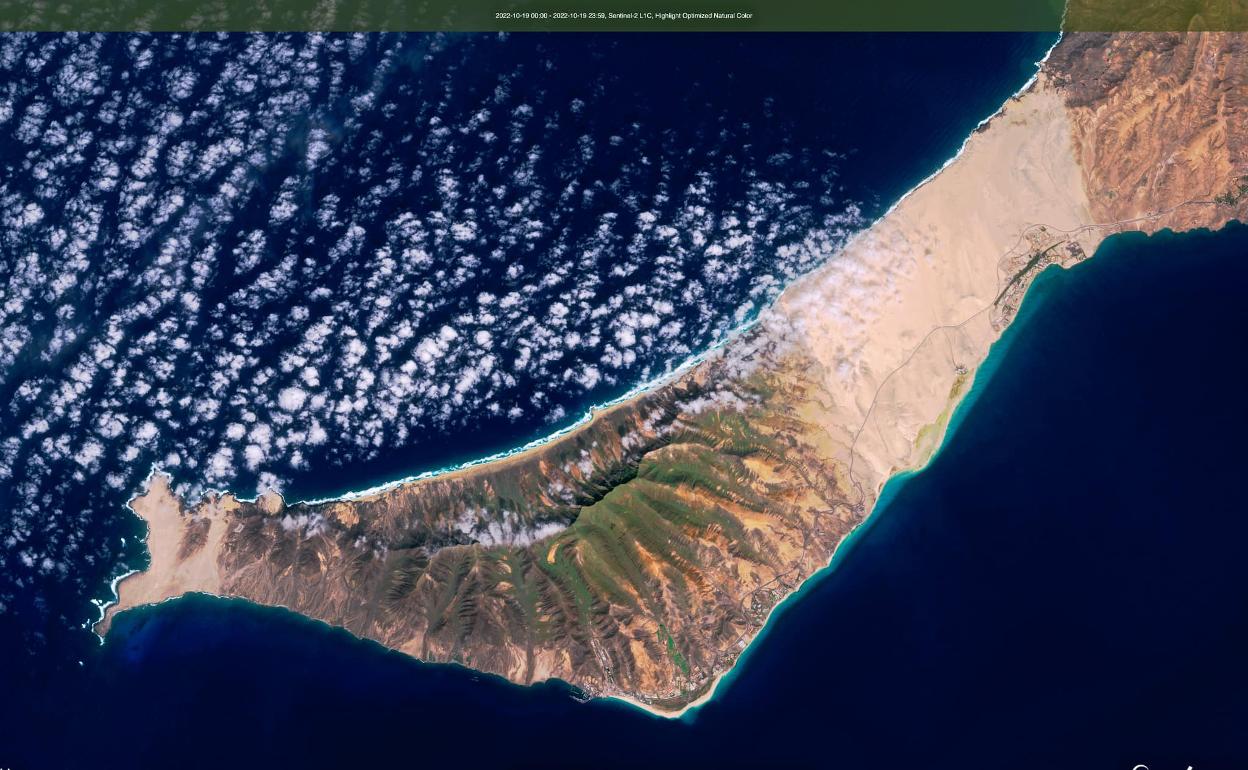
From the skies above, the barrancos of Gran Valle, Butihondo, Mal Nombre, Vinámar, and others on the Jandía Peninsula emerge in vibrant shades of green, as captured by the Sentinel 2L1C satellite of the Copernicus project. Rolling hills and valleys that once lay barren after years of drought have found new life, showcasing a stunning transformation thanks to the recent rains associated with Cyclone Hermine.
Landscapes of Abundance
The rainfall brought about by Cyclone Hermine at the end of September has revitalized the dry landscapes of the Pájara municipality. The once-arid environment is now bursting with greenery, turning these dry barrancos into a veritable garden. The Jandía massif, with its serrated ridges, harmoniously meets the sea, trailing a lush blanket of grass, a sight that has delighted locals and observers alike.
A Contrast of Colors
The deep greens of the rejuvenated barrancos stand in stark contrast to the arid stretches of La Pared. Here, the golden sands and rugged cliffs underscore the stark beauty of the island. Urban development is quickly encroaching on this pristine landscape, as Costa Calma gradually ascends from the shore, hinting at the growing human footprint on this natural paradise.
The North’s Flourishing Landscape
Traveling north to La Oliva, one finds another spectacle unfolding. The area between the Corralejo Dunes and El Cotillo also feels the impact of the rain, with swampy lands and fields around Villaverde and Lajares stepping forth in brilliant green hues. These areas, traditionally drought-stricken, showcase nature’s resilience and ability to rebound after precipitation, evoking a sense of wonder in its visitors.
Center of Contrast
In sharp contrast, the central regions of Fuerteventura remain relatively dry, revealing an intriguing patchwork when viewed from above. The satellite images depict a stark dichotomy: lush green valleys adjacent to dry expanses. This visual discrepancy highlights not only geographical variances but also the different climatic effects at play across the island.
The Richness Beneath
The transformation experienced by the islands serves as a reminder of the environmental power of rain. While the outer landscapes burst forth in greenery, the soil gains precious nutrients, fostering a hidden wealth of biodiversity that may have lain dormant for years. This revival is more than just a visual delight; it represents the cycling of ecosystems and habitats beneath the surface.
The Importance of Satellite Observation
The role of advanced satellite technology, as exemplified by the Sentinel 2L1C, is vital in understanding these environmental changes. The satellite offers a bird’s-eye view of the earth’s surface, allowing researchers and environmentalists to monitor transformations over time. This information is invaluable in the face of ongoing climate challenges, enabling proactive measures for conservation.
Embracing Nature’s Rhythm
As we witness these natural changes heading into the fall season, the landscapes of Jandía remind us of the delicate balance between human development and nature. Each green sprout not only signifies life after drought but also serves as a call for mindfulness about our environmental choices. Through shared observation and appreciation, we can partake in the ongoing story of recovery, resilience, and the rich tapestry of the island’s natural heritage.