Spain’s Diplomatic Dance with China: A New Era of Engagement
Introduction to the Visit
Spanish Prime Minister Pedro Sanchez recently embarked on his fourth visit to China in just four years, a testament to the growing importance of Sino-Spanish relations. Speaking at Tsinghua University in Beijing, Sanchez emphasized the need for China to take on a more substantial role in global issues, particularly in areas like climate change, security, and the fight against inequality. This visit comes at a time when many Western governments are striving to maintain engagement with Beijing, despite ongoing tensions in trade and security.
China’s Role in Global Issues
During his address, Sanchez called on China to step up its efforts in various critical areas. He highlighted the pressing need for collaboration in combating climate change, promoting global health, and ensuring responsible development in artificial intelligence and nuclear weapons. By advocating for international law and peace in conflict zones such as Lebanon, Iran, Gaza, and Ukraine, Sanchez underscored the potential for China to be a leader in fostering global stability.
Europe’s Response to U.S. Withdrawal
Sanchez pointed out that Europe must also intensify its efforts in these domains, especially as the United States appears to be retreating from its traditional leadership roles. This shift presents both challenges and opportunities for European nations, which may need to fill the void left by U.S. disengagement. The Prime Minister’s remarks reflect a broader sentiment among European leaders who recognize the necessity of a united front in addressing global challenges.
Trade Dynamics Between Spain and China
Trade relations between Spain and China are particularly noteworthy. Sanchez revealed that China accounted for a staggering 74% of Spain’s total trade deficit, which has more than doubled in four years to nearly $50 billion. This alarming statistic highlights the urgent need for Spain to recalibrate its trade balance. The Spanish government is keen on boosting agricultural and manufacturing exports to mitigate the high volume of imports from China.
Bilateral Ties and Future Prospects
Sanchez’s visit is not just about addressing trade deficits; it also aims to strengthen bilateral ties. The Chinese state news agency Xinhua reported that Sanchez’s trip is set to further consolidate relations between the two nations. This is particularly significant at a time when global uncertainty is on the rise. The hope is that through steady engagement, both countries can work towards a more balanced and prosperous economic relationship.
Meeting with Xi Jinping
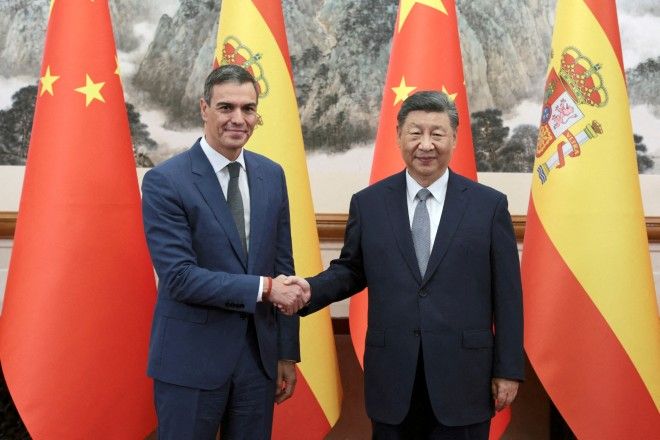
A key highlight of Sanchez’s visit is his anticipated meeting with Chinese President Xi Jinping. This meeting is expected to focus on geopolitics, providing an opportunity for both leaders to discuss pressing global issues and explore avenues for deeper cooperation. The outcome of this meeting could have far-reaching implications for not just Spain and China, but for Europe as a whole.
Conclusion: A Strategic Ally?
Spain’s approach to China stands out in Europe, as it advocates for treating China as a strategic ally rather than merely an economic rival. This perspective is crucial in navigating the complexities of international relations in an increasingly multipolar world. As Sanchez continues his diplomatic efforts, the focus remains on fostering a balanced, globalized economy that benefits both nations and contributes to shared prosperity.


