Dreamland: The Territorial Debate Reshaping Fuerteventura
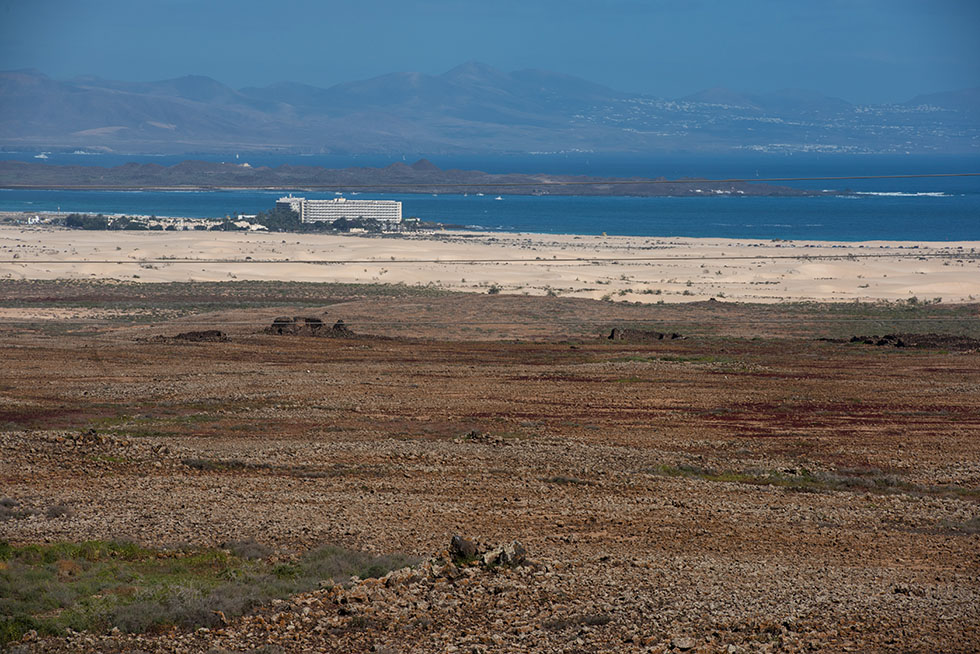
Dreamland has emerged as one of the most contentious territorial debates in Fuerteventura over the last decade. This ambitious theme park and commercial center, located just 400 meters from the Natural Park of the Corralejo Dunes, proposes the urbanization of 160,001 square meters of currently untouched rustic land. Plans reveal that some buildings could reach heights exceeding 24 meters, igniting fierce discussions about environmental preservation and urban development.
The Island’s Interest Declaration
The declaration of “insular interest” by Sergio Lloret, the president of the Cabildo, has triggered a wave of backlash, particularly from Podemos, which labeled the support from Andrés Briansó as a “betrayal” against Fuerteventura. This declaration is pivotal as it sets the legislative framework for the proposed development, allowing it to circumvent certain restrictions typically placed on rustic land. The process for this declaration is expected to face significant resistance as local voices call for environmental awareness.
Territorial Impact Concerns
One of the primary objections raised by the Fuerteventura Environmental Agency against Dreamland pertains to the project’s claimed insular interest. In a May agreement, the agency questioned the anticipated benefits for the local population and highlighted the environmental unsuitability of the proposed site, labeling the rustic land as having “essential and unique natural values.” Additionally, they pointed out the potential for “territorial fragmentation” that could arise from erecting such a massive complex in a location far removed from existing urban areas.
The legal framework used for this project—the Canary Islands Soil Law—allows for the execution of insular interest projects on any type of land. However, the consensus is that prioritizing virgin land for such development is questionable, especially when alternatives exist.
The Location Study
Despite the strong objections, the promoters of Dreamland assert that the chosen location is ideal for a “strategic tourist facility.” The study, authored by engineer Francisco González-Jaraba and biologist Rosendo López, acknowledges that while the site near the Corralejo Dunes is somewhat apt in terms of ownership, it poses considerable environmental risks. They recognize that several protected species inhabit the area, including endangered birds such as the hubara and guirre.
In fact, alternative locations, including areas closer to urban populations, received higher environmental ratings in their analysis. The study opens up a compelling question about the legitimacy and logic behind the chosen location.
Questionable Access Provisions
A major point of contention is how visitors will access the park. The proposed access route involves a secondary road that is narrow and inadequate for the projected traffic, which anticipates that one in every four visitors to Fuerteventura will travel through this route. Moreover, the financial viability of upgrading this road to handle tourist traffic adds another layer of complexity to the project.
Promoters have pointed to easy access from the main highway as a key selling point for their chosen location. Yet contradictions in their documentation surrounding access logistics only serve to heighten skepticism.
Visual Impact and Environmental Concerns
The Fuerteventura Environmental Agency has expressed significant worry about the visual alterations the project could bring to this largely untouched landscape. While the promoters assert that there would only be a minimal visual impact, the agency argues that there would indeed be a “very high” visual impact due to the proposed scale of the buildings.
The project documentation lists plans for nearly 18 structures, with the tallest reaching nearly 24.2 meters. The promoters’ claims about maintaining minimal visual intrusion seem at odds with these plans, sparking further doubts about the project’s long-term consequences on the landscape.
Economic Viability and Employment
Proponents push hard on the argument of economic diversification and employment generation. The project’s potential to create jobs, particularly high-quality positions, has been highlighted by supporting political factions. However, skepticism surrounds the jobs created, with a significant percentage being described as “common” roles rather than specialized, skilled jobs.
The financial projections indicate that most revenues would come from tourists, suggesting that the park’s success is heavily reliant on attracting visitors. Yet, questions remain about the actual numbers, with the expected creation of a mere 150 direct jobs, many of which may not be sustainable or high-paying.
Financing the Ambitious Project
Initial claims suggested that Dreamland would require an investment of up to 120 million euros; however, documented preparations show a reduction in necessary funds to 76.8 million, planned to be executed in multiple phases. Negotiations with banking institutions for loans, alongside efforts to entice private investors, expose underlying uncertainties about the project’s financing.
Despite optimism from Newport about partnerships with audiovisual companies and the influx of additional capital, ambiguity remains regarding the comprehensive financial strategy essential for the project’s realization.
In summary, Dreamland’s plans have opened a multifaceted debate, intertwining environmental integrity, economic potential, and community wellbeing. As stakeholders engage in discussions, the future of Fuerteventura’s landscape hangs in the balance, marked by the undeniable conflict between development aspirations and ecological stewardship.