Fuerteventura’s Emerging Entrepreneurs: Tapping into the Island’s Economic Potential
The blossoming startup scene in Fuerteventura is a testament to innovation and resilience in a changing economic landscape.
Fuerteventura’s entrepreneurial landscape is witnessing a vibrant transformation. Despite the economic challenges brought on by the pandemic, the island has emerged as a hotspot for startups, driven by a mix of local talent and an influx of remote workers. This burgeoning ecosystem is not only revitalizing Fuerteventura’s economy but is also fostering innovation across diverse sectors such as technology, tourism, and sustainability.
Recent statistics reveal a noteworthy increase in new business registrations, highlighting a growing confidence among entrepreneurs. Catalyzed by favorable governmental initiatives and a unique lifestyle appeal, the island is attracting both local residents and expatriates determined to carve out their niche. With co-working spaces sprouting up and networking events gaining traction, Fuerteventura offers an ideal environment for collaboration and idea-sharing, bolstering a sense of community among new business ventures.
Moreover, the commitment to sustainable practices is becoming a cornerstone for many startups. Entrepreneurs are increasingly integrating eco-friendly methods into their operations, a trend that not only aligns with global priorities but also positions Fuerteventura as a leader in sustainable entrepreneurship. As these startups find their footing, they are reshaping the island’s economic narrative, making Fuerteventura not just a stunning holiday destination but also a thriving hub for innovation and business growth.
Source: Gobierno de Canarias
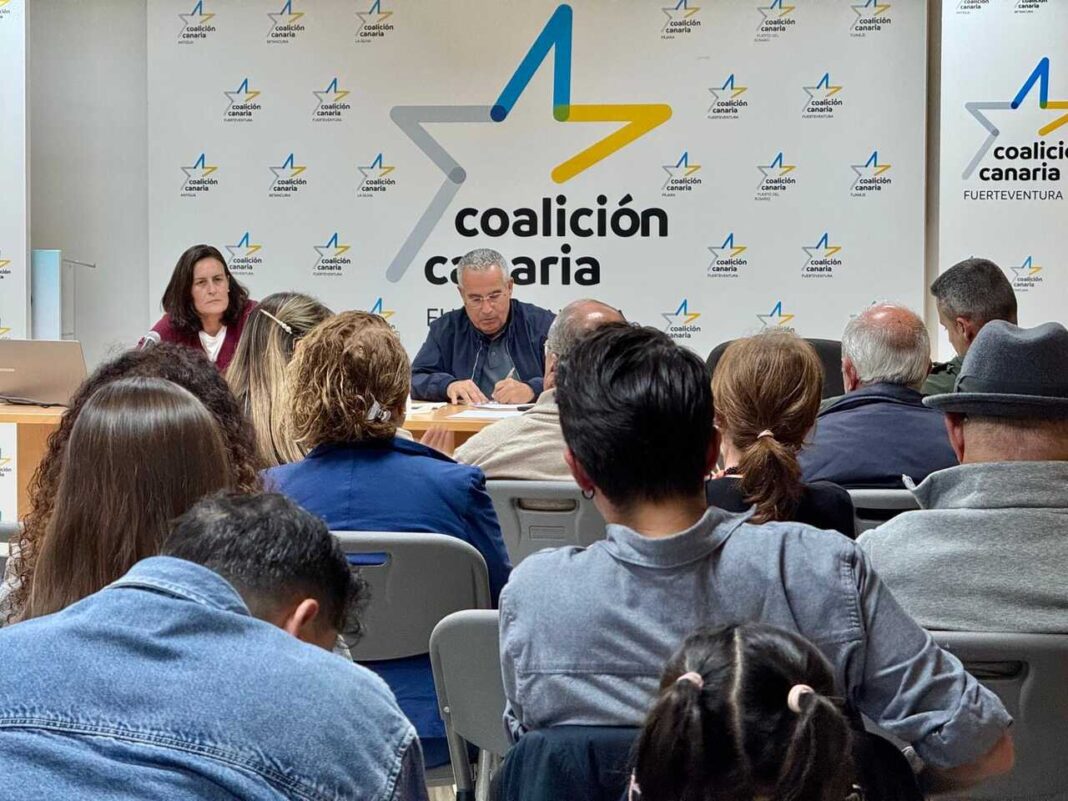
Major Assembly – Fuerteventura Canarian Coalition reiterates its rejection of the implementation of renewable energy infrastructure on agricultural land, and questions the modus operandi of the Ecological Transition Department of the Government of the Canary Islands. “Far from seeking alternatives to the use of agricultural land, they are opening new avenues for its occupation to the detriment of the primary sector,” they denounce. The insular Executive of the political organization recalled that the Ministry recently announced the creation of a working group to develop a regulation that aims to make agricultural activity compatible with the installation of photovoltaic plants. Faced with this scenario, the organization once again shows its concern about the counselor’s insistence on allocating rural land to uses other than agricultural development. “We don’t want any more blows in Fuerteventura,” they emphasize. The Assembly Majorera – Canarian Coalition warns that these types of initiatives may represent a change in the territorial model that puts at risk the protection of agricultural land and the future of the primary sector on the island. Along these lines, they recall their opposition to the indiscriminate implementation of Article 6 bis of the electricity sector law, as well as to the Renewable Acceleration Zones (ZAR) including agricultural land. Once again, they have reiterated the need to prioritize the mandatory installation of renewable energies on building roofs and in already anthropized spaces, such as industrial estates, until their potential is exhausted. Furthermore, the Majorera Assembly-Canary Coalition insist that the Renewable Acceleration Zones are limited to streamlining the procedures for the implementation of energy infrastructures. “We are acting quickly, but only to achieve the objective of 58% renewable penetration, without developing a true energy transition,” they question. For training, it is essential to have a clear roadmap that orders the implementation of renewable energies on the island. In this sense, they highlight that the Cabildo of Fuerteventura is already working on drafting an island energy plan, being, so far, the only island in the Canary Islands that is promoting planning of this type. “The commitment to renewable energies is firm and unquestionable, but it cannot be done at any price,” they defend. The organization insists that the implementation of these infrastructures must be carried out in an orderly manner and in accordance with the planning and territorial model of the island. In addition, they emphasize the importance of working hand in hand with the Cabildo and the city councils on the matter. In this way, they criticize that the Ministry continues to insist on the use of rural land, now through proposals that open the door to allocating large agricultural areas – almost 50% of the rural land – to energy generation for discharge into the grid. Regarding this, AM-CC reiterates that “we must not contribute to the energy transition becoming energy speculation.” In this sense, they emphasize that agricultural land is strategic for the Canary Islands. “You cannot talk about food sovereignty and, at the same time, promote the implementation of industrial facilities on farmland,” they insist. For the party, this initiative responds “more to economic interests than to wanting to give a boost to the primary sector.” Furthermore, they defend that energy development in the primary sector should be aimed at the self-sufficiency of farmers and ranchers, and not at converting their farms into energy production platforms for the market.
Originally reported by www.lavozdefuerteventura.com, rewritten by the Fuerteventura Times AI Editorial Desk.