Fuerteventura’s Movement ‘There’s a Limit’ Returns to the Streets
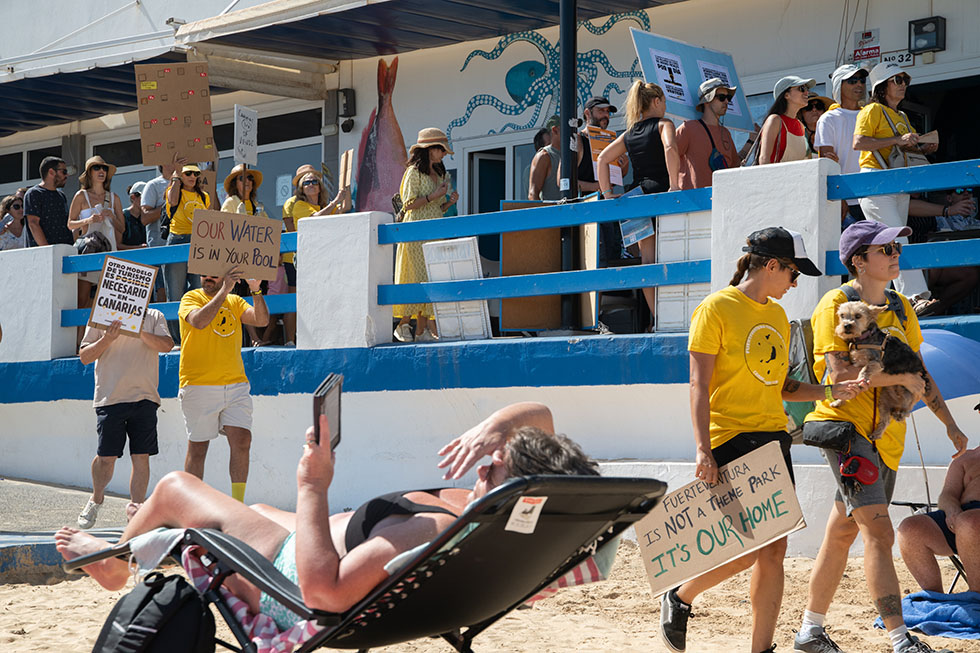
On Sunday, October 20, the environmental and social movement ‘Fuerteventura tiene un límite’ made a significant return to the streets of Corralejo, located in La Oliva. This demonstration is part of the broader network ‘Canarias tiene un límite’, aimed at advocating for a drastic change in the economic model of the region.
A Call for Sustainable Change
Despite witnessing lower turnout this time compared to the previous protest on April 20, which saw around 1,500 participants, the fervor and passion were palpable. Protesters raised their voices against the relentless surge in tourism with bold slogans like, “Gobierno de Canarias es una Inmobiliaria” (Government of the Canary Islands is a Real Estate Agency), and “no es turismofobia es canaricidio” (it’s not tourism-phobia; it’s Canary genocide).
The sentiments echoed concerns over ecological preservation and the social well-being of residents, highlighting the pressing need for a new, sustainable economic model. The crowd carried banners demanding “agua para las gavias y no para los campos de golf” (water for the fields, not for golf courses), and “quiero vivir en la tierra de mis abuelos” (I want to live in the land of my grandparents).
The Parade Through Corralejo
Under the warm midday sun, participants gathered at the entrance to Corralejo, marching along the Virgen del Carmen avenue. The procession continued toward the small dock and concluded at Plaza Patricio Calero, where a manifesto was read aloud, reinforcing the critical message that “Canarias and Fuerteventura have a limit.”
Lola Soto, the spokesperson for the platform, emphasized the lack of action from the Government of the Canary Islands, stating, “They do not listen to us; we will keep organizing protests and mobilizations to show them we are more than they think.”
Building for the Future
In a strategic move, Soto announced a forthcoming meeting on November 30 to unite all groups involved in the movement, aiming to outline a roadmap for the following year. Within the past six months, activists have made their presence felt at various local events, including showcasing banners at Feaga, the Costa Calma Windsurfing Festival, and during the celebrations of Rosario in the capital.
The demonstration also received support from the Plataforma Salvar la Bahía de Corralejo, opposing the construction of a new mega-port proposed for the area. Spokesperson Wim Geirnaert shared concerns about preserving the unique and volcanic landscape. He passionately argued against the detrimental impact the port would have, stating, “We reject the construction of the macro-pier, which will only lead to further pollution and degradation of the bay’s quality.”
Addressing Social Issues
The manifesto presented during the demonstration highlighted some alarming statistics regarding socio-economic conditions in the Canary Islands. With 36% of the population at risk of poverty or social exclusion, the region ranks second in the country for the lowest average salaries. Furthermore, Fuerteventura boasts the highest number of vacation rentals per capita in the entire archipelago. For instance, Pájara has more tourist beds than the residents it officially counts.
Participants also pointed out the demographic trends, emphasizing how the influx of European migrants significantly surpasses that of individuals from Africa or Latin America. This fact contradicts the entrenched narratives of racial and class-based hatred that seek to misrepresent these communities.
According to Oxfam, eight out of ten residents have encountered rumors and falsehoods about migrants, with the prevalence of racism and xenophobia marked as the leading categories of hate crimes in the region.
The Echo of Activism
As the crowd dispersed, the resonant echo of their chants lingered in the air: a clear message demanding not just a limitation on tourism but a sustainable and livable future for Fuerteventura. As the movement continues to evolve, its dedicated advocates persist in their fight for systemic change, highlighting critical social and environmental issues facing their beloved islands.
The ongoing struggle reflects a broader dialogue about what it means to balance economic development with ecological stewardship and community well-being, making clear that the conversation around tourism needs to shift from mere growth to thoughtful, sustainable practices.