Journey to the Canary Islands: A Pandemic Travel Experience
For weeks leading up to my trip to the Canary Islands, an archipelago off the northwest coast of Africa, I felt a nagging doubt that the adventure would actually happen. My life had shrunk to mundane trips to the local grocery store and icy walks in the cold Berlin air, contrasting sharply with the sun-soaked sands and azure waters I longed for.
Navigating Travel Restrictions
During this period, entering Spain required European residents to furnish a negative PCR test taken within 72 hours of arrival. Unlike other appealing destinations in Europe that enforced mandatory quarantines—such as Greece and Italy—the Canary Islands provided a glimmer of hope for a hassle-free getaway. With our PCR test results cleared and relief flooding our hearts, my Spanish best friend and I arrived at the eerily quiet Berlin Brandenburg Airport (BER) during what was usually peak travel time: Easter weekend.
In the pre-pandemic world, the Canary Islands were a hotspot for tourists, but according to recent statistics from the Canary Islands Tourism Board, arrivals plummeted by a staggering 91% in 2021. With tourism accounting for over 30% of the region’s GDP, the impact was devastating, akin to many tourism-dependent areas in Spain.
The Flight Experience
Though we stepped onto a flight filled with fellow adventurers, EasyJet’s seating arrangements left little room for comfort. I found myself grappling with anxiety as children dashed up and down the aisle, dispersing droplets of laughter and nearby jet streams of air. The in-flight service had transformed drastically. We were advised to bring our own food since airlines ceased to offer meals for hygiene reasons. I munched on leftover pizza I had packed the night before while applying hand sanitizer with almost obsessive consistency.
Unpredictable Travel Plans
Traveling during a pandemic isn’t for the meticulous planners. Booking accommodation or renting a car weeks in advance served little purpose. Cancelling those plans could lead to financial losses if flight cancellations or sudden travel restrictions cropped up. This uncertainty melted away as we finally found ourselves on Fuerteventura, an island celebrated for breathtaking beaches and a magnet for surfers across Europe.
After showing our digital registration form at the airport, we picked up a rental car—its steering wheel meticulously wrapped in plastic. Standing next to the turquoise waters sent a jolt of reawakening through me, starkly contrasting the murky canals of Berlin.
A Dual Reality
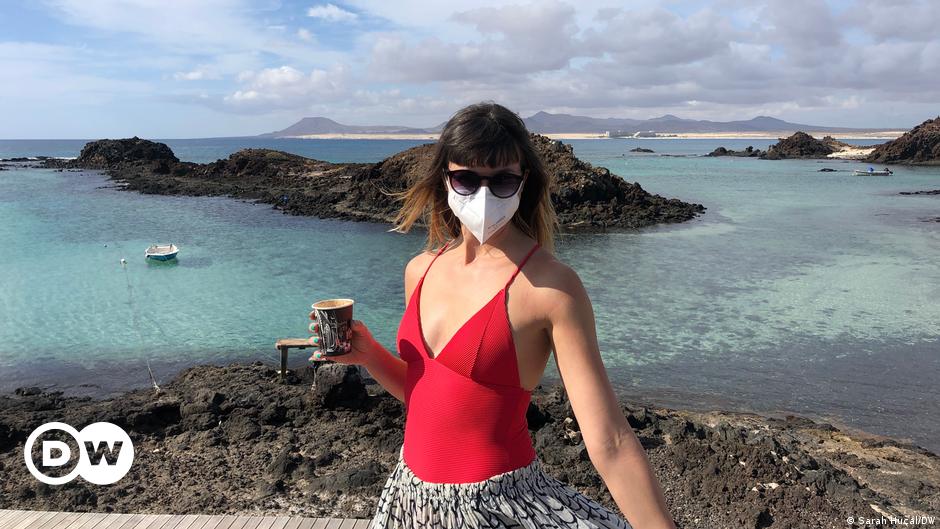
My initial impression of Corralejo, our destination town, resembled that of a near COVID-free haven. This pristine, sun-soaked beach town was deceiving; at that moment, Fuerteventura had 189 active COVID cases. Yet hand sanitizer stations and mandatory FFP2 masks were available everywhere. Spain’s strict mask mandate required wearing one even outdoors, and locals seemed comfortable adhering to these rules.
Each island came with its own set of restrictions based on designated “alarm levels.” Upon our arrival, Fuerteventura was at level three, limiting bar and restaurant terrace capacity to 50% and imposing a 10 p.m. curfew. Meanwhile, the mainland enforced stricter regulations.
Nightlife with a Twist
Nightlife in Corralejo buzzed with life, with bars and restaurants filled with young people amidst the ongoing pandemic. My friend and I reveled in the excitement, both exhilarated and anxious at the prospect of mingling with others after months of social isolation back home. Yet the reality of the situation was unmistakable; hand sanitizer became part of the nightly routine as a waitress swiftly squirted it into our palms even before we could greet her.
As the clock ticked closer to 10 p.m., patrons scrambled to settle bills and vacate the premises. It felt novel, if not a little absurd, to witness my friend marvel at how quickly everyone hurried home before the hour typically reserved for dinner in Spain.
The Human Cost of Travel
While our experience of traveling without the usual crowds was refreshing, the toll on the tourism industry was heartbreaking. Unemployment soared to 25% in the Canary Islands by the end of 2020, and countless hotel workers faced layoffs or were thrown into financial limbo with limited government support.
“It’s our worst Easter week in recent history,” Tom Smulders, president of the Las Palmas Association of Tourist Accommodation Entrepreneurs, revealed to me. Only 30% of hotels in Gran Canaria remained open, usually operating at half capacity during a season that would typically thrive.
The islands introduced a unique initiative; some hotels managed to keep staff employed by taking in migrants arriving via boat from Africa, while the government compensated hoteliers for the arrangement.
New Opportunities Amidst Challenges
Amid this adversity, there was a silver lining. Kitti Kovacs, who transitioned from hotel receptionist to a tour operator selling boat trips, remarked, “Remote workers are really saving us.” Some hotels began offering drastically reduced rates for long-term stays to attract digital nomads—an unexpected but welcome shift in strategy during these uncertain times.
Adventure on Multiple Islands
Moving on to La Palma required another PCR or antigen test before boarding our short flight. Arriving on this lush island famed for its breathtaking hiking trails, we embarked on treks through practically deserted pathways carved into volcanic landscapes. At a charming coastal eatery, I savored fresh seafood while the waiter diligently sanitized tables and chairs before each new guest arrived, a reminder that health protocols were a continuous priority.
An Eerie Contrast on Grand Canaria
Grand Canaria, with its popular tourist spots like Playa del Ingles and Maspalomas, presented an eerie sight. Normally brimming with visitors, the once-vibrant locales felt desolate, reminiscent of a ghost town. After passing through testing at the airport without incident, I felt relieved—saving myself from a potentially burdensome quarantine should the result be unfavorable.
Returning to Berlin, where the sun shone brightly, I felt rejuvenated, having forged a deeper connection with nature and a renewed sense of self amidst the pandemic’s restrictions. While my journey came to a close with five days of quarantine, I cherished the memories and the newfound perspective gained along the way.