The Craftsmanship of Josefa Navarro: A Legacy of Artistry and Tradition
A Journey of Learning and Passion
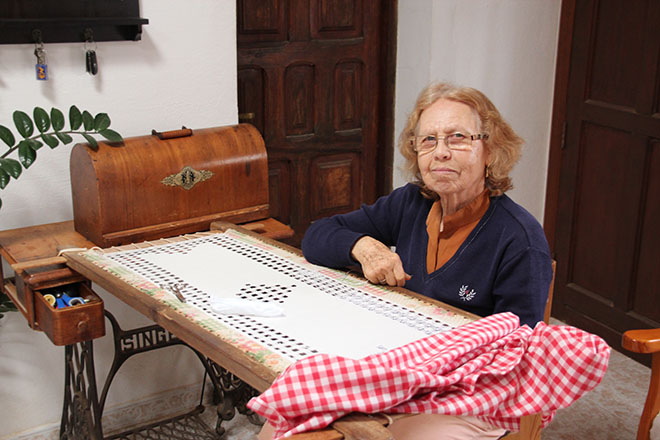
Josefa Navarro, affectionately known as Fefita among her neighbors, hails from La Aldea de San Nicolás, having been born in 1941 to a Majorero father and a mother from Gran Canaria. At just 14 years of age, she moved to the picturesque Vega de Río Palmas in Fuerteventura, where her journey into the captivating world of craftsmanship began. Her early introduction to the art was under the tutelage of a neighbor, and later, through courses organized by the Betancuria Town Hall. It was with the guidance of her dedicated teacher, Lolita Betancor, who was also instrumental in establishing the first Insular Crafts Fair, that Josefa learned the intricate techniques of calado (lacework) and palm weaving.
Recognition and Challenges in Craftsmanship
This year, Josefa’s remarkable skills were recognized as she was awarded the Insular Crafts Award. However, despite this accolade, she expresses deep concern for the future of artisanship in Majorera. The absence of appropriate venues to exhibit their work has significantly hampered local artists, including herself. Josefa highlights that the slow closure of artisan shops across the island has dealt a heavy blow to creators who strive to share their gifts with wider audiences. She reminisces about busier times when her creations could be found in various artisan shops, including those in the airport and the town of Antigua. Today, only a handful of shops remain, and even they seem sparse. “If I were to live off my craft, I would starve,” she laments.
A Tradition at Risk
The dwindling opportunities to showcase and sell their work has caused Josefa—and many like her—a sense of despair. Each year, the Artisan Fair remains one of the scant opportunities for exposure, yet it is far from sufficient to sustain these skilled artisans. Sharing her disappointment, Josefa mentions, “Perhaps in time, there will be neither calado, nor anything else.” Despite this disheartening outlook, her passion for her craft remains steadfast, and she hopes to inspire her daughters to continue the family tradition. However, she acknowledges the challenges modern life poses to maintaining such traditions, urging local administrations to be more proactive in fostering engagement in artisan activities among the youth.
The Importance of Tradition in Modern Times
Josefa, having learned her craft through communal courses despite limited resources in her youth, strongly advocates for the revival of similar programs in current municipalities. She firmly believes that engaging in manual work provides a therapeutic escape from the hustle and bustle of modern life. “The craft is a relaxing endeavor,” she says, emphasizing the mental benefits it offers in our fast-paced world.
Reflecting on how palm weaving once played a vital role in everyday life, she recounts that homes used to be adorned with palm mats, and items like backpacks (serones) were used for transporting grains. Today, however, she notes, the primary creations are simple palm hats, often used for casual outings, like her own walks.
A Life of Balance and Creativity
Josefa balances her time between domestic responsibilities, tending to her small farm, and her beloved crafts. Although no longer tending to animals as she used to, she still cultivates vegetables and potatoes for her household. Her adeptness in various tasks shines through, whether in agriculture or artisanry.
With her home as her workshop, she creates charming palm hats and intricately designed lace items, such as table runners and mats, which have seen growing demand in her community. In retelling her experiences, she remarks about the past when homes were filled with handmade palm crafts, contrasting them with the present, where only simple items like hats seem to survive.
Community Engagement and Cultural Richness
In addition to her crafting, Josefa enjoys social gatherings at the senior center in Betancuria, where she continues her creative endeavours and connects with like-minded individuals. Her passion for music and dance also surfaces in community parrandas where she joyfully plays the guitar and participates in performances, embracing the vibrant culture of her island.
Through her story and dedication, Josefa Navarro embodies the spirit of Majorera craftsmanship, a craft deeply intertwined with the identity of her community. Her journey, a testament to perseverance and love for tradition, continues to resonate in the hearts of those who appreciate the rich cultural heritage of Fuerteventura.