<p style="text-align: justify;"><strong>Actions Include the Dismantling of the Treatment Plant, Creation of a Slope, and Planting Over a Hundred Native Species of the Saladar</strong></p>

<p style="font-weight: 400; text-align: justify;">The recent initiative to naturalize the Saladar de Jandía has garnered attention from local authorities and environmental enthusiasts alike. This project, framed by the regional government as part of its commitment to sustainable tourism and environmental conservation, is set to restore one of the Canaries' protected wetlands, significantly impacted by human activity.</p>

<p>
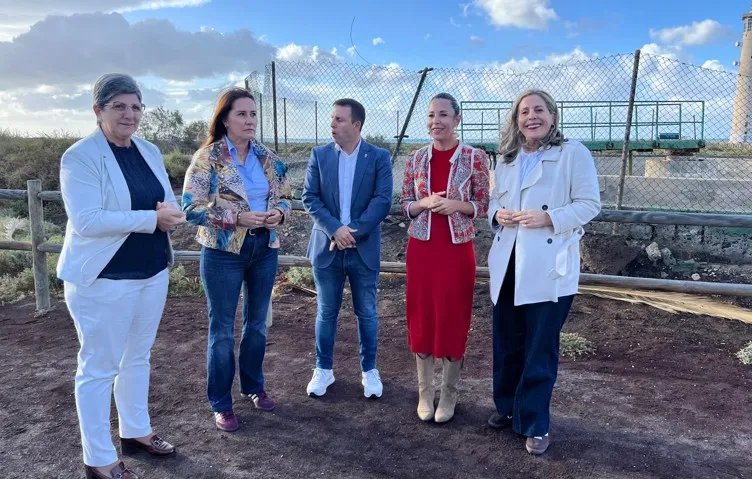
    On-site visits by key figures such as the Canary Islands' Tourism and Employment Councillor Jéssica de León, the President of the Cabildo de Fuerteventura Lola García, and Tourism Councillor Marlene Figueroa have highlighted the importance of this initiative. They collectively emphasize a vision of tourism that not only embraces the natural landscapes but also preserves and enhances them.
</p>

<p style="font-weight: 400; text-align: justify;">
    The financial backing for this robust plan amounts to **€249,815**, sourced from the Next Generation EU funds. The dedication of such resources signifies a strong commitment to restoring over **9,000 square meters** of terrain that has suffered due to outdated infrastructure and environmental degradation.
</p>

<p style="font-weight: 400; text-align: justify;">
    A key aspect of the project involves the removal of obsolete structures, such as the former treatment plant, facilitating the process of returning the land to its original geomorphological state. The objective here isn't just about elimination but preservation—a restoration of the natural flora and fauna that defines the Saladar de Jandía.
</p>

<p style="font-weight: 400; text-align: justify;">
    “Our perspective on tourism has undergone significant change,” remarked Councillor Jéssica de León. “We no longer see it as merely sun and beach; we advocate for a perspective whereby the natural environment and cultural identity are focal points.” The Saladar de Jandía, a gem of natural heritage, thus stands as a crucial undertaking in the broader realm of environmental stewardship and tourism adaptability.
</p>

<p style="font-weight: 400; text-align: justify;">
    The president of the Cabildo de Fuerteventura echoed these sentiments, stating that the project's principal aim is to enhance a space of incredible environmental value. She emphasized that this endeavor illustrates an effective model where tourist development aligns with ecological preservation—a testament to a forward-thinking approach.
</p>

<p style="font-weight: 400; text-align: justify;">
    Marlene Figueroa added that initiatives like this exemplify that future tourism hinges on caring for what makes our locales unique. Their campaign titled 'Fuerte por Naturaleza' showcases various projects aimed at improving not only the landscape's image but also positively impacting local residents' quality of life.
</p>

<p style="font-weight: 400; text-align: justify;">
    The mayor of Pájara, Alejandro Jorge, highlighted the importance of synergetic collaboration among local governmental agencies. “The naturalization of the Saladar de Jandía is a long-desired project that goes beyond environmental restoration; it enhances the aesthetics of our urban surroundings,” he noted. The collaborative effort affirms the mutual commitment to community and environmental well-being.
</p>

<p style="font-weight: 400; text-align: justify;">
    The **Naturalization of the Saladar de Jandía** project unfolds in **four distinct phases**. The first phase addresses the dismantling and removal of the outdated treatment plant, deemed incompatible with current conservation laws. The second phase focuses on eliminating the current fill, rediscovering the saladar's natural contours by lowering the platform from its current **3.40 meters** to the original **2.50 meters**.
</p>

<p style="font-weight: 400; text-align: justify;">
    Next, the third phase aims to rehabilitate the entire work area. Utilizing sifted earth from demolition, efforts will be made to profile the terrain and create protective slopes. The fourth and final phase emphasizes aesthetic integration, featuring the random planting of **104 native plant species** at the base of the slope. Noteworthy species in this initiative include <em>Chenoleoides tomentosa</em> (algoera), <em>Salsola vermiculata</em> (matabrusca), and <em>Tetraena fontanesii</em> (uva de mar), along with three specimens of <em>Tamarix canariensis</em> (tarajal).
</p>

<p style="font-weight: 400; text-align: justify;">
    This detailed approach encapsulates a movement towards a more sustainable, conscious interaction with our natural heritage, paving the way for a renewed relationship between tourism and environmental conservation. As these developments unfold, the Saladar de Jandía will undoubtedly emerge as a symbol of ecological restoration, further solidifying its reputation as one of the Canary Islands' most precious landscapes.
</p>