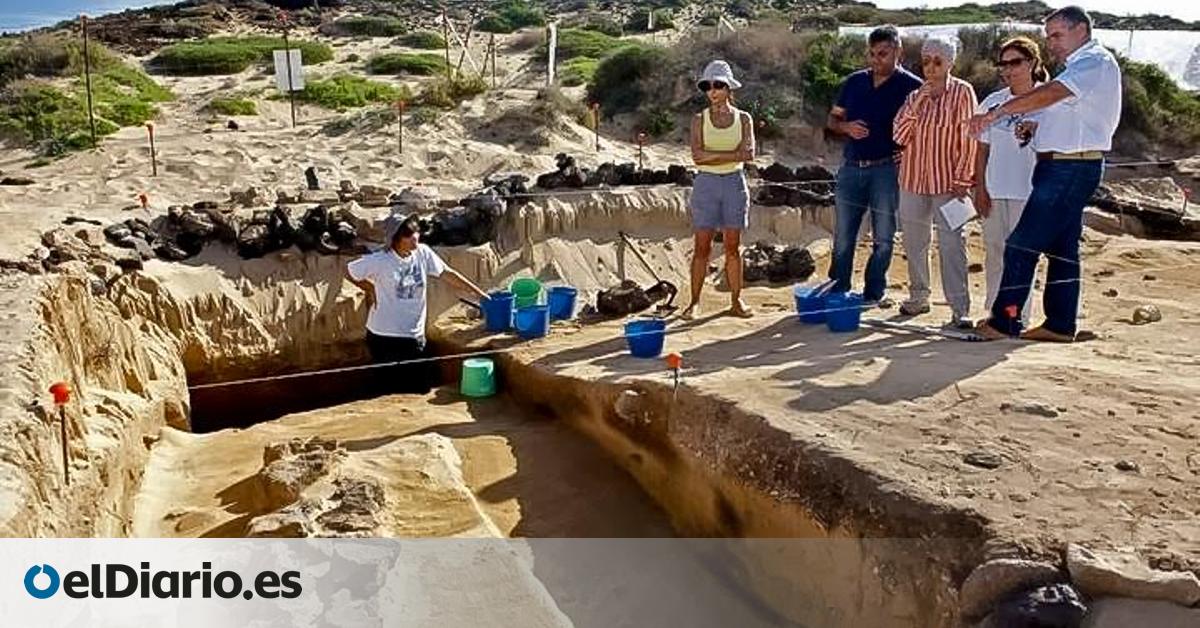
Archaeological Campaign at the Islet of Lobos: A Glimpse into Roman History
The Cabildos of Fuerteventura and Tenerife, alongside the University of La Laguna, are embarking on an exciting journey through time with the ninth archaeological campaign at the Lobos Islet, running from Monday until November 22nd. This long-standing collaboration aims to uncover forgotten chapters of history that lay beneath the sands of this picturesque island.
Expanding Horizons of Discovery
This year’s excavation efforts mark a significant expansion, increasing the research area by approximately 370,598 square meters to the north of previous excavations. Last year’s campaign utilized georadar to survey La Calera beach, revealing potential fertile areas that had remained undiscovered until now. This promising find opens new avenues for research and fuels fresh expectations about the Roman site of Lobos.
Expertise Steering the Campaign
The campaign is co-directed by a trio of seasoned experts: Mercedes del Arco Aguilar, curator at the Archaeological Museum of Tenerife; María del Carmen del Arco Aguilar, a professor of Prehistory at the University of La Laguna; and Isidoro Hernández Sánchez, the director of the Archaeological Museum of Fuerteventura. Their diverse expertise fuels a multidisciplinary team that embodies a blend of archaeological knowledge, cultural history, and environmental science.
Historical Context: The Discovery Beginnings
The archaeological journey on Lobos began in 2012, sparked by a serendipitous find of Roman pottery at La Calera beach. Initially a casual discovery, this material prompted a deeper investigation, confirming the Roman origins of these artifacts. The intervention was a collaborative effort involving the Fuerteventura Cabildo, the Archaeological Museum of Tenerife, and the University of La Laguna.
Insights from Previous Excavations
Through eight successful campaigns, researchers have meticulously excavated around 520 square meters at Lobos. This effort has led to a fascinating characterization of the site as a purple dye workshop, a highly coveted product extracted from the murex snail—a testament to the island’s industrial past. This purple dye was not merely a commodity but a symbol of status and wealth in ancient times.
Dating the Past: Understanding Roman Influence
The stratigraphic layers and the artifacts uncovered have been subjected to radiocarbon dating, affirming that the Lobos site represents the far reaches of the Roman Empire in the eastern-central Atlantic. This site boasts a rich array of archaeological records, now displayed at the Archaeological Museum of Fuerteventura, providing a window into the lives of its historical inhabitants.
Artifacts of Interest: Shells, Tools, and More
Among the notable discoveries are remnants of shells that attest to the production of purple dye, showcasing features that help identify this industrial endeavor. Various tools essential for different stages of the dye production process have also been discovered, alongside an assortment of both lithic and metallic artifacts. These findings significantly enrich our understanding of the technological advancements of the time.
The Complete Picture: Production Processes Uncovered
The site encapsulates the entire process involved in purple dye production, from the extraction phase to the maceration and precipitation stages of the dye. Such comprehensive evidence allows researchers to reconstruct ancient industrial practices and the socio-economic landscape of the era.
Daily Life on the Islet: Insights through Artifacts
An extensive and varied collection of materials—including ceramics, lithics, metals, and remains of terrestrial and marine fauna—paints a vivid picture of everyday life in Lobos. These artifacts offer invaluable insights into the everyday activities, food sources, and cultural practices of the people who once inhabited this remote islet.
Through this ongoing research at the Islet of Lobos, we not only rediscover the wealth of Roman history but also gain a deeper understanding of how communities thrived in these island landscapes. The collaboration among local governments and academic institutions enables a continued dialogue between the past and present, ensuring that the stories of Lobos resonate for generations to come.
:format(jpg):quality(99):watermark(f.elconfidencial.com/file/bae/eea/fde/baeeeafde1b3229287b0c008f7602058.png,0,275,1)/f.elconfidencial.com/original/1a7/af7/d3b/1a7af7d3bb2895c72b5d30e6b028d7f9.jpg "A Unique Situation in Spain")