One Culture, Three Religions: An Interfaith Pilgrimage in Andalusia
By Msgr. Gregory J. Fairbanks • Posted June 6, 2025
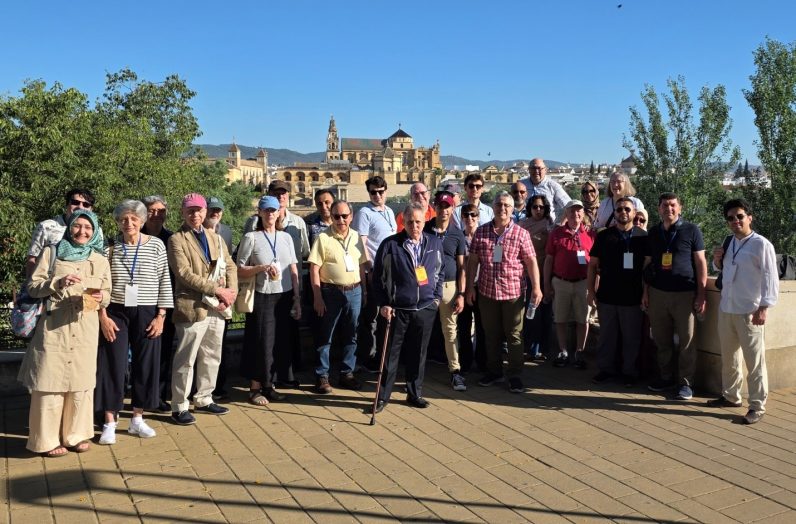
“One culture, three religions” was a phrase frequently echoed during an interfaith pilgrimage held from May 19-26 in the Andalusia region of Spain. This unique journey brought together a diverse group of 27 individuals: 14 Muslims, eight Jews, and five Christians. Together, we explored not only the rich history of southern Spain but also the profound connections that bind our faiths.
The Pilgrimage’s Purpose
The pilgrimage was cosponsored by Peace Islands Pennsylvania and New York and the National Council of Synagogues. Our aim was to foster understanding and dialogue among different faith traditions, emphasizing the shared heritage that often gets overshadowed by contemporary divisions.
A Historical Tapestry
Our focus was on the medieval period of Spanish history, spanning from 711 to 1492. This era is remembered differently by various groups, yet it is characterized by a complex interplay of cooperation and conflict among Christians, Muslims, and Jews. Modern Spanish historians refer to this time as La Convivencia, which translates to “living together.” This term encapsulates a period when these three religions coexisted in relative peace, contributing to a vibrant cultural tapestry in Medieval Iberia, which encompasses present-day Spain and Portugal.
The Quest for Unity
Historians today hope that this interpretation of history can serve as a unifying force for Spain’s diverse regions, especially in light of ongoing independence movements. As Spain becomes increasingly secular, with about four percent of its population identifying as Muslim and a small Jewish community alongside other religious minorities, the lessons of La Convivencia are more relevant than ever.
Exploring Historical Sites
Our pilgrimage took us through several iconic cities: Madrid, Toledo, Córdoba, Seville, and Granada. Each location offered a unique glimpse into the historical interactions of our faiths.
In Córdoba, we visited the renowned Mosque-Cathedral, a stunning architectural marvel that tells a story of transformation. Originally a Visigoth church, it was converted into a mosque in 785 and expanded until its completion in 971. After the Christian reconquest in 1236, it was designated as a cathedral, and a new cathedral was built within its walls in the 16th century, creating a cathedral inside a cathedral.
In Seville, we explored the Church of Santa María la Blanca, which has transitioned through various religious identities: from a church to a mosque, then a synagogue, and back to a church. The remnants of each period are preserved, serving as a testament to the city’s layered history.
Engaging with Local Faith Leaders
Throughout our journey, we had the opportunity to meet with local faith leaders who shared insights into the current state of interfaith relations in Spain. Their sincere efforts to welcome and accommodate individuals from different faith traditions were inspiring. These conversations highlighted the ongoing commitment to fostering understanding and cooperation among diverse communities.
A Shared Heritage
As we traveled, we witnessed a culture shaped by three distinct yet interrelated religions. All three faiths trace their origins back to the patriarch Abraham, often regarded as a common ancestor. This shared lineage underscores the potential for unity amidst diversity.
For nearly eight centuries, Christians, Muslims, and Jews coexisted, each leaving an indelible mark on Spanish culture and identity. Our goal as pilgrims was to learn from this rich history, appreciate the unique contributions of each faith, and recognize the goodness inherent in one another as we navigate the complexities of the future.
Building Relationships
The hope is that this pilgrimage will serve as a catalyst for deepening relationships and fostering understanding among our diverse faith communities. By experiencing the historical facts together and striving to see each other’s perspectives, we can move forward with mutual respect and appreciation.
In a world often marked by division, we discovered that we have far more in common than what separates us. May we find the courage to achieve La Convivencia in peace, drawing from the lessons of our shared past as we look toward a harmonious future.
Msgr. Gregory J. Fairbanks serves as Dean of the School of Diaconal Formation and professor of Church History at St. Charles Borromeo Seminary in Lower Gwynedd.