Reviving Heritage: Almudena Monserrat de León and the Vineyards of Tefía
Almudena Monserrat de León has stepped into a legacy that blends passion with tradition, reclaiming her family’s winemaking heritage in Tefía, an area in Fuerteventura, once cultivated by her grandfather. Specializing in the production of wine under the label Aires de Tefía, Almudena exemplifies how the future of viticulture hinges on adapting to the unique resources offered by the island’s soil and climate.
From Hobby to Agricultural Experiment
What started as a simple hobby of nurturing a family plot filled with fig trees and a few vines has transformed into an ambitious agricultural project. Almudena aims to not only preserve local winemaking culture but also encourages aspiring agrarians by championing the “trial and error” philosophy in viticulture. With support from the Majuelo Winegrowers Association and guidance from seasoned local vintners, she continues to expand her understanding of winemaking.
Diverse Viticultural Practices
Working with a variety of viticultural models is a key aspect of Almudena’s approach. She employs techniques such as gavia (a traditional method of planting in raised beds), planting vines in májaras (a type of trench), and outside of these traditional systems. Over the past four years, she has transported vine cuttings from another family estate in Tefía to cultivate different grape varieties, primarily indigenous to the region. “To thrive, the vine must break through the white rock and tap into its rich calcium,” Almudena explains, underscoring the significance of the local terrain.
Timing the Harvest
Timeliness is crucial in Almudena’s operation. As a teacher, she finds that summer months are optimal for harvest, allowing her to fully dedicate herself to the winemaking process. The first tasting of the season coincides with the San Andrés festivities in early December, where family traditions reign supreme. “At my father’s estate, my mother prepares her traditional stew while we sample the first wines of the year,” she notes, blending family life with agricultural passion.
Emphasizing Sustainability
Sustainability plays a central role in Almudena’s winemaking philosophy. She incorporates organic compost to fortify her vines and has devised methods to combat water scarcity by situating vines in soil that retains moisture. Utilizing materials like limestone, which helps conserve humidity, she mirrors successful practices seen in neighboring areas like Lanzarote. This strategic positioning promotes healthy growth while allowing her to reap the benefits of seasonally collected rainwater.
Discovering Unique Terroir Flavors
One fascinating aspect of Almudena’s work lies in her exploration of terroir’s impact on flavor profiles. “The same vine, cultivated in Tefía, Lajares, or Tetir, yields different grapes,” she describes, hinting at the array of flavors that emerge based on varying soil types and nutrients. Such insights add depth to her wines and encourage her exploration of diverse grape varieties.
Nurturing Passion and Tradition
With years of experience rooted in the family tradition, Almudena’s journey into winemaking started with encouragement from her grandfather. While pursuing her teaching degree in Tenerife, he urged her to delve into winemaking, equipping her with necessary skills and tools. This familial legacy not only fuels her interest but also instills a sense of responsibility to preserve their heritage.
“I find it astonishing to witness the lifecycle of a vine,” she shares, reflecting on the transition from barren branches to a fruitful harvest. It’s this appreciation for the transformation that propels her passion for viticulture.
Exploring Other Agricultural Ventures
In addition to viticulture, Almudena aims to revitalize the fig trees planted in the area, and she is even experimenting with growing pitaya alongside pomegranate trees and olive plants. This diversified approach to agriculture not only aids in maintaining ecological balance but also enhances pest control by using companion planting strategies.
Navigating Regulatory Challenges
Despite her dedication and innovative practices, Almudena faces significant hurdles in securing the necessary government permits for commercial production. The stringent regulations imposed by the Canary Islands government apply uniformly to both small-scale and large wineries. While Almudena recognizes that her production volume is not sufficient for mainstream retail, she wishes to inspire other local winemakers to contribute to Fuerteventura’s winemaking visibility.
A Dream of Recognition
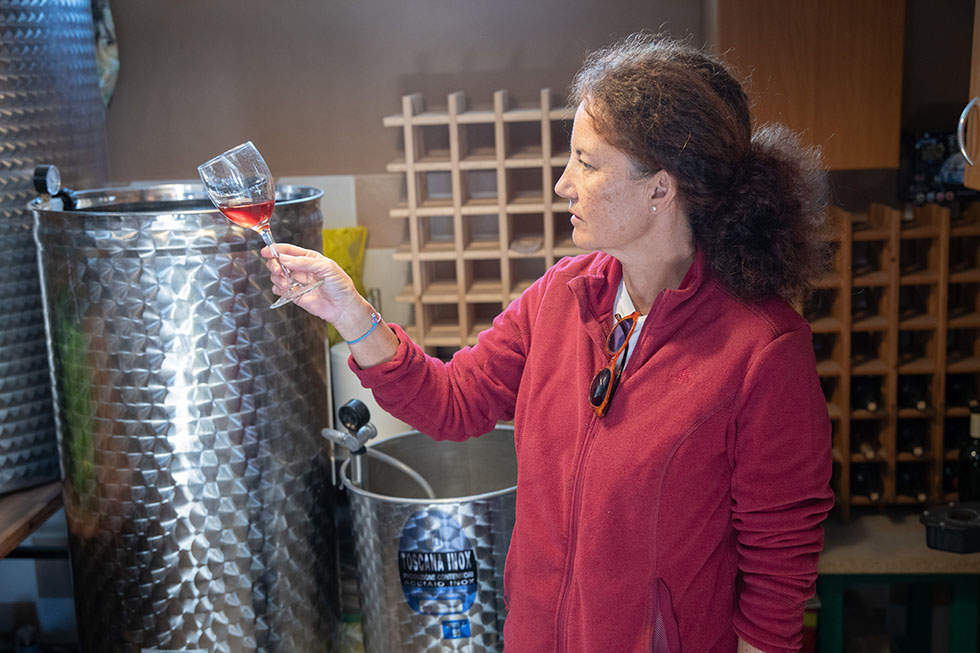
Almudena aspires for her vineyard to be recognized as “the smallest winery in Canary Islands.” She has outfitted a section of her rural home in Tefía with all necessary winemaking equipment, from a press to stainless-steel fermenters for her rosé and white wines. Preferring these modern materials for their utility with young wines, she sees promise in the unique blends she can create, like Brisa, a smooth white, and Siroco, a local red that embodies the characteristics of their region.
Focus on Local Varietals
Almudena remains committed to crafting wines that celebrate local varietals such as hoja de moral and listán prieto for her reds and rosés, while utilizing both volcanic malvasía and listán blanco for her whites. The resultant wines under the Aires de Tefía brand serve as a tribute to the island’s rich viticultural landscape, albeit without commercial sales at this time. Instead, she conducts wine tastings for visitors, imparting knowledge and experience that fosters a deeper appreciation of local agriculture.
Pairing Wine and Local Gastronomy
To enhance her wine tastings, Almudena often pairs her offerings with local delicacies, such as the artisan cheeses from Bernardo Peña and traditional bread baked by Miguel Diego. This culinary pairing not only elevates the wine experience but also showcases the cultural richness of Fuerteventura, enticing both locals and tourists who visit for the island’s unique ecological attractions.
Almudena Monserrat de León is not just reviving a family legacy; she is redefining how Fuerteventura cultivates its agricultural identity, one grape at a time. Through her dedication to sustainable practices, local varietals, and communal celebrations, she is firmly establishing her place in the growing narrative of Fuerteventura’s viticulture.