The Art of Pottery: Women in Craftsmanship and Silverio López Márquez’s Journey
The Role of Women in Pottery History
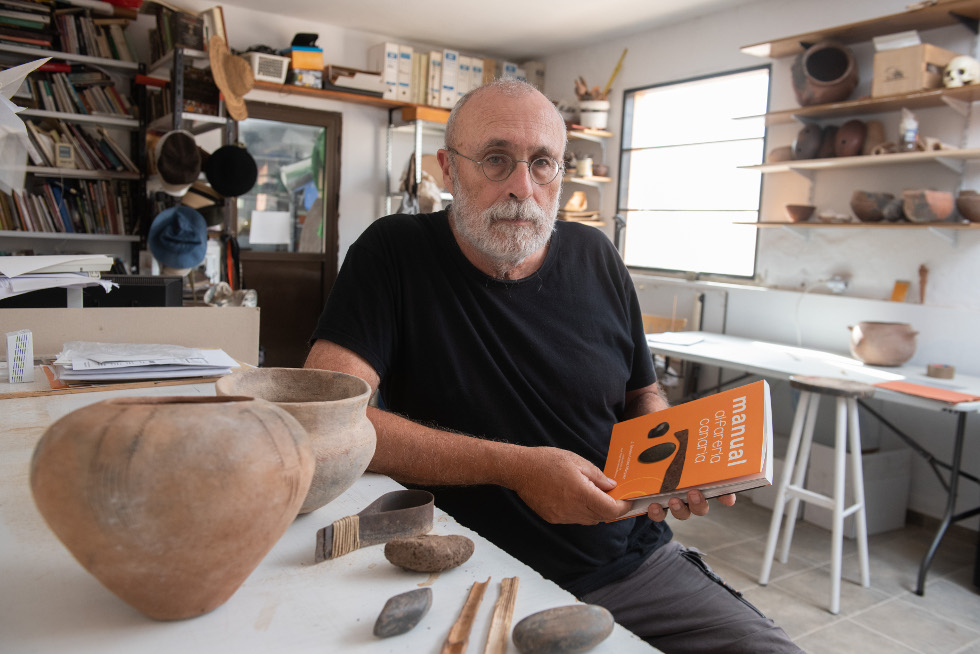
Throughout history, women have played a pivotal role in the art of pottery, a fact emphasized by artisan Silverio López Márquez. Celebrated as a master potter based in Fuerteventura, López brings a unique perspective to the craft, which he considers an ancestral vocation. Born in La Laguna in 1959, he relocated to La Isleta in Las Palmas de Gran Canaria at the young age of six. His passion for clay dates back to the 1970s when he was part of a mountain club and discovered various pieces of native ceramics.
López recalls, “While in high school, our mountain group frequently visited La Atalaya de Santa Brígida. We were curious about the skill and sought to understand its origins.” His exploration led to the formation of a pioneering artisan group, Benoguare, in Tafira around 1975. They aimed to reproduce Canarian pottery accurately, engaging in workshops and visiting museums to immerse themselves in the craft.
Crafting Tradition in the Modern Age
López’s work goes beyond personal artistry; it embodies a commitment to passing down traditional techniques. He emphasizes the significance of continuous learning and adaptation, recalling how he trained across Gran Canaria before settling in Fuerteventura. His family operated a workshop producing beautiful plaster pieces, showcasing another layer of artisanal creativity.
Now, Silverio has unveiled his discoveries in a book titled Manual de Alfarería Canaria, which delves into the millennia-old techniques that have evolved without losing their essence. He notes, “The women potters have been generous in passing on their ancient knowledge; it’s our duty to continue this chain and share experiences with the new generation.”
Understanding Canarian Ceramics
Canarian pottery reflects a prehistoric technique shaped by the islands’ geographical diversity. Its development stems from the quality of available clay and fuel, intertwined with the cultural narratives from the Neolithic era through Northern Africa to the Canary Islands. According to López, these traditional practices are deeply rooted, highlighting how different shapes and styles of pottery have adapted over time.
He mentions a dwindling number of artisans who strive to keep the tradition alive. Silverio’s book serves as a compendium of invaluable knowledge, detailing his personal journey, his friendships, and the collective experiences of fellow potters. Historian José Angel Hernández contributes a scholarly perspective, documenting the history of the craft.
A Tribute to Female Potters
The book is a rich tribute to female potters. Featuring historical photographs, it honors remarkable figures such as Panchito and notable women like Juliana Suárez, Manuela Cabrera, and Adolfina Cubas. In Fuerteventura, sisters Salomé and Eloísa Brito left a lasting legacy, with Salomé’s lineage continuing in the craft today.
Reflecting on past collaborations, Silverio recounts his experiences working alongside the Brito sisters, emphasizing the importance of traditional techniques. Salomé’s memorable insight, “the essence of pottery is in the firing process,” captures the depth of knowledge that has been passed down, underscoring the meticulous nature of crafting pottery.
Traditional Processes in Pottery
Silverio details the traditional pottery-making process in eight phases — from gathering raw materials to firing techniques. He stresses the need for precision in each step: the preparation, modeling, drying, and eventually the firing. Each technique varies across regions, influenced by localized traditions.
He notes that while earlier practitioners relied on manual methods without a wheel, modern practices have embraced new tools, enhancing creativity while preserving fundamentals. Silverio’s insights extend to current practices in Fuerteventura, highlighting artisans like Pepe Caballero and Eduardo Ramírez, who continue to innovate while respecting traditional forms.
Advocating for Artisan Rights and Education
Silverio’s Manual de Alfarería Canaria does not just focus on techniques; it advocates for crucial changes in legislation regarding artisan work. He calls for initiatives that would make resources and funding accessible to craftsmen, positing that the preservation of culture hinges on economic viability. His perspective aligns with a broader vision that sees artisanry not merely as a trade but as an intrinsic cultural expression.
He insists that the Constitution should reflect support for modernizing the artisan sector, noting, “We must ensure that our artisans receive the protection they deserve.” His vision includes a plea for structural support, aiming to recognize artisan work as a social industry exempt from burdensome taxation.
Incorporating Pottery into Education
Believing deeply in the importance of education, Silverio argues for the inclusion of pottery techniques in school curricula. He emphasizes that without teaching these skills to younger generations, the art form risks extinction. “Children today will become the guardians of this craft tomorrow,” he asserts, underscoring the urgency of passing down knowledge.
He envisions specialized educators leading these classes to ensure authenticity and commitment to traditional craftsmanship.
This exploration of Silverio López Márquez’s work and philosophy not only highlights his artistry and the historical importance of women in pottery but also reflects a broader narrative about cultural preservation, education, and sustainability within artisanal practices.