Spain’s Strategic Dilemma: Balancing Domestic Security and International Alliances
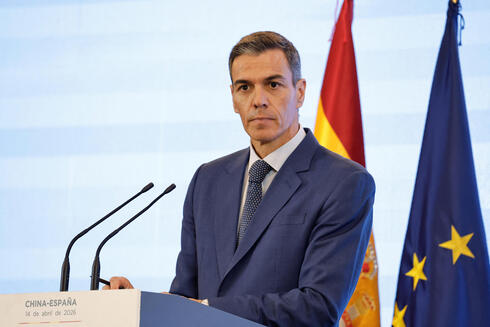
When the United States sought to utilize its Spanish bases to conduct air operations against Iran, Prime Minister Pedro Sanchez made a surprising decision: he said no. This refusal led to the rapid relocation of fifteen American aircraft, including vital refueling tankers. In a geopolitical landscape already fraught with tension, Spain’s choice inadvertently provided Iran with a strategic advantage it had not earned.
The Context of Spain’s Decision
What makes Sanchez’s decision particularly striking is the backdrop against which it was made. Spain has emerged as a leader in the European Union in counter-terrorism efforts, particularly against jihadist threats. Over the past decade, Spanish courts have successfully convicted individuals in 82% of terrorism prosecutions. In 2024 alone, authorities conducted 49 counter-terrorism operations, resulting in the arrest of 81 individuals on jihadist charges. This figure was only surpassed in the first ten months of 2025, highlighting the ongoing challenges Spain faces in combating radicalization.
A Growing Domestic Threat
The situation in Spain is more alarming than the statistics suggest. In 2024, authorities arrested 15 minors on jihadist terrorism charges, a number that exceeds the total of minors detained over the previous seven years combined. This alarming trend indicates that the radicalization pipeline is not only accelerating but also becoming younger and more decentralized. Online propaganda has made Salafi-jihadist content readily accessible to teenagers, often with no prior connections to extremist networks or recruiters.
Spain’s preventive judicial model, which intervenes early in the radicalization process, is considered one of the most sophisticated in Europe. However, the sheer scale of its caseload serves as an implicit acknowledgment of the severity of the underlying problem.
Geographic Hotspots of Radicalization
The geography of radicalization within Spain reveals significant insights. Catalonia accounts for nearly 30% of all jihadist convictions over the past decade, while the North African enclave of Ceuta contributes another 22%, despite its small population. In Ceuta’s El Príncipe district, a predominantly Muslim neighborhood bordering Morocco, integration with mainstream Spanish society is virtually nonexistent. Radicalization operates through intimate networks, with nearly 87% of detainees influenced by someone they knew personally, often a family member or childhood friend.
Institutional Challenges
The Muslim Brotherhood has maintained a presence within Spain’s official Islamic bodies since the 1980s. A pivotal summit in 1984 in Madrid helped lay the groundwork for the Federation of Islamic Organizations in Europe. Brotherhood-linked figures have since infiltrated the Islamic Commission of Spain, projecting a facade of moderation while maintaining ideological continuity with an organization whose goals are fundamentally at odds with liberal democracy.
In 2019, Operation WAMOR exposed a clandestine network within these official institutions that had been channeling funds to Al-Qaeda affiliates in Syria. Additionally, Qatar has funded mosque expansion programs across various Spanish cities, disproportionately benefiting Brotherhood-linked associations.
Spain as a Target and a Node
Spain is not merely a passive victim of external radicalization; it serves as a primary European theater for it. The Al-Andalus narrative gives Spain a unique symbolic weight in jihadist ideology, unmatched by any other Western European country. Propaganda from ISIS and Al-Qaeda frames the recovery of Muslim Iberia not as a historical grievance but as an active strategic objective. Pro-Al-Qaeda media outlets, such as the Voice of Al-Andalus, disseminate Spanish-language propaganda that encourages local mobilization.
Foreign Policy Implications
Against this backdrop, the Sanchez government’s foreign policy choices take on a more complex dimension. Spain recently announced a €1.6 million funding increase for the International Criminal Court (ICC) shortly after an arrest warrant was issued for Israeli Prime Minister Netanyahu. Foreign Minister José Manuel Albares emphasized that Madrid had become one of the ICC’s top ten financial backers. Meanwhile, Spain’s attorney general established a dedicated investigative team to gather evidence of alleged violations in Gaza, further complicating its international stance.
This duality is striking: a government that prosecutes Brotherhood financing networks and teenage IS sympathizers is simultaneously directing state resources toward the legal persecution of a country that Iran has long sought to undermine.
Strategic Consequences
The strategic ramifications of Spain’s refusal to support U.S. operations against Iran are already becoming evident. U.S. Senator Marco Rubio has raised concerns about whether the United States should reconsider its troop presence in Spain. In response, Washington has quickly signed a new military cooperation roadmap with Morocco, shifting strategic weight to the southern shore of the Strait of Gibraltar, a region that Spain has rendered politically unreliable.
Spain’s choices reflect a complex interplay of domestic security challenges and international diplomatic relations, revealing the intricate balance that must be maintained in an increasingly volatile geopolitical landscape.